House Extension Costs: What to Expect and How to Budget Effectively
Complete guide to house extension costs in the UK. Learn about fee structures, budgeting tips, and how to get maximum value from your house extension investment.
Understanding House Extension Costs in the UK
House extension costs vary significantly depending on project scope, complexity, and location. Understanding these costs and how they're structured is essential for effective project budgeting and ensuring you receive maximum value from your house extension investment. This comprehensive guide breaks down everything you need to know about extension costs and budgeting strategies. Factors affecting cost include the size of the extension, the specification of finishes, the complexity of structural work, and the location of your property.
Typical House Extension Cost Structures
House extension costs are typically calculated based on square meterage, ranging from £1,500-3,000 per square meter depending on project complexity. For smaller projects like single storey extensions, costs may be higher per square meter due to fixed overhead costs. Larger double storey extensions often command lower per-square-meter rates due to economies of scale. Understanding cost structure helps you budget accurately and compare quotes from different specialists.
Square Meterage-Based Costs: Most common for full-service projects, typically £1,800-2,500 per square meter. This structure provides cost certainty and ensures comprehensive service delivery. When using this structure, ensure specifications are clearly defined so costs are accurate. A detailed specification document should accompany any square-meterage quote to ensure all parties understand what's included.
Fixed Price Arrangements: Suitable for well-defined projects with clear scope. Fixed prices provide cost certainty but require detailed project definition to avoid scope creep and additional charges. With fixed price contracts, ensure all elements are listed explicitly, including finishes, fixtures, and any optional extras. Get changes in writing and understand how variations will be priced.
Hourly Rates: Appropriate for consultation work, feasibility studies, or projects with uncertain scope. Rates typically range from £75-150 per hour depending on specialist experience and location. Hourly rates work well when you're uncertain about the extent of work required and want to explore options before committing to full project costs.
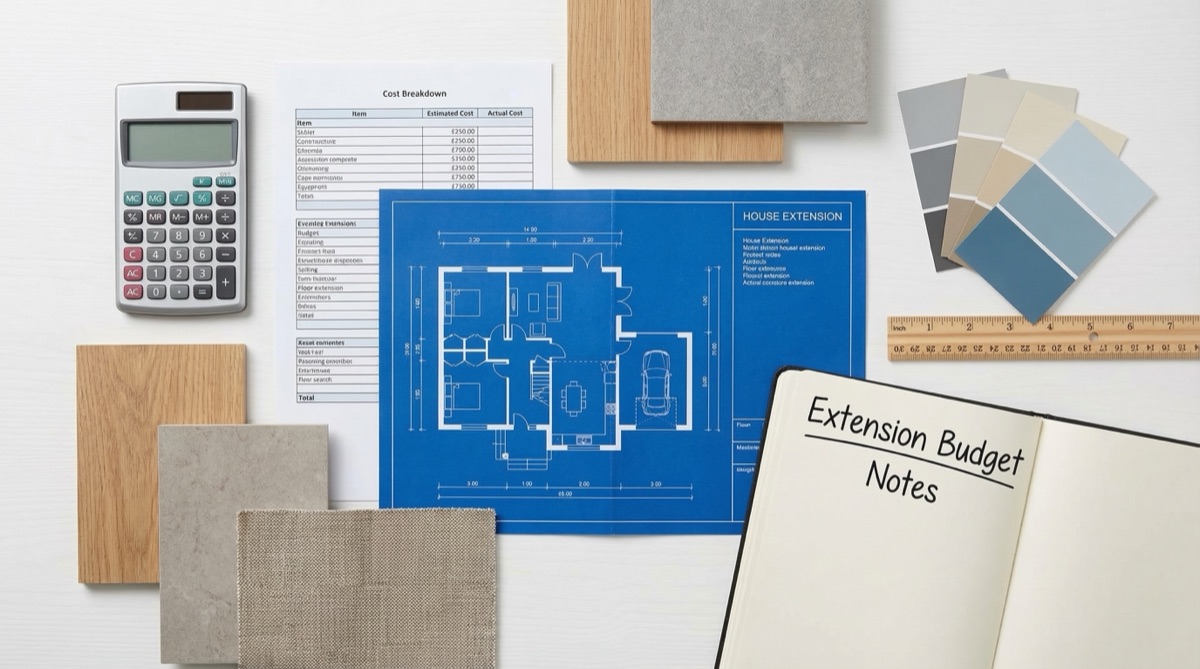
Cost Breakdown for Typical Extension: For a 25 square metre single storey rear extension costing approximately £60,000: design and planning fees (12%), building regulations and approvals (5%), construction labor (45%), materials (30%), and contingency (8%). Understanding this breakdown helps you see where your money goes and prioritize spending on elements that add most value.
Factors Affecting House Extension Costs
Size and Complexity: Larger extensions cost more in total but often less per square metre. A 40 square metre extension typically costs £1,800-2,200 per square metre, while a 15 square metre extension might cost £2,200-2,800 per square metre due to fixed costs spread over smaller area. Complex structural work such as removing load-bearing walls or dealing with challenging ground conditions significantly increases costs.
Specification and Finishes: The quality of finishes dramatically affects cost. Basic extensions with standard finishes cost approximately £1,500-1,800 per square metre, while premium extensions with high-end kitchens, underfloor heating, and bespoke joinery can cost £2,800-3,500 per square metre. Mid-range extensions with good quality finishes typically cost £2,000-2,500 per square metre and offer good value.
Location and Accessibility: London properties typically cost more than equivalent projects in surrounding areas due to higher labor costs and material prices. Properties on corner plots or with restricted access may incur additional costs for site setup and material handling. Properties near listed buildings or in conservation areas often cost more due to additional design and approval requirements.
Structural Requirements: Extensions requiring structural calculations, temporary support, or foundations on challenging ground cost more than straightforward extensions. Working with party walls requires surveyor involvement, adding £700-1,500 per surveyor. Extensions near utilities or contaminated ground increase costs substantially.
Breaking Down Professional Fees
Architectural Design Fees: Typically 4-8% of construction costs, covering initial consultation, design development, technical drawings, and project administration. More complex projects or those requiring listed building consent may cost more. Some practices charge fixed fees for straightforward projects, making budgeting easier.
Structural Engineering: Typically 1-3% of construction costs. Simple extensions might require only basic calculations, while complex projects with steel beams or foundation work cost more. Structural engineers also provide ongoing support during construction for inspections and amendments.
Planning and Building Regulations: Professional services to prepare and submit applications cost £2,000-5,000 depending on complexity. Local authority fees are separate: planning applications cost £258 for householder applications, while building regulations fees vary by project complexity but typically range from £500-1,500.
Project Management: If not included in design fees, project management typically costs 5-10% of construction budget. A dedicated project manager coordinates all tradespeople, manages timelines, and ensures quality throughout construction.
Construction Costs in Detail
Labor Costs: Typically represent 40-50% of construction budget. Skilled tradespeople charge £150-250 per day depending on trade and experience. Projects requiring specialist subcontractors (structural work, electrical systems, plumbing) incur higher labor costs. Good project management keeps labor costs down by minimizing inefficiency and rework.
Material Costs: Typically represent 30-40% of construction budget. Material costs fluctuate with commodity prices, with recent inflation affecting building material costs significantly. Specialist materials like high-performance windows, renewable energy systems, or bespoke joinery increase material costs. Bulk purchasing and early ordering can reduce material costs.
Preliminaries: Site setup, scaffolding, utilities, and facilities typically cost £3,000-8,000 for standard extensions. These costs are fixed regardless of extension size, making them proportionally higher for small projects. Discuss preliminaries with builders to understand what's included and whether any costs can be minimized.
Hidden Costs to Budget For
Party Wall Matters: If your extension is near party walls, you must serve notices on neighbors and typically hire an agreed surveyor. Surveyor costs typically range from £700-1,500 per property, plus any awards for neighbors' surveyor fees. Budget £1,500-3,000 for party wall matters on typical terraced or semi-detached properties.
Utility Diversions: If the extension affects gas, water, electric, or drainage services, utility companies may require relocations. These can cost £500-2,000 per service. Survey your site carefully and check utility plans before finalizing designs to avoid surprises.
Contingency: Professional advisers typically recommend a 10% contingency for unexpected costs. On a £60,000 extension, this means budgeting £6,000 for unforeseen issues discovered during construction. Contingency is essential as most projects encounter minor unexpected issues.
Financing Costs: If financing the extension, budget for interest costs. A £60,000 loan over 10 years at 5% interest costs approximately £7,000 in interest. Compare different financing options to minimize these costs.
Ways to Reduce Extension Costs Without Compromising Quality
Optimize Design: Professional designers can identify efficient layouts that maximize space while minimizing material and labor costs. Simple rectangular designs cost less than complex shapes with multiple angles and junctions.
Standard Specifications: Using standard, readily available materials and components costs less than bespoke options. Off-the-shelf kitchen units cost less than custom-built cabinetry. Standard window sizes and configurations cost less than custom designs.
Phased Approach: If budget is limited, extensions can be built in phases. Phase 1 might be a simple shell with basic fit-out, while Phase 2 (years later) adds high-end finishes and built-in features. This spreads costs over time and allows you to adapt designs based on actual use.
Value Engineering: Professional team members can suggest cost-effective alternatives that deliver similar functionality. For example, thermally efficient glazed doors can be more cost-effective than premium triple-glazed windows plus standard doors.
Early Planning: Involving professionals early in the design process prevents costly redesigns later. Identifying issues at design stage is far cheaper than discovering them during construction.
Typical Extension Costs 2024
Single Storey Rear Extension (25sqm): £50,000-£75,000 depending on specification. This is the most common extension type in the UK.
Double Storey Extension (50sqm total): £85,000-£140,000 depending on specification. Better value per square metre than single storey but higher total cost and longer build time.
Side Return Extension (12sqm): £30,000-£50,000. Often used on Victorian and Edwardian terraces to reclaim narrow side alleyways.
Loft Conversion (20sqm): £50,000-£75,000 depending on type. Usually the most cost-effective way to add a bedroom.
Wrap-Around Extension (40sqm): £70,000-£120,000. Combines side return and rear extension for maximum space.
The London extension breakdown, in your inbox
One thoughtful piece a week on what extensions actually cost in London, what councils are approving, and the mistakes worth avoiding. No fluff, no spam, unsubscribe in one click.
We'll only email you about London extensions. Unsubscribe any time.
Explore More House Extension Design Options
Related Articles
Comprehensive guide to house extension planning permission in 2024. Learn about costs, timelines, planning applications, and what to expect from professional house extension specialists.
Discover the key advantages of choosing professional house extension services. From cost savings to creative solutions, learn why specialists are essential for successful projects.
Navigate the planning application process successfully. Learn each step from feasibility checks through approval, including timelines, common issues, and how to improve approval chances.
Ready to Get Started?
Henry Lewis
Henry Lewis covers UK home extensions, planning permission, and renovation for Home Extensions Now. He has spent the last decade writing about property and the British housing stock, with a particular focus on how London homeowners navigate the planning system and get the most from their builds.
Ready to Plan Your Home Extension?
Whether you're planning a single-storey extension, renovation project, or complete home redesign, our house extension design solutions can help you build quickly and confidently.