Can I Extend My Terraced House? London Homeowner's Guide
Comprehensive guide to extending terraced houses in London. Understand party walls, building regulations, planning challenges, and viable extension options for terraced properties.
Extending Your Terraced House in London: Complete Guide
Terraced houses dominate London's residential landscape, particularly across Victorian and Edwardian neighborhoods. However, extending terraced properties presents distinct challenges compared to detached or semi-detached homes. Party walls on both sides, limited side space, and narrow plots create unique constraints requiring specialized knowledge. This comprehensive guide explores what's possible for terraced house extensions, party wall procedures, viable extension approaches, and how to navigate London's specific planning environment for terraced properties.
Understanding Terraced Property Constraints
Terraced homes share party walls with neighbors on both sides. These party wall relationships fundamentally affect extension possibilities and procedures. Any extension affecting party walls requires formal party wall procedures involving appointed surveyors from both neighbor sides. Party wall procedures add 3-6 months to timelines and increase costs through surveyor fees. Understanding party wall implications helps you choose extension approaches and plan realistic timescales.
Terraced properties typically feature narrow side passages and limited side garden space. This constrains options available to detached or semi-detached owners. Extensions typically focus on rear additions rather than side expansions. The narrow plot width characteristic of many terraced houses limits side extension possibilities in most cases.
Rear Extension Possibilities
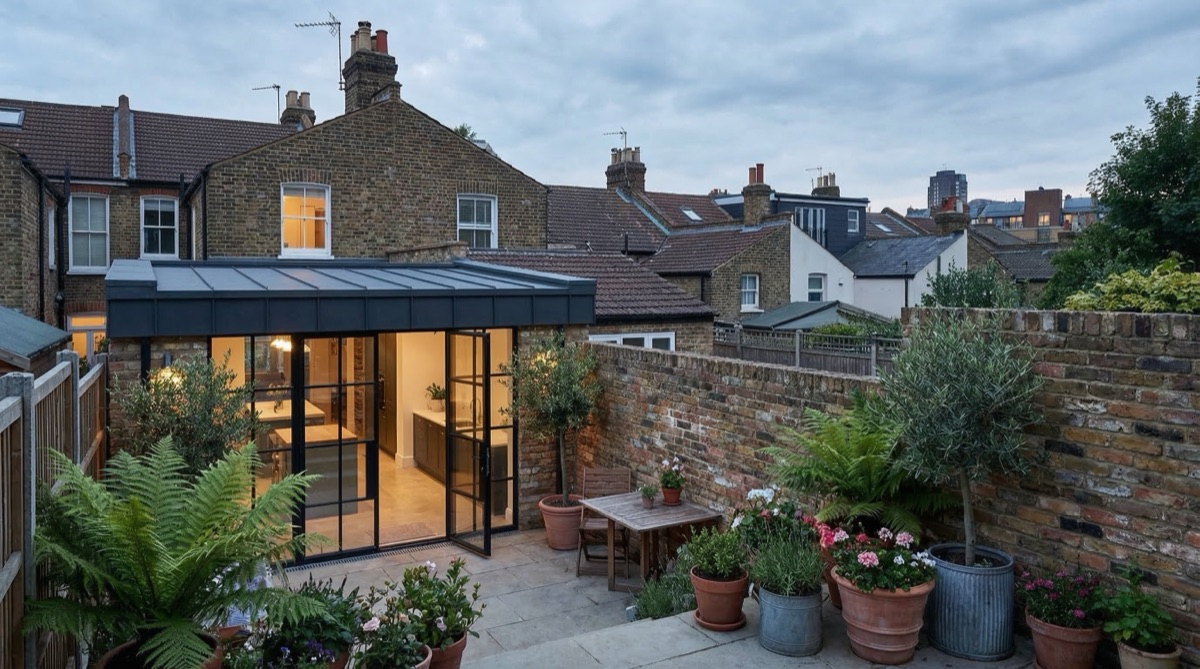
Modest Rear Extensions: Most terraced properties can accommodate rear extensions without party wall implications if kept to modest dimensions. Extensions up to 3-4 metres typically don't require party wall procedures under certain circumstances, though individual assessments are essential. These dimensions create valuable open-plan kitchen-diner spaces, significantly enhancing ground-floor living.
Larger Rear Extensions: Larger rear extensions (4-6 metres or deeper) typically involve party wall procedures. While this requires surveyor involvement and delays, most neighbors accept straightforward rear extensions generating minimal impact. Professional party wall management ensures compliance and fair procedures.
Narrow Multi-Level Extensions: Some terraced properties benefit from narrow rear extensions working upward. Creating single storey with first-floor extension above creates substantial space additions within tight footprints. These designs optimize available depth while minimizing party wall impact.
Party Wall Procedures for Terraced Properties
Notification Requirements: Extensions affecting party walls require formal notification to neighboring properties. Surveyors appointed from each side meet, assess impacts, and prepare awards documenting the work and any protections required. This process typically takes 2-3 months but is essential for compliance.
Protective Works: Party wall procedures may require protective measures including: temporary propping or underpinning, careful temporary support of neighboring structures, protection of neighboring structural elements, and sometimes remedial works if existing damage exists. Professional surveyors ensure these requirements are met.
Damage Liability: Once party wall awards are issued, property owners are liable for any damage to neighboring properties, even if unforeseeable. Party wall insurance protects against unexpected damage liability. Understanding party wall implications helps you manage risk and plan appropriately.
Building Regulations Challenges in Terraced Houses
Structural Assessment: Terraced house extensions require structural engineers to assess existing walls' capacity to support new loads. Many Victorian and Edwardian terraced walls have sufficient capacity for modest extensions, but assessment is essential. Some older properties require structural modifications (underpinning, reinforcement) to support extensions safely.
Fire Safety: Building regulations require fire safety means of escape. In terraced properties, extensions must not compromise primary escape routes. Careful planning ensures extensions maintain adequate egress while adding living space. First-floor extensions must incorporate additional exits or windows suitable for emergency escape.
Ventilation and Air Quality: Modern building regulations require mechanical ventilation with heat recovery in many cases. In terraced properties with existing poor ventilation, extensions trigger requirements to improve overall ventilation standards. Professional HVAC design ensures compliant, comfortable solutions.
Thermal Insulation and Energy Performance
Building Regulations Requirements: Extensions must meet current thermal performance standards. In terraced properties, this includes ensuring adequate external insulation in exposed walls, particularly in northern exposures. Proper thermal design prevents discomfort and excessive heating costs. Extensions provide opportunities to upgrade overall house thermal performance, reducing energy consumption despite adding floor area.
Cold Bridging Prevention: Careful detailing at junctions between old and new structures prevents cold bridging (thermal paths conducting cold into the house). Professional design eliminates cold bridges creating surface condensation and mold. This detail-level thinking distinguishes quality from poor extensions.
Loft Conversions in Terraced Houses
Significant Space Addition: Many terraced houses have loft space suitable for conversion. Converting roof spaces to bedrooms adds valuable accommodation without affecting ground-floor living areas or outdoor space. Loft conversions typically cost 30-40% less than ground-level extensions while adding useful space.
Dormer Design: Terraced house dormers must respect street appearance and neighboring properties' rights to light. Rear dormers work well as they're not street-visible. Side dormers facing streets require careful design respecting local character. Well-designed dormers can enhance street appeal while providing useful internal space.
Staircase Space: Accessing loft conversions requires staircases consuming significant space. Some terraced houses lack sufficient space without compromising ground-floor functionality. Professional assessment clarifies what's achievable in your specific property.
Garage Conversions
Underutilized Potential: Many terraced properties have garage structures (either integral to the house or detached in rear gardens) rarely used for cars. Converting garages to additional living space makes excellent use of existing structures. Integral garages convert to ground-floor rooms, creating instant new spaces. Detached garages can become studios, home offices, or guest accommodations.
Minimal Party Wall Impact: Most garage conversions don't significantly affect party walls if no structural modifications occur to party wall elements. However, if garage side walls are party walls, professional assessment clarifies requirements.
Cost-Effective Option: Garage conversions typically cost £25,000-£45,000, making them cost-effective space increases compared to building new rear extensions costing £50,000+.
Side Passage Utilization
Rare Side Extension Potential: While most terraced properties lack sufficient side space for extensions, some benefit from converting side passage spaces to add width. This only works in properties with unusually wide side passages, which are uncommon in London terraced housing.
Access Improvements: More commonly, side passages can be improved by: widening existing gates to improve bicycle/garden equipment access, covering passages to create protected routes, or creating narrow utility spaces. These improvements enhance functionality without full side extensions.
Basement Excavation
Ambitious Space Creation: Some London terraced owners pursue basement excavations creating substantial new spaces. While architecturally ambitious, basements in terraced properties present significant challenges: party wall involvement on multiple boundaries, groundwater management, structural concerns, and substantial costs (£150,000-£300,000+). Basements are options only for exceptionally committed owners with sufficient budgets and tolerance for disruption.
Professional Assessment Essential: Basement projects require specialist design and ground investigation. Poor basement design creates damp, groundwater, and structural problems. Only engage specialists with proven basement experience in London's specific ground conditions.
Planning Considerations for Terraced Extensions
Conservation Area Constraints: Many London terraced properties are in conservation areas requiring heightened heritage protection. Extensions must respect area character, local materials, and design language. Design sensitivity becomes particularly important in conservation-protected neighborhoods.
Overlooking and Privacy: Terraced houses have close neighbor relationships. Extensions must not create overlooking issues or excessive private space loss for neighbors. Careful window placement, strategic screening, and respectful design minimize neighbor impacts.
Overshadowing Concerns: Planning authorities assess whether extensions create excessive shadow on neighboring gardens. Careful positioning and height control ensure extensions don't overshadow neighbor properties creating loss of light.
Recommended Extension Strategies for Terraced Houses
Modest Rear Extension: 3-4 metre single storey rear extension creating open-plan kitchen-diner. Costs typically £35,000-£50,000 with excellent value return. This represents the most common terraced extension type.
Rear Extension Plus Loft Conversion: Combining rear extension with loft conversion creates substantial space increase. Costs typically £80,000-£120,000. This comprehensive approach maximizes space potential in constrained plots.
Garage Conversion Plus Rear Extension: Converting existing garage while adding rear extension creates multiple new spaces. Costs typically £60,000-£100,000 depending on garage size and rear extension scope.
Rear Extension with First-Floor Addition: Creating rear extension with first-floor room above maximizes depth constraints. Costs typically £100,000-£150,000. This approach works in properties with sufficient depth tolerance.
Getting Started with Your Terraced Extension
Terraced house extensions are certainly possible despite constraints. Begin by engaging experienced architects or surveyors familiar with terraced properties in your specific neighborhood. They understand local planning policies, typical structural considerations, and proven design approaches. Professional guidance ensures your extension approach is realistic, compliant, and likely to achieve planning approval. View party wall procedures as standard project phases rather than barriers. With proper professional guidance and realistic expectations, terraced properties offer excellent extension opportunities.
Explore More House Extension Design Options
Related Articles
Comprehensive guide to house extension planning permission in 2024. Learn about costs, timelines, planning applications, and what to expect from professional house extension specialists.
Discover the key advantages of choosing professional house extension services. From cost savings to creative solutions, learn why specialists are essential for successful projects.
Complete guide to house extension costs in the UK. Learn about fee structures, budgeting tips, and how to get maximum value from your house extension investment.
Ready to Get Started?
Home Extensions Now Team
Our expert team of architectural design specialists brings decades of combined experience in UK house extension design and planning services for residential and commercial projects. We're committed to providing clear, actionable insights to help you make informed decisions about your home extension projects.
Ready to Plan Your Home Extension?
Whether you're planning a single-storey extension, renovation project, or complete home redesign, our house extension design solutions can help you build quickly and confidently.