Extension Design for Aging in Place: Accessibility and Future-Proofing
Design extensions that accommodate aging in place. Learn about accessibility features, universal design, and how to create spaces suitable for changing abilities.
Designing Extensions for Aging in Place
Designing extensions with aging in place principles ensures your home remains comfortable and functional throughout changing life stages. Universal design creates spaces that work well for people of all ages and abilities, not just those with current disabilities. This forward-thinking approach adds minimal cost while maximizing long-term functionality and property appeal. This guide explores accessibility considerations, universal design principles, and specific features that support aging in place while enhancing usability for all occupants.
Universal Design Principles
Universal design creates spaces usable by people of all ages and abilities without requiring special modification. Principles include: equitable use (designs work equally well for all users), flexibility (designs accommodate individual preferences and abilities), intuitive use (designs are easy to understand without special instruction), perceptible information (essential information is communicated in multiple ways), tolerance for error (designs minimize hazards and consequences of accidental errors), low physical effort (designs can be used efficiently and comfortably without fatigue), and appropriate size and space (appropriate dimensions allow comfortable access and use).
Universal design benefits everyone. Wider doorways, level transitions, and accessible storage help people with mobility aids but also benefit parents with strollers, delivery workers with equipment, and people carrying items. Bright lighting and clear visual contrast help people with poor vision but also improve everyone's safety. Universal design isn't specialized design for disabled people — it's good design that works well for everyone.
Accessible Entrances and Transitions
Level Access: Level transitions between indoor and outdoor spaces eliminate trip hazards and allow easy access for wheeled aids (walkers, wheelchairs, mobility scooters). If achieving completely level access is impossible due to ground slopes, gentle ramps (no steeper than 1:12 ratio, ideally 1:20) are preferable to steps. Flush thresholds at extension doorways eliminate trip hazards and create seamless indoor-outdoor flow.
Doorway Width: Standard doorways (775mm) work for most people but can be tight for people with mobility aids. Wider doorways (850mm+) provide comfortable access for wheelchairs and walkers without requiring modification. During extension design, specifying wider doorways costs nothing additional and provides significant accessibility benefit.
Accessible Pathways: Paths to extension entrances should be smooth, well-lit, and slip-resistant. Gravel or uneven surfaces are hazardous for people with mobility limitations. Seating areas at intervals provide rest points for people with limited mobility.
Kitchen Accessibility
Counter Height Flexibility: Standard kitchen counters (900mm) work for most people but are uncomfortable for people who are shorter, taller, or using mobility aids. Varying counter heights (850mm-950mm) or incorporating adjustable-height counters accommodates different users. Island counters with seating allow people to sit while preparing food, reducing fatigue for people with limited standing tolerance.
Accessible Storage: Storage at heights between 400-1500mm is comfortably accessible to people of different abilities. Avoid high overhead cabinets requiring step stools, or provide pull-down systems allowing access without reaching. Accessible lower shelving (with space underneath for mobility aids) accommodates wheelchair users. Open shelving or glass-fronted cabinets make storage contents visible without opening every cabinet.
Appliance Placement: Placing frequently-used appliances at heights accessible to people with mobility aids (cooktop, oven, refrigerator) minimizes the need to reach or bend. Side-opening ovens allow access for people unable to bend deeply. Drawer-style dishwashers eliminate the need to bend deeply. Consider ease of use for people with different abilities.
Workspace and Clearance: Kitchen workspaces should include areas where someone using a wheelchair or walker can work comfortably. Clearance under counters (700mm minimum) allows knee space and wheelchair access. Wide knee space under sinks allows someone to sit and wash up. Open layouts minimize the need to navigate complex, cramped spaces.
Bathroom Accessibility
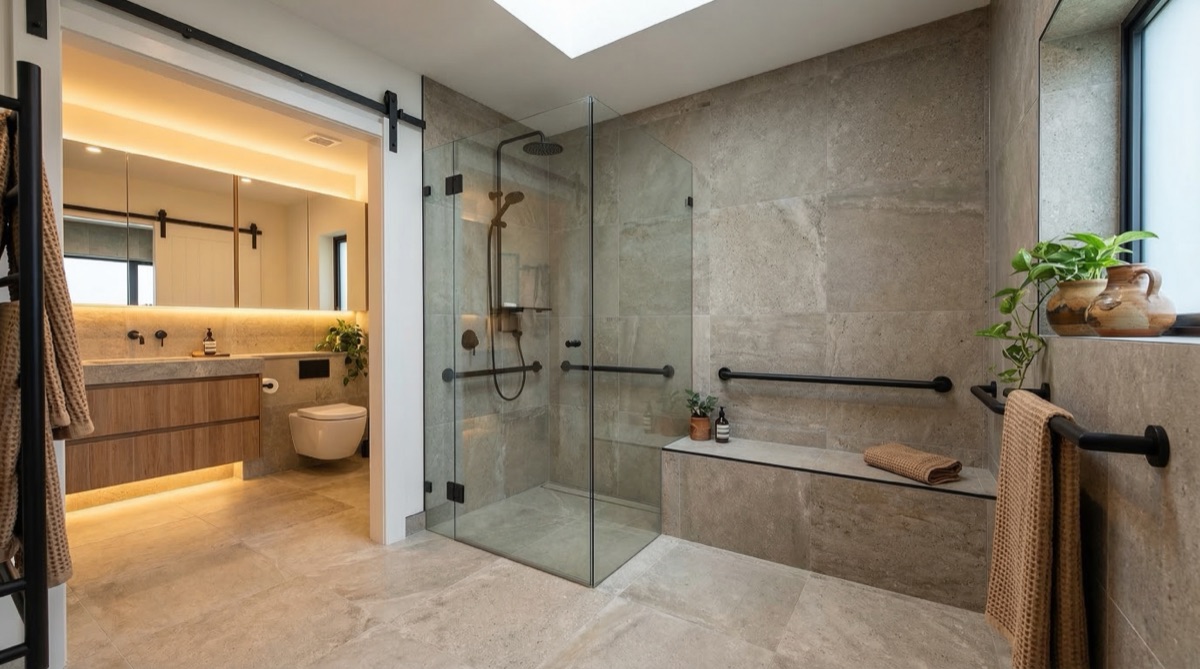
Accessible Showers: Walk-in showers with minimal curbs or ramped thresholds accommodate people with mobility limitations and reduce fall risk. Grab bars at strategic locations (near toilet, shower, tub) support safe movement. Contrasting-color grab bars improve visibility. Non-slip surfaces reduce slipping risk. Roll-in showers with accessible controls work for wheelchair users.
Toilet Accessibility: Standard toilets (400mm height) are uncomfortable for people with mobility limitations. Higher toilets (450mm) or raised seats improve accessibility. Grab bars beside toilets support safe transfer. Space beside toilets allows space for mobility aids or caregiver assistance.
Accessible Vanities: Knee space under sinks allows people using wheelchairs to use sinks comfortably. Wall-mounted sinks (rather than pedestal sinks) provide this space. Lever handles are easier to operate for people with limited hand strength or dexterity.
Lighting and Ventilation: Bright, even lighting improves safety and visibility. Automatic extraction ventilation removes moisture preventing condensation and mold. Heated bathroom floors improve comfort and safety (reduced need for slippery floor mats).
Bedroom Accessibility
Space and Circulation: Bedrooms should have adequate space to move around beds and access storage. Wide doorways allow beds and other furniture to be maneuvered into the room. Space around beds allows caregiver assistance. Avoid furniture arrangements that create tight, hazardous pathways.
Accessible Storage: Wardrobe storage at accessible heights (rather than high overhead) minimizes the need to climb or reach. Pull-down rails or accessible shelving make clothes easy to reach. Drawers with soft-close mechanisms prevent pinching and are easier to operate than traditional drawers.
Lighting Controls: Accessible light switches (at 1000-1200mm height, not too high or low) work for people with different abilities and reach ranges. Three-way switching (control from doorway and bed) accommodates different preferences. Dimmers allow lighting adjustment for comfort.
Living Space Accessibility
Clear Pathways: Furniture arrangement should maintain clear pathways through spaces. Adequate space (at least 900mm) allows people with mobility aids to navigate. Avoid creating cluttered, maze-like layouts that are difficult to navigate.
Seating Variety: Provide variety of seating heights and styles. Firmer, higher seats are easier for people with mobility limitations to get into and out of. Armrests provide support. Avoid deep, low seats that are difficult to rise from.
Vision Aids: Good lighting is essential. Avoid dark corners and glare from windows. Ensure TV viewing distances and heights are comfortable. Readable controls (large, high-contrast buttons) work for people with poor vision.
Flooring Choices
Slip Resistance: Smooth, slippery floors (polished concrete, glazed tile) increase fall risk. Choose slip-resistant finishes (matte tiles, textured stone, well-maintained timber). Avoid rugs that can create trip hazards — use non-slip matting if rugs are essential.
Thermal Comfort: Hard floors (tile, stone, concrete) are cold underfoot. Underfloor heating improves comfort and supports foot health in cold months. Warm carpets in bedrooms improve comfort.
Sound Quality: Hard floors reflect sound creating excessive noise. Soft flooring (carpet, cork) in bedrooms and living areas improves acoustic comfort. Good acoustics support quality of life, particularly for people with hearing difficulties.
Lighting Design
Adequate Levels: Good lighting is essential for safety and usability. Pathways, stairs (if any), and work areas should have adequate illumination. Layered lighting (general, task, and accent) provides flexibility. Nightlights on pathways improve safety during nighttime navigation.
Glare Reduction: Avoid glossy surfaces and direct bright light causing glare. Use matte finishes and soften light through diffusers. Proper lighting improves visibility while reducing discomfort.
Light Quality: Good color rendering (ability to see colors accurately) and flicker-free lighting improve visibility and reduce eye strain. LED lighting (warm white 2700K-3000K) provides efficient, quality lighting suitable for all ages.
Climate Control and Comfort
Temperature Regulation: Extensions should maintain comfortable temperatures year-round. Adequate insulation and heating/cooling systems are essential. Zone control allowing different areas to be maintained at different temperatures accommodates individual preferences.
Humidity Control: Excessive humidity promotes mold and dust mites (problematic for respiratory health). Ventilation systems maintain appropriate humidity. Dehumidification in bathrooms prevents condensation.
Air Quality: Fresh air ventilation maintains good air quality. MVHR systems provide fresh air while recovering heat. Air purification removes allergens and particulates supporting respiratory health.
Technology and Smart Controls
Accessible Controls: Light switches, thermostats, and other controls should be at accessible heights (1000-1200mm) with large, high-contrast buttons. Avoid small, hard-to-grip controls. Voice-activated or remote controls provide alternatives for people with mobility limitations.
Smart Home Systems: Automated lighting, heating, and window controls allow adjustment without physical manipulation. Voice-controlled systems accommodate people with limited dexterity. Remote monitoring allows family to check on aging relatives' safety and comfort.
Cost Implications
Incorporating accessibility and universal design features typically adds 2-5% to construction costs but provides substantial long-term value. Most features cost little or nothing (wider doorways, level access, adequate lighting) when incorporated during design. Specialized features (grab bars, accessible bathrooms, specialized kitchens) cost more but deliver significant quality-of-life improvements. The alternative — modifying homes later when needs change — is much more disruptive and expensive.
Future Flexibility
Even with good aging-in-place design, some features may need modification as circumstances change. Designing for future flexibility (robust structures allowing equipment installation, spaces allowing furniture rearrangement, systems allowing controls relocation) future-proofs against changing needs without requiring renovation.
Explore More House Extension Design Options
Related Articles
Comprehensive guide to house extension planning permission in 2024. Learn about costs, timelines, planning applications, and what to expect from professional house extension specialists.
Discover the key advantages of choosing professional house extension services. From cost savings to creative solutions, learn why specialists are essential for successful projects.
Complete guide to house extension costs in the UK. Learn about fee structures, budgeting tips, and how to get maximum value from your house extension investment.
Ready to Get Started?
Home Extensions Now Team
Our expert team of architectural design specialists brings decades of combined experience in UK house extension design and planning services for residential and commercial projects. We're committed to providing clear, actionable insights to help you make informed decisions about your home extension projects.
Ready to Plan Your Home Extension?
Whether you're planning a single-storey extension, renovation project, or complete home redesign, our house extension design solutions can help you build quickly and confidently.