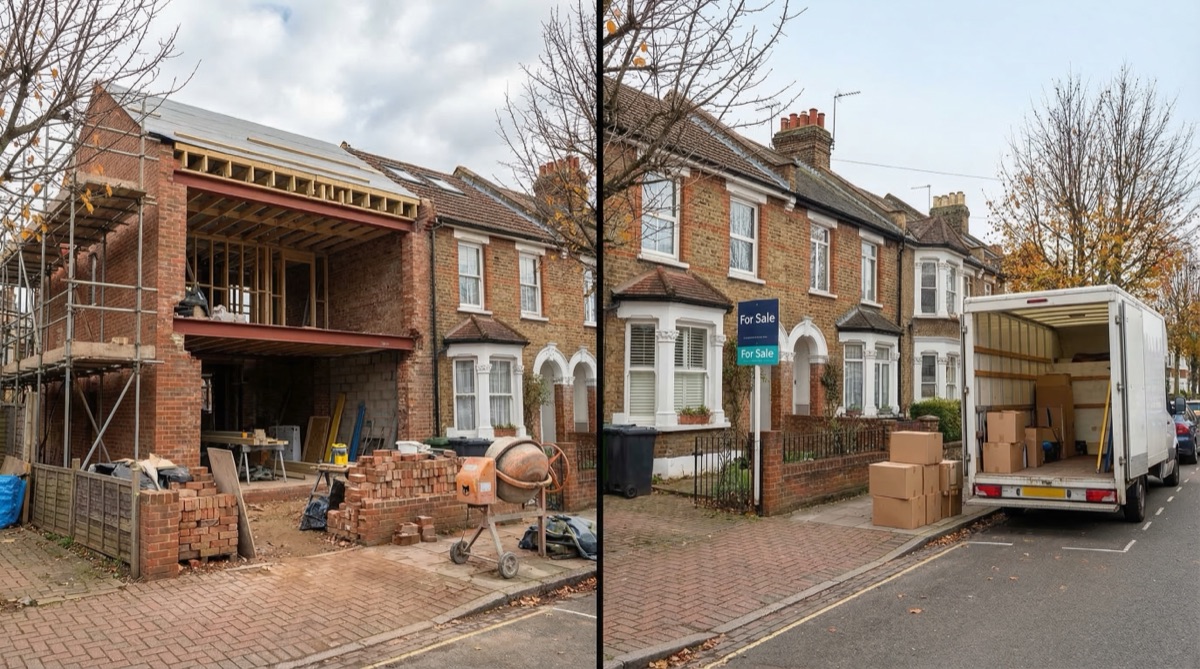
Extension vs Moving House: Cost Comparison for London Homeowners
Comparing house extension costs against moving house costs in London. Analyze financial implications, hidden costs, and help decide which option makes sense for your situation.
House Extension vs Moving House: London Financial Analysis
Many London homeowners facing space constraints contemplate two fundamental options: extend their current property or move to a larger home. Both approaches involve substantial investments and significant lifestyle disruption. This comprehensive financial analysis compares true costs of each approach, explores hidden expenses often overlooked, and provides frameworks for making this consequential decision. Understanding both options' complete financial implications helps you make informed decisions aligned with your circumstances and priorities.
House Extension Costs: Complete Breakdown
Construction Costs: Building new space typically costs £2,000-£3,500 per square metre in London, depending on quality level and complexity. A modest 25 square metre extension costing £50,000-£87,500 represents the minimum viable investment. Larger extensions or those involving structural complexity cost more per square metre.
Design and Planning Fees: Professional architectural services typically cost 8-15% of construction costs. For a £70,000 extension, design fees typically range £5,600-£10,500. These fees cover concept design, detailed design, planning applications, and building regulations submissions. Quality design prevents expensive construction problems and increases approval likelihood.
Party Wall Costs: If your extension affects party walls (common in London terraced and semi-detached properties), party wall surveyors cost £1,500-£3,500 depending on complexity. While this seems modest, party wall procedures also delay projects by 2-4 months.
Building Regulations and Approvals: Building control submission, assessment, and approval typically cost £300-£800. This is separate from local authority planning application fees (typically £150-£500 depending on extension size).
Structural Engineering (if required): Some extensions require specialist structural engineer assessment, costing £800-£2,500. Double storey extensions, those affecting party walls structurally, or those on unusual properties typically require engineering input.
Project Management and Supervision: Many specialists offer project management services overseeing construction, costing 5-10% of construction costs. A £70,000 project might involve £3,500-£7,000 in project management. This cost is optional but reduces risk of construction problems.
Total Extension Cost: £70,000 construction + £7,000-£10,500 design + £1,500-£3,500 party wall + £3,500-£7,000 project management + £1,100-£3,300 other fees = £83,100-£124,300 typical total project cost.
Contingency for Surprises: Experienced homeowners typically budget 10-15% contingency for unexpected issues discovered during construction. A £70,000 construction budget should include £7,000-£10,500 contingency reserve. This contingency frequently gets used for unforeseen structural issues, existing damage discovered during work, or design modifications.
House Moving Costs: Complete Breakdown
Estate Agent Fees: Selling your current London property typically involves 1-2% agent fees. For an £800,000 London property, agent fees typically range £8,000-£16,000. This is substantial and represents 7% of extension costs even before considering other expenses.
Mortgage Broker and Legal Fees: Buying your new property involves legal fees (£800-£1,500), mortgage arrangement fees (typically £500-£1,500), and potentially mortgage broker fees. Total estimated £2,000-£4,000.
Stamp Duty (Purchase Tax): This is the largest hidden cost many homeowners underestimate. London property purchases trigger stamp duty: properties £250,000-£500,000 pay 5%, properties £500,000-£1,000,000 pay 10%, properties over £1,000,000 pay 12-15%. For an £800,000 London home, stamp duty alone is approximately £60,000 (5% on first £500,000 plus 10% on remaining £300,000). Stamp duty alone exceeds most extension costs!
Surveyor and Valuations: Buying property requires surveyor assessment (£500-£1,500), mortgage valuation (£200-£500), and potentially specialist surveys for older properties. Total typically £1,200-£3,000.
Removal and Relocation Costs: Professional moving companies in London typically charge £3,000-£8,000 depending on property size and distance. Some homeowners move during school year when costs are premium (£6,000-£12,000). Additional moving costs include temporary accommodation if properties don't align in timing.
Temporary Accommodation Overlap: Moving often creates timing gaps between selling current property and purchasing new property. Temporary accommodation costs (£2,000-£5,000) or extended stays in family properties add to total moving expenses.
Property Improvements and Decoration: New properties often require redecoration, updates, or alterations to your preferences. Refreshing decoration and essential improvements typically costs £10,000-£30,000 for moderate properties, even if the property is in good condition.
Council Tax Changes: Moving properties may place you in different council tax bands with ongoing costs increasing by £100-£500 annually depending on the band change.
Total Moving Cost: £8,000-£16,000 agents + £2,000-£4,000 legal/mortgage + £60,000 stamp duty + £1,200-£3,000 surveys + £3,000-£8,000 removals + £2,000-£5,000 temporary accommodation + £10,000-£30,000 improvements = £86,200-£66,000 minimum (this calculation shows moving typically costs £86,200-£146,000+ for London properties over £750,000, not including ongoing council tax increases).
Financial Analysis Summary
The Surprising Reality: House extension costs (£83,000-£124,000) are often comparable to or actually cheaper than moving costs (£86,000-£146,000+) in London's expensive property market. Stamp duty alone frequently exceeds entire extension budgets. The cost difference narrows dramatically when considering full moving expenses.
Beyond Pure Costs: Value Considerations
Property Value Return: Well-designed extensions typically increase property value by 70-90% of extension costs. A £70,000 extension might increase property value by £49,000-£63,000. This represents substantial return on investment, particularly if you stay in the property for 5+ years. Poor extensions, however, return only 20-50% of investment.
Avoidance of Moving Costs: Every pound saved on moving costs is a pound available for extension investment. The £60,000+ stamp duty alone could fund a substantial extension. This mathematical reality favors extension in many circumstances.
Maintaining Established Community: Extensions allow you to stay in established neighborhoods where you have friendships, family connections, and community roots. Moving requires establishing new social connections and community involvement. While non-financial, this factor weighs heavily for many homeowners.
School Continuity: For families with school-age children, moving often requires changing schools, disrupting educational continuity. Extending current properties maintains school stability, avoiding the transition stress of school changes.
When Moving Makes Financial Sense
Fundamental Incompatibility: If your current property fundamentally doesn't meet your needs and cannot be extended (e.g., your current home lacks suitable extension potential, or land constraints prevent adequate expansion), moving may be necessary despite costs.
Neighborhood Preference Change: If you want to move to different neighborhoods (better schools, shorter commutes, lifestyle changes), moving makes sense. Extension keeps you in current location permanently.
Current Property Price Appreciation: If your current property has appreciated dramatically (e.g., bought £600,000 now valued £900,000), moving to equivalent property with appreciation may not require moving to substantially larger home despite original property size constraints.
Emotional Preference for Fresh Start: For some homeowners, new properties feel appealing despite costs. Personal preference for fresh starts, unfamiliarity with existing structure, or desire for modern infrastructure can justify moving despite financial challenges.
When Extension Makes Financial Sense
Adequate Extension Potential: Properties with good extension potential (sufficient rear garden, manageable party walls, straightforward planning circumstances) make excellent extension candidates.
Fundamental Property Satisfaction: If you genuinely love your property, neighborhood, and community, extensions make excellent sense. Extension costs remain substantially lower than moving costs for equivalent space increase.
Long-Term Occupation Plans: If you plan to remain in your property 5+ years, extensions provide excellent long-term investment. Value return compounds if you remain in the property during extended holding periods.
Financial Constraint: Extension costs often remain below moving costs, making extensions more achievable financially for budget-conscious homeowners. A £70,000-£100,000 extension may be more achievable than £150,000-£200,000 moving costs.
Hybrid Approaches
Strategic Home Improvement Plus Extension: Some homeowners improve current properties strategically (kitchen upgrades, bathroom refreshing) while also adding extensions. This approach creates substantially transformed properties without moving costs. Total investments of £100,000-£150,000 can completely transform properties while remaining less than moving costs.
Staged Extensions: Some homeowners extend in phases: initial rear extension, later loft conversion, eventually double storey addition. Staged approach spreads costs over time, allows testing satisfaction with modifications before pursuing further investments, and maintains financial flexibility.
Decision Framework
Calculate your specific extension costs (using frameworks above). Calculate your specific moving costs including stamp duty. If costs are comparable (as they often are in London), strongly consider extension advantages: maintained community, school continuity, known property characteristics. Only if extension cannot solve fundamental space needs should moving be pursued. In London's expensive property market, extension economics often favor staying and improving rather than moving.
Recommendation
For most London homeowners, house extensions represent superior financial and lifestyle outcomes compared to moving. Extensions cost comparable amounts to moving while preserving established community, maintaining school continuity, and achieving known outcomes. Professional consultation with architects and financial advisors clarifies your specific circumstances and optimal approach. Don't assume moving is the obvious answer without calculating true total costs.
Explore More House Extension Design Options
Related Articles
Comprehensive guide to house extension planning permission in 2024. Learn about costs, timelines, planning applications, and what to expect from professional house extension specialists.
Discover the key advantages of choosing professional house extension services. From cost savings to creative solutions, learn why specialists are essential for successful projects.
Complete guide to house extension costs in the UK. Learn about fee structures, budgeting tips, and how to get maximum value from your house extension investment.
Ready to Get Started?
Home Extensions Now Team
Our expert team of architectural design specialists brings decades of combined experience in UK house extension design and planning services for residential and commercial projects. We're committed to providing clear, actionable insights to help you make informed decisions about your home extension projects.
Ready to Plan Your Home Extension?
Whether you're planning a single-storey extension, renovation project, or complete home redesign, our house extension design solutions can help you build quickly and confidently.