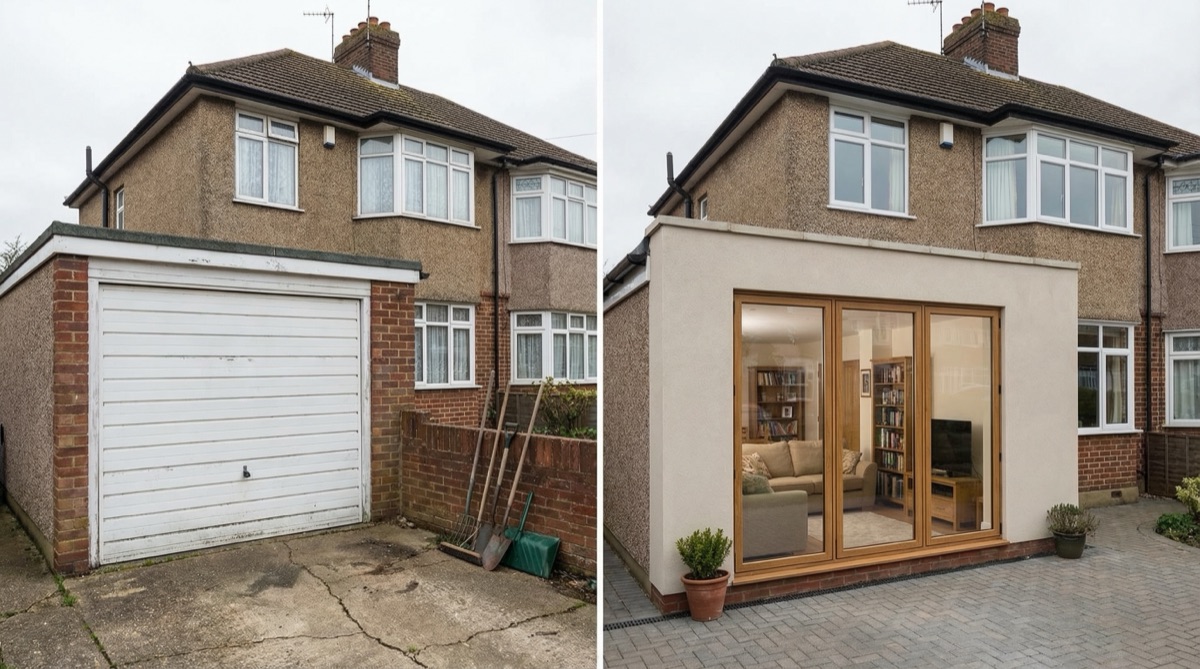
Garage Conversion Guide: Transform Your Space in London
Complete guide to converting garages into valuable living space. Explore design options, building regulations, costs, and planning considerations for London properties.
Garage Conversion: Transform Unused Space into Living Area
Many London properties feature garages rarely used for cars, representing underutilized potential. Converting garages to home offices, playrooms, guest accommodations, or studios creates valuable living space at fraction of extension costs. This comprehensive guide explores garage conversion possibilities, building regulations requirements, planning considerations, cost structures, and design approaches ensuring successful conversions. Understanding garage conversion potential helps you identify underused space transformable into genuinely useful areas.
Assessing Your Garage for Conversion Viability
Location Considerations: Integral garages (attached to main house) convert easily to continuous living space. Detached garages convert to standalone studios or annexes. Semi-detached garages depend on party wall implications. Accessibility to main house matters; conversions distant from main entrances create isolated, less-usable spaces. Proximity to services (water, electricity, heating) affects conversion costs.
Size and Ceiling Height: Standard garages (approximately 3m x 6m) convert to modestly-sized rooms. Double garages (approximately 6m x 6m) create more generous spaces. Ceiling height affects usability; garages with minimum 2.4m ceilings provide adequate headroom. Conversion feasibility depends partly on whether garage proportions suit intended use.
Structural Soundness: Assess garage structural condition before committing to conversion. Walls must be sound for insulation and finishing work. Flat roofs require assessment for leaks or structural inadequacy. Concrete foundations must be dry and undamaged. Significant structural repairs may occur during conversion, adding unexpected costs.
Permitted Development and Planning Considerations
Generally Permitted Development: Most garage conversions to internal living space qualify for permitted development (no formal planning permission required) if no external changes occur. Removing garage doors and installing windows may trigger planning requirements in conservation areas or on listed properties. Professional planning confirmation is essential before assuming permitted development applicability.
Conservation Area Restrictions: Garage conversions in conservation areas require planning permission if visible external changes occur. Replacing garage doors with windows may require formal permission even in straightforward areas. Professional planning assessment clarifies requirements for your specific property.
Listed Building Constraints: Listed properties have minimal permitted development rights. Garage conversions require Listed Building Consent and planning permission for any modifications. Heritage requirements may prevent some conversion options or require sympathetic design approaches.
Building Regulations Requirements
Essential for All Conversions: Building regulations approval is required for all garage conversions regardless of planning permission status. Building regulations ensure converted spaces meet safety, thermal performance, and functional standards.
Key Compliance Areas: Structural safety and soundness. Fire safety and adequate emergency egress. Thermal insulation ensuring adequate heat retention. Moisture protection and damp prevention (critical for basement garages). Ventilation ensuring adequate air quality. Electrical and plumbing safety. Disabled access where required.
DPM (Damp Proof Membrane) Installation: Most garages lack damp proof membranes. Conversion requires installing moisture barriers preventing rising damp damaging new finishes. Concrete slab treatment is essential for ground-level garages. Moisture problems in converted garages result in expensive remedial work; proper initial damp prevention is essential.
Thermal Insulation and Energy Performance
Insulation Requirements: Converted spaces must meet current building regulations thermal performance standards. This requires: insulation in external walls, insulation in roofs, thermal breaking at edges, and appropriate ventilation. Proper insulation prevents uncomfortable spaces and excessive heating costs.
Service Integration: Conversions require extending heating, water, and electrical services to new spaces. Planning for service routes early prevents expensive retrofitting. Modern conversions integrate services efficiently and discretely.
Functional Design for Garage Conversions
Home Office Conversions: Garages convert well to home offices for remote workers or creative professionals. Requirements include: adequate electricity for computer equipment, good natural light if possible, acoustic treatment if sound isolation is important, climate control, and comfortable working environment. Home office conversions are relatively straightforward and highly functional.
Studio or Creative Space Conversions: Artists, musicians, or craftspeople find garage conversions ideal for studios. Good natural light, acoustic considerations, utility access, and adequate space for activities are priorities. Conversions can provide dedicated creative spaces separate from home distractions.
Guest Accommodation Conversions: Guest suites or annexes create flexible accommodation for visitors. Bedroom function requires: adequate space, natural light, appropriate heating, window for emergency egress, and ideally separate access creating autonomy. En-suite bathrooms are optional but enhance functionality and property appeal.
Playroom or Recreation Space: Family spaces for children's activities, music, or hobbies suit garage conversions. Robust finishes, good ventilation, and adequate electrical supply support active use. Playroom conversions are often simpler than formal rooms.
Cost Structure for Garage Conversions
Typical Costs: Standard garage conversions typically cost £25,000-£45,000 depending on size, existing condition, and desired quality level. This is substantially less than extending (typically £2,000-£3,500 per square meter) due to existing structure utilization. Even for double garages creating 40 square meters, conversion costs (£40,000-£60,000) remain below equivalent extension costs (£80,000-£105,000).
Cost Breakdown: Structural work and existing condition remediation (£3,000-£8,000). Damp proof membrane and moisture management (£2,000-£5,000). Insulation installation (£2,000-£4,000). Services (electrical, plumbing, heating extension) (£5,000-£10,000). Windows and doors (£3,000-£6,000). Internal finishes and decoration (£5,000-£8,000). Bathroom fixtures (if installing bathroom) (£5,000-£12,000). Contingency for unexpected issues (10-15% of total).
Variable Costs: Existing condition significantly affects costs. Garages requiring significant structural work, extensive damp remediation, or services routing through difficult paths cost more than well-conditioned spaces. Finish quality (basic vs. premium) affects costs substantially.
Design Approaches for Successful Conversions
Preserving Natural Light: Converting closed garages to bright, cheerful spaces requires maximizing natural light. Replacing garage doors with windows, installing roof lights if possible, or extending windows creates bright spaces. Natural light dramatically improves appeal and usability.
Connection to Main House: Integrated design connecting conversions visually and functionally to main houses creates better overall aesthetics. Matching materials, consistent color schemes, and thoughtful transitions between old and new create harmonious results. Conversions feeling grafted-on or separated diminish overall property appeal.
Finishes and Quality: Quality finishes elevate conversions from basic utility spaces to appealing living areas. Quality materials, professional decoration, and thoughtful detailing create spaces guests and family genuinely enjoy. Budget constraints may require phased finishes, with essential work completed first and enhancement completed later.
Detached Garage Conversion to Studio or Annexe
Advantages: Detached garages in rear gardens offer private studio or annexe potential. Creating independent spaces supports home offices, guest accommodation, art studios, or rental potential. Conversion and appropriate finishing may allow rental generating additional income.
Services and Connections: Detached conversions require extending water, electricity, and heating to garage locations. Service routing affects costs; conversions near existing utility paths cost less than those requiring long service runs. Proper design minimizes service extension costs.
Access and Privacy: Detached studios benefit from direct external access, creating privacy and autonomy. Conversions within sight of main windows create visual connection; conversions obscured by landscaping feel separate and private.
Quality Control and Professional Guidance
Professional Oversight Essential: Successful conversions require professional guidance ensuring building regulations compliance, structural soundness, and appropriate design. Architects or building surveyors familiar with conversions ensure quality outcomes avoiding problems.
Building Control Inspection: Building control inspections at defined stages ensure compliance throughout conversion. Issues identified during inspection can be corrected promptly; issues discovered after completion are expensive to remediate. Professional oversight prevents problems.
Warranty and Completion Certificates: Ensuring building completion certificates are issued confirms compliance with all regulations. Completion certificates are essential for future property sales or insurance purposes.
Maximizing Conversion Value
ROI Advantages: Garage conversions typically recover 70-85% of costs in property value increases. A £40,000 conversion might increase property value by £28,000-£34,000. This ROI is comparable to or better than many extension types despite lower absolute cost.
Property Appeal Enhancement: Conversions creating valuable bedrooms, home offices, or guest spaces increase property appeal. Buyers recognize conversion utility and value additional space.
Getting Started: Conversion Checklist
Assess existing garage condition and conversion viability. Determine intended conversion purpose (office, guest space, studio, etc.). Confirm planning and building regulations requirements with professional advisors. Obtain detailed quotations from experienced conversion specialists. Plan service extensions and routes. Design conversion approach maximizing functionality and aesthetic appeal. Secure contractor and commence work. Maintain building control engagement throughout conversion. Complete final finishes and obtain completion certificates. Garage conversions transform underused spaces into valuable living areas. With thoughtful design and professional oversight, conversions enhance both daily living and property value substantially.
Explore More House Extension Design Options
Related Articles
Comprehensive guide to house extension planning permission in 2024. Learn about costs, timelines, planning applications, and what to expect from professional house extension specialists.
Discover the key advantages of choosing professional house extension services. From cost savings to creative solutions, learn why specialists are essential for successful projects.
Complete guide to house extension costs in the UK. Learn about fee structures, budgeting tips, and how to get maximum value from your house extension investment.
Ready to Get Started?
Home Extensions Now Team
Our expert team of architectural design specialists brings decades of combined experience in UK house extension design and planning services for residential and commercial projects. We're committed to providing clear, actionable insights to help you make informed decisions about your home extension projects.
Ready to Plan Your Home Extension?
Whether you're planning a single-storey extension, renovation project, or complete home redesign, our house extension design solutions can help you build quickly and confidently.