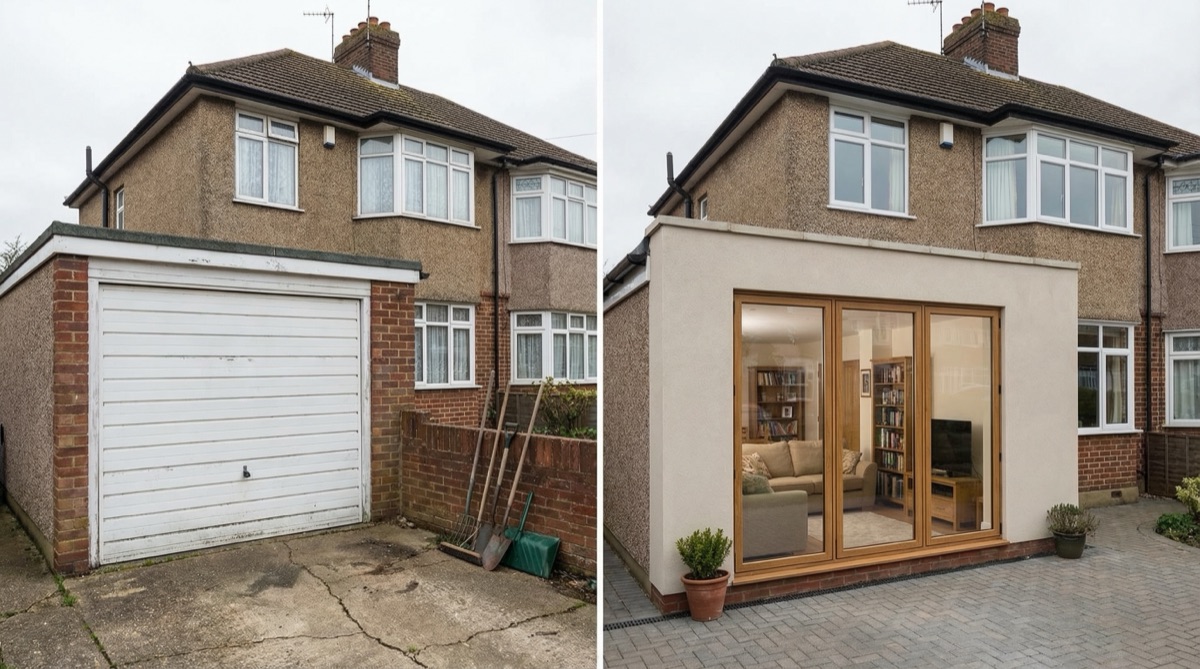
Converting Your Garage: Space, Planning and Building Solutions
Convert your garage into usable space. Learn about planning permissions, structural modifications, ventilation, and turning wasted garage space into valuable living area.
Garage Conversion Guide
Most garages remain underutilized for their primary purpose while valuable living space is lacking. Garage conversions offer cost-effective space expansion, typically costing £15,000-35,000 and avoiding the need to expand the building footprint. A 20sqm garage conversion typically costs 30-40% less than building an equivalent extension, making it excellent value. This comprehensive guide explores conversion options, planning requirements, structural work, and how to create attractive, functional space from your garage.
Common Garage Conversion Options
Home Office: Converting garage to home office creates dedicated workspace costing less than building a new extension. Garage dimensions often suit office layouts. Ensure good insulation, heating, lighting, and ventilation for comfortable year-round working.
Guest Bedroom: Garage conversions create practical guest bedrooms. Ensure adequate ventilation, heating, and natural light (add windows if necessary). Ground floor locations are preferable for guest convenience.
Studio or Creative Space: Artists, musicians, and craftspeople often use garage conversions for studios. Space for equipment and materials, and sound insulation for music practice, benefit from dedicated converted space.
Gym or Fitness Space: Garage conversions suit fitness spaces with space for equipment and exercise. Ensure adequate flooring for impact-absorbing properties and ventilation for air quality.
Games or Recreation Room: Family entertainment spaces, snooker rooms, or home cinemas suit garage conversions. Space, controlled lighting, and dedicated use make these ideal applications.
Storage with Utility: Rather than complete conversion, some garages become garden storage, laundry rooms, or utility areas. Partial conversions maintain some vehicle parking while providing useful space.
Planning Permission Considerations
Permitted Development: Most residential garage conversions fall within permitted development rights, avoiding the need for formal planning permission. However, this depends on various factors: the property type, whether it's integral or detached, and whether it's a listed building or in a conservation area. Permitted development status must be confirmed before work starts — planning authorities can confirm in writing.
Conservation Areas and Listed Buildings: If your property is in a conservation area or is listed, most external modifications (including new windows) require planning permission. Internal conversions with no external changes may avoid permission, but confirm with planning authorities before proceeding.
Building Regulations: All garage conversions must comply with building regulations. Key requirements include: insulation meeting current standards, ventilation for indoor air quality, fire safety provisions, and structural safety for any modifications.
Structural Modifications
Removing Garage Doors: Most conversions involve removing the garage door and infilling the opening. This creates new wall, windows, and doors creating the connection to the rest of the house or new external access. Structural design ensures the opening is properly infilled and structurally sound.
Wall Removal: Some conversions remove walls between garage and house creating open-plan space. Load-bearing walls require structural beams allowing removal. Structural engineers design beams supporting loads previously carried by the removed wall. This work is straightforward but requires structural design and building control sign-off.
Roof/Ceiling Modifications: If you need height, removing the existing garage ceiling and accessing the roof space creates volume. However, this exposes you to the roof structure and may affect loft conversion options. Most garage conversions retain existing ceiling height, which is typically adequate (2.4-2.7m).
Thermal Performance and Insulation
Insulation Standards: Garage conversions must meet current building regulations insulation standards (approximately 0.15 W/m²K U-value). This typically requires adding 100-150mm insulation to external walls and roof. Proper insulation is essential for comfort and energy efficiency.
Ground Floor Insulation: Most garage floors (concrete slabs) require insulation to prevent cold floors. Options include: adding insulation under the slab (during reconstruction), adding insulation on top of the slab (with flooring over), or installing underfloor heating eliminating the discomfort of cold concrete floors.
Thermal Bridging: Garage structures often have exposed concrete, metal, or other thermally conductive materials. Detailed design minimizes thermal bridges. Insulation over structural elements, thermally broken connections, and careful detailing maintain thermal performance.
Ventilation and Indoor Air Quality
Fresh Air Supply: Building regulations require minimum fresh air supply rates. Garages (previously used for vehicles and equipment) may have been inadequately ventilated. Conversion must provide adequate ventilation. Options include: natural ventilation (openable windows), mechanical ventilation (fans extracting air), or mechanical ventilation with heat recovery (MVHR) recovering heat from extract air.
Extract Ventilation: If the converted space is a bedroom, en-suite bathroom, or contains kitchenette, dedicated extraction may be required. Size extract systems appropriately for occupancy and moisture generation.
Air Quality Improvements: Many garages are adjacent to vehicle parking or traffic areas. Converting to residential use may benefit from improved ventilation removing outdoor air pollution. Good ventilation supports long-term health.
Heating and Climate Control
Heating Supply: Garage conversions need adequate heating. Options include: extending existing heating system with new radiators (usually simplest), underfloor heating, or dedicated space heating. Ensure heating capacity is adequate for winter comfort.
Zoning: If conversion will be used intermittently (guest room, office), consider thermostat control allowing the space to be independently heated, reducing whole-house heating costs when unoccupied.
Cooling: Most garages are not cooled. If conversion will be uncomfortable during summer heat, consider air conditioning or good ventilation with cross-flow design creating cooling breezes.
Lighting and Natural Light
Natural Light: Most garage conversions benefit from adding windows providing natural light and connection to outdoors. New windows require building regulations compliance and, depending on design, may require planning permission. Roof lights add light without compromising privacy if upper story isn't desired.
Task Lighting: Good artificial lighting is essential as garages often have minimal existing lighting. Add adequate electrical circuits supporting appliances and task lighting. LED lighting is efficient and provides quality illumination.
Flooring Options
Concrete Floors: Most garages have concrete slab floors. Options include: polish and seal the concrete (minimal cost, industrial look), apply self-leveling resin (smooth, durable finish), cover with tile or laminate (warm, comfortable), or add carpet (cozy but potentially trapping moisture). Underfloor heating makes concrete comfortable in winter.
Moisture Control: Concrete floors can trap moisture. If the ground beneath is wet or damp, add waterproof membrane beneath new flooring preventing moisture damage.
Partition and Access Considerations
Separation from House: Some conversions open directly into the house; others maintain separation through doors. Separation provides privacy and fire safety benefits. If opening to the house, ensure the connection is appropriately designed.
External Access: Some conversions maintain separate external access (doors/windows to exterior). Others lose external access. Consider whether external access is desirable for guest rooms or studios.
Fire Safety
Separation from House: If the converted space opens directly into the house, fire safety between garage and house must be maintained. Fire doors and smoke seals protect against fire spread.
Escape Routes: New bedrooms need appropriate escape routes. If the conversion is a bedroom with external access, escape via external door is straightforward. If escape is via the house, ensure adequate exits from the main building.
Electrical and Plumbing Work
Electrical Installation: Most garages have minimal electrical infrastructure. Conversions require adequate circuits for lighting and appliances. Electrical work must comply with building regulations and be installed by qualified electricians. Budget 10-15% of conversion cost for electrical work.
Plumbing: If the conversion includes en-suite bathroom or kitchenette, plumbing work is required. Proximity to existing plumbing affects costs. Remote conversions may require significant pipe runs increasing costs.
Cost Breakdown for Garage Conversions
Basic Conversion (20sqm office/bedroom): £15,000-25,000 including insulation, heating, lighting, flooring, and door infill. Budget finishes, minimal additions.
Standard Conversion (20sqm with bathroom): £25,000-40,000 including all above plus en-suite bathroom, plumbing, and mid-range finishes.
Premium Conversion (20sqm with high-end finishes): £40,000-55,000 with luxury finishes, high-end kitchen/bathroom, and integrated design.
Common Mistakes to Avoid
Inadequate Insulation: Garages converted without sufficient insulation remain cold and expensive to heat. Adequate insulation to current building standards is essential.
Poor Ventilation: Inadequate ventilation creates damp, condensation, and mold problems. Proper ventilation design is essential even in modest conversions.
Insufficient Heating: Heating capacity insufficient for conversion size creates uncomfortable spaces. Ensure heating system is properly sized.
Underestimating Costs: Many garage conversions cost more than initially budgeted due to structural work, plumbing, and electrical infrastructure requirements. Budget conservatively.
Maximizing Value from Your Garage Conversion
Well-executed garage conversions add property value (typically recovering 60-80% of investment) while providing immediate useful space. The key is thoughtful design creating attractive, functional spaces that serve your needs and appeal to future buyers.
Explore More House Extension Design Options
Related Articles
Comprehensive guide to house extension planning permission in 2024. Learn about costs, timelines, planning applications, and what to expect from professional house extension specialists.
Discover the key advantages of choosing professional house extension services. From cost savings to creative solutions, learn why specialists are essential for successful projects.
Complete guide to house extension costs in the UK. Learn about fee structures, budgeting tips, and how to get maximum value from your house extension investment.
Ready to Get Started?
Home Extensions Now Team
Our expert team of architectural design specialists brings decades of combined experience in UK house extension design and planning services for residential and commercial projects. We're committed to providing clear, actionable insights to help you make informed decisions about your home extension projects.
Ready to Plan Your Home Extension?
Whether you're planning a single-storey extension, renovation project, or complete home redesign, our house extension design solutions can help you build quickly and confidently.