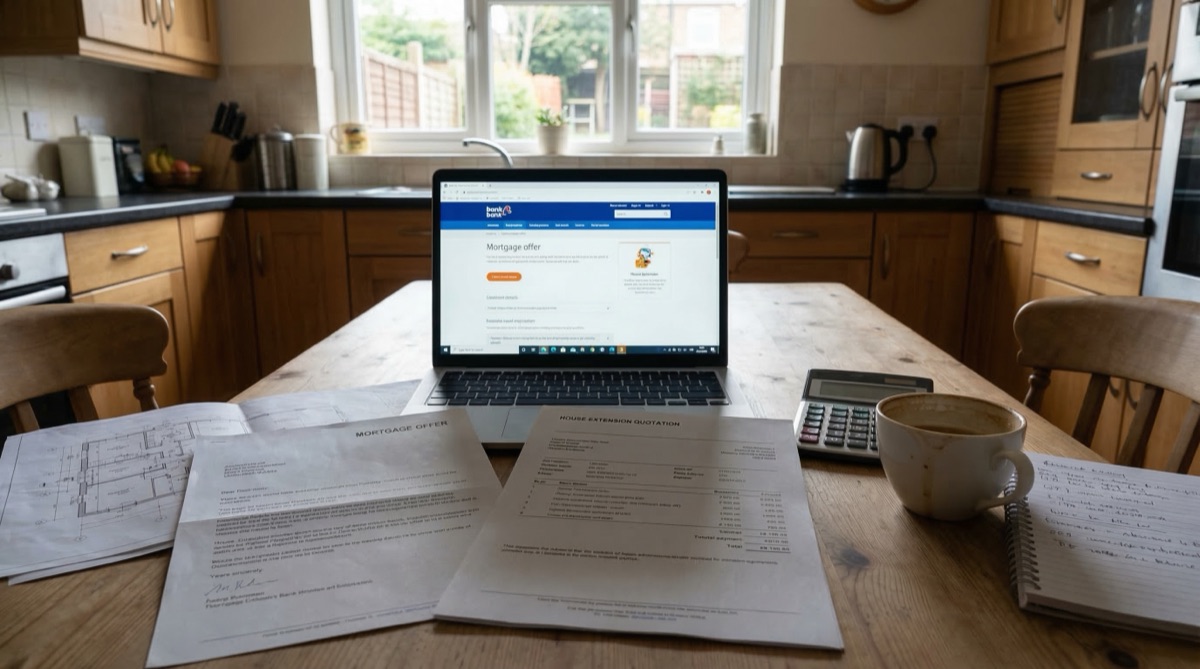
House Extension Financing Options UK: Loans and Strategies
Explore house extension financing options in the UK. Compare loans, mortgages, savings strategies, and how to minimize costs and manage payments affordably.
Financing House Extensions: UK Options and Strategies
Financing house extensions requires careful planning to ensure affordability while minimizing interest costs. This comprehensive guide explores available financing options in the UK, compares costs, and provides strategies for securing favorable terms and managing extension debt responsibly.
Available Financing Options in the UK
Home Improvement Loans: Unsecured personal loans designed for home projects, typically offering £5,000-50,000. Interest rates range from 4-8% depending on credit score and loan term. Monthly payments are straightforward with fixed terms. These suit smaller extensions without home security risks.
Home Equity Loans: Use your home's equity as security for borrowing, typically at better rates (4-6%) than unsecured loans. Borrowing typically available up to 80-90% of home equity. These suit larger extensions where significant borrowing is required.
Remortgaging: Refinance existing mortgage, borrowing additional funds at mortgage rates (typically 3-5%). Spreads costs over 20-25 year mortgage term. Total interest can be substantial but monthly payments are very manageable. Best for larger extensions where long-term cost is acceptable.
Savings: Using accumulated savings avoids interest costs but depletes emergency reserves. Many experts recommend maintaining 3-6 months emergency fund even when using savings for extensions.
Combination Approach: Many homeowners combine savings (20-30%) with borrowing (70-80%), balancing emergency reserves while minimizing total interest.
Comparing Financing Costs
For a typical £60,000 extension: home improvement loan at 6% over 7 years costs approximately £10,000 interest (monthly payment £964); home equity loan at 4% over 10 years costs £6,600 interest (monthly payment £640); remortgage at 4% over 20 years costs £29,000 interest (monthly payment £329). Analysis shows trade-offs: shorter terms and unsecured loans cost more per month but less total interest; longer terms and secured loans reduce monthly payments but increase total interest.
Improving Loan Rates
Credit Score Improvement: Higher credit scores qualify for better rates. Improve scores through: paying bills on time, reducing credit card debt, correcting credit file errors. Waiting 6-12 months to improve credit scores can save 1-2% in interest.
Larger Down Payment: Putting down 30-40% savings reduces borrowing and improves approval odds. Lenders offer better rates on smaller borrowing amounts.
Competitive Shopping: Rates vary significantly between lenders. Comparing 10+ lenders can reveal 1-2% rate differences. Using loan comparison websites and contacting lenders directly ensures competitive quotes.
Fixed Rate Terms: Fixed rates protect against interest rate increases. While rates may slightly exceed variable rates, certainty of payments supports planning.
Phased Extension Funding
Some homeowners finance extensions in phases, spreading costs over time. Phase 1 might deliver basic shell (£30,000) funded immediately. Phase 2 (2-3 years later) adds premium finishes and systems (£20,000). Phased approach spreads financing needs and allows adjusting second phase based on first phase outcomes.
Government Support and Schemes
Government-backed schemes for energy-efficient improvements (such as eco loans) offer favorable rates for extensions incorporating renewable energy or high-performance insulation. Criteria are strict and schemes change regularly, but eligible projects qualify for advantageous financing.
Protecting Your Financial Position
Maintain Emergency Reserves: Ensure you retain 3-6 months emergency expenses even after extension financing. Financial vulnerability from depleted reserves creates stress if circumstances change.
Conservative Payment Planning: Ensure monthly loan payments don't exceed 20-25% of household income after fixed expenses. Conservative planning protects against hardship if income decreases.
Protect Against Interest Rate Rises: If considering variable-rate borrowing, ensure you could afford payments if rates rise 2-3%. Fixed-rate options provide certainty.
Extension Financing and Property Value
Extensions typically increase property value by 70-100% of project cost. A £80,000 extension might increase value by £80,000-100,000. This value uplift means extension financing is investment in property rather than pure expense. Homes with quality extensions command higher selling prices relative to comparable properties without extensions.
Risk Management in Extension Financing
Extension projects occasionally exceed budgets due to unexpected structural issues, ground conditions, or design changes. Conservative budgeting includes 10-15% contingency (beyond base cost) for unforeseen expenses. Building this cushion into financing plans prevents budget overruns creating financial stress.
Building Contractor Payment Terms
Standard building contracts specify payment terms: typically 20-30% upon commencement, 50-60% during construction (based on progress), final 10-20% upon completion. This protects both homeowner and builder. Conservative homeowners avoid paying excessive advance amounts and retain final payments ensuring work quality.
Long-Term Financial Perspective
Extension borrowing is typically viewed as investment in your property, justified by increased value and improved quality of life. Borrowing terms of 10-15 years are common and reasonable. The key is ensuring monthly payments fit comfortably within budgets without creating financial stress. Many homeowners pay off extension debt while still enjoying property value appreciation, making extensions sound long-term investments.
Specialist Extension Loan Products
Several UK lenders now offer specialized extension loans tailored to property improvement projects. These products typically offer: fixed interest rates 5-7%, flexible terms 5-15 years, borrowing £10,000-150,000, and streamlined applications specifically for home improvements. Specialist lenders understand extension projects and often move faster than traditional banks. They may accept larger loan amounts than standard personal loans and require less stringent credit requirements. Comparing specialist lenders alongside traditional banks often reveals better rates or terms suited to extension projects. These loans work particularly well for homeowners struggling to access traditional financing.
Using Property Equity for Extension Funding
Many London properties have accumulated significant equity through recent property appreciation. Using equity for extensions is often more cost-effective than other financing methods. For example, a property valued at £800,000 with £300,000 mortgage remaining has £500,000 available equity. Borrowing £60,000 against this equity (at 4% interest) costs far less than unsecured personal loans (6-8%). Equity-based borrowing spreads payments over longer terms (10-20 years), reducing monthly payments while keeping total costs manageable. Consult mortgage lenders about equity release options or consider refinancing mortgages to access lower rates while borrowing extension funds simultaneously.
Avoiding Common Financing Mistakes
Over-Extending Budgets: Borrowing too much creates monthly payment stress. Conservative budgeting limits borrowing to amounts easily manageable even if circumstances change slightly. Many homeowners regret taking on maximum possible borrowing when payments feel burdensome.
Ignoring Early Repayment Penalties: Some loans include early repayment charges if paid off before term end. Check loan terms carefully — if you plan to sell property or remortgage within 3-5 years, avoid loans with penalties.
Neglecting Insurance: Payment Protection Insurance (PPI) on loans protects against hardship if you lose income. Legitimate PPI (not the mis-sold products from previous years) can be sensible protection, particularly for primary earners in households dependent on single income.
Underestimating Total Costs: Factor in interest, fees, insurance, and contingency reserves when calculating total cost. Many homeowners underestimate total borrowing costs, leading to financial stress.
Extensions as Property Investment
Extensions funded through borrowing are investments in property assets, not pure expenses. A £70,000 extension funded through £60,000 borrowing (combined with £10,000 savings) might increase property value by £80,000-100,000. Over a 15-year loan period, the property value appreciation often exceeds total interest paid on the loan. This makes extensions sound financial investments where borrowing is justified by property value uplift. Properties with quality extensions command stronger market prices and attract broader buyer pools, making extensions investments with both practical (improved daily living) and financial (property appreciation) returns.
Government Green Home Grants and Funding
The government offers various grants and support schemes for extensions incorporating energy-efficient and renewable energy measures. These may include grants for heat pumps, solar panels, insulation upgrades, and electric vehicle charging infrastructure integrated into extensions. Grant programs change regularly, but eligible extensions with qualifying sustainability measures can receive partial funding assistance. Criteria typically include energy performance standards and require professional installation. Consulting a renewable energy specialist when planning extensions identifies available grants maximizing public funding contributions toward green improvements. Government support for sustainability makes energy-efficient extensions more financially attractive than standard construction.
Refinancing Strategies for Extensions
After extension completion, refinancing options may improve. For example, if you took a 5-year home equity loan at 5% for £60,000, after 2 years you might refinance remaining £48,000 into a remortgage at 4% over 15 years. This refinancing reduces remaining interest costs significantly. Monitor interest rate markets and refinancing opportunities — annual refinancing review might identify opportunities to reduce payments or shorten terms. However, refinancing involves costs (application fees, valuation, legal fees typically £500-1,500), so only refinance if interest savings exceed costs.
Explore More House Extension Design Options
Related Articles
Comprehensive guide to house extension planning permission in 2024. Learn about costs, timelines, planning applications, and what to expect from professional house extension specialists.
Discover the key advantages of choosing professional house extension services. From cost savings to creative solutions, learn why specialists are essential for successful projects.
Complete guide to house extension costs in the UK. Learn about fee structures, budgeting tips, and how to get maximum value from your house extension investment.
Ready to Get Started?
Home Extensions Now Team
Our expert team of architectural design specialists brings decades of combined experience in UK house extension design and planning services for residential and commercial projects. We're committed to providing clear, actionable insights to help you make informed decisions about your home extension projects.
Ready to Plan Your Home Extension?
Whether you're planning a single-storey extension, renovation project, or complete home redesign, our house extension design solutions can help you build quickly and confidently.