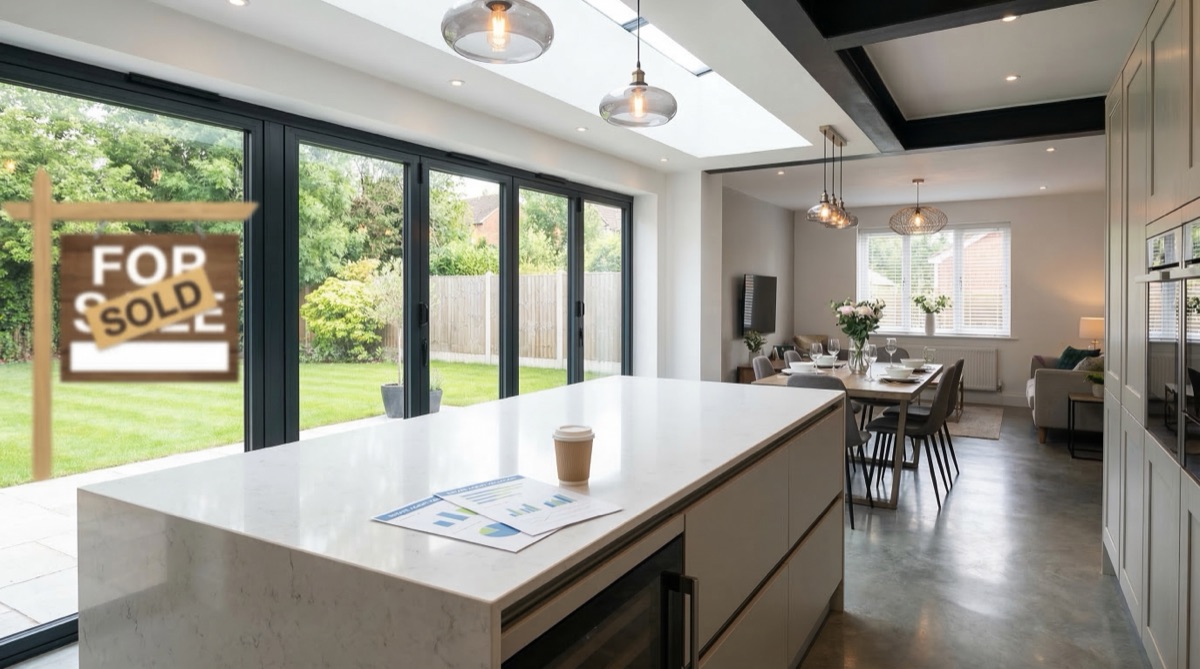
Which House Extensions Add Most Value? ROI Guide
Explore which extensions add most property value. Understand ROI for different extension types and maximize return on extension investment.
House Extension ROI: Which Extensions Add Most Property Value?
When investing significant resources in house extensions, understanding return on investment helps you prioritize projects offering best value. Not all extensions add equivalent value; well-considered projects maximize property value increases while poorly planned extensions barely recover their costs. This comprehensive guide analyzes ROI for different extension types, explores factors affecting value recovery, and provides frameworks for maximizing extension value. Understanding these principles helps you make investment decisions aligned with both immediate lifestyle improvement and long-term property value optimization.
Extension ROI Fundamentals
Value Recovery Rates: Well-designed extensions typically recover 70-90% of their cost in increased property value. A £70,000 extension might increase property value by £49,000-£63,000. Poor extensions recover only 20-50% of costs. The difference between excellent and poor extensions determines whether extension represents sound investment or disappointing value destruction.
Factors Affecting ROI: Extension value recovery depends on: design quality, appropriate sizing (extensions that are too ambitious or undersized both underperform), material quality, professional execution, location within the property, and how effectively the extension integrates with existing space. Extensions solving genuine space problems add more value than gratuitous additions.
Market Preference: Buyer preferences fundamentally determine extension value. Extensions providing spaces buyers actively want (additional bedrooms, enhanced kitchen-dinners, larger living areas) add substantial value. Extensions providing spaces buyers don't want (excessive en-suite bathrooms, oversized garages, niche spaces) add minimal value.
Single Storey Rear Extensions: Excellent ROI
Value Recovery: Single storey rear extensions typically recover 75-90% of costs in property value increases. A £60,000 rear extension might increase property value by £45,000-£54,000. These extensions represent the best single extension investment for most homeowners.
Why Strong Performance: Rear extensions create open-plan kitchen-dinners, highly desired by modern buyers. These extensions enhance daily living quality and significantly improve property appeal. Market demand for open-plan living creates strong value recovery.
Optimal Design for Value: Maximum value recovery comes from thoughtful open-plan design creating flowing spaces with excellent natural light, strong indoor-outdoor connections, and flexible furniture arrangement potential. Poorly designed rear extensions with awkward proportions, inadequate light, or poor material choices underperform significantly.
Double Storey Rear Extensions: Strong but Variable ROI
Value Recovery: Double storey extensions typically recover 65-85% of costs in property value increases. A £120,000 double storey extension might increase property value by £78,000-£102,000. ROI remains strong but becomes more variable than single storey work.
Critical Success Factors: Double storey extensions succeed when they add desired bedrooms or bathrooms at appropriate proportions. Extensions creating excessive bedrooms (more than 5 in typical properties) or undersized rooms add minimal value. Proportional, well-designed double storey work adds significant value; oversized or poorly proportioned work disappoints.
Risk Factors: Double storey extensions involve greater cost and complexity than single storey work. Construction problems, budget overruns, or design compromises disproportionately affect value recovery. Superior project management and design quality are essential for double storey success.
Loft Conversions: Strong ROI at Lower Cost
Value Recovery: Loft conversions typically recover 75-85% of costs in property value increases. A £40,000 conversion might increase property value by £30,000-£34,000. Loft conversions offer excellent ROI at lower cost than ground-level extensions.
Advantages: Loft conversions avoid garden loss (increasingly valued by buyers), create valuable additional bedrooms or studies, and cost 30-40% less than equivalent ground-level extensions. These advantages create strong value recovery despite lower absolute value addition compared to larger extensions.
Optimal Application: Loft conversions work best when adding bedrooms to smaller properties, creating offices for work-from-home professionals, or providing guest accommodation. Conversions addressing specific space problems add strong value; gratuitous additions add minimal value.
Kitchen Renovations (Without Extensions): Moderate ROI
Value Recovery: Kitchen renovations without extending space typically recover 50-70% of costs. A £30,000 kitchen renovation might increase property value by £15,000-£21,000. Kitchen work adds moderate value without solving space constraints.
When to Invest: Kitchen renovation adds best value when existing kitchen is genuinely outdated or dysfunctional. Cosmetic updates to adequate kitchens add minimal value. Kitchen renovation alone cannot overcome fundamental space constraints; rear extension plus kitchen renovation combination adds stronger value than either alone.
Garage Conversions: Excellent ROI at Low Cost
Value Recovery: Garage conversions typically recover 70-85% of costs. A £40,000 conversion might increase property value by £28,000-£34,000. These conversions offer exceptional ROI at modest investment.
Advantages: Conversions utilize underused existing structures, add valuable living space at fraction of extension costs, and avoid complex planning and structural work. Market demand for home offices and flexible spaces makes conversions increasingly valuable.
Limitations: Conversions cannot exceed space available in original garage structure. This limits maximum addition compared to new-build extensions. For maximum space increase, garage conversion combined with rear extension offers strong value.
Basement Excavations: High Cost, Variable ROI
Value Recovery: Basement excavations typically recover 50-75% of substantial costs. A £200,000 basement might increase property value by £100,000-£150,000. ROI can be strong but cost and complexity introduce significant risk.
When Worthwhile: Basements work best in already-valuable properties where space constraints are critical and substantial budgets are available. In modest properties or where space constraints can be solved through simpler extensions, basement excavations rarely justify their costs and complexity.
Risk Considerations: Basements involve significant structural complexity, groundwater management, and specialized expertise. Poor basement design creates damp, structural, and habitability problems destroying value. Only pursue basements with exceptional professional expertise and realistic budget expectations.
Structural Repairs Affecting Value
Essential vs. Value-Adding: Structural repairs (underpinning, damp remediation, structural reinforcement) are often essential for extension work but don't independently add value. These necessary costs should be budgeted as extension overhead, not expected to recover proportionately in property value.
Value Protection: While repairs don't add value, they protect against value loss. Deferred structural problems depreciate properties significantly. Including necessary repairs within extension budgets ensures comprehensive resolution preventing future problems.
Design Quality Impact on ROI
Professional Design Value: High-quality design adds disproportionate value recovery. Well-designed extensions might recover 85-90% of costs; poorly designed equivalents might recover 40-50%. Design quality is not cosmetic; it fundamentally determines whether extensions solve space problems effectively and appeal to future buyers.
Material Quality Impact: Superior materials increase costs but often return 80-90% of premium costs in added property value. Using lower-cost materials might save 10-15% of costs but reduces value recovery to 50-60%. Quality materials provide better overall ROI than cost minimization approaches.
Combination Approaches for Optimal Value
Rear Extension Plus Loft Conversion: Combining rear extension (strong ROI at moderate cost) with loft conversion (strong ROI at lower cost) creates comprehensive space addition with excellent overall ROI. Combined projects typically recover 75-85% of total costs, offering strong value.
Rear Extension Plus Kitchen Renovation: Pairing rear extension with kitchen renovation creates integrated ground-floor enhancement. Kitchen integral to extended space adds better value than standalone renovation. Combined investment recovers 75-85% typically.
Double Storey Extension Plus Quality Finishes: Combining comprehensive double storey extension with high-quality interior finishes creates premium additions commanding strong value recovery. Higher quality creates higher ROI despite greater initial cost.
Factors Beyond Extension Type Affecting ROI
Property Location: Extensions in desirable neighborhoods and school catchments recover value better than similar extensions in less desirable areas. Location fundamentally affects property value and determines extension value addition.
Market Timing: Extensions initiated during rising property markets recover value better than those completed during declining markets. While individual extension quality matters most, market conditions provide backdrop affecting absolute value recovery.
Buyer Demographics: Extensions add best value when they align with target buyer preferences. Family homes benefit from bedroom additions; urban apartments benefit from open-plan entertainment spaces. Understanding buyer preferences optimizes extension value.
Getting Maximum Value from Your Extension
Prioritize design quality above cost minimization. Well-designed £70,000 extensions add more value than poorly designed £60,000 equivalents. Use quality materials; their higher initial costs return better in value recovery. Combine extensions strategically; integrated projects add more value than isolated additions. Consult professional designers familiar with your market; they understand which extensions add best value in your specific location. View extensions as long-term property investments, not just immediate improvements. This perspective encourages choices maximizing value recovery and ensuring extension investments enhance both lifestyle and property value substantially.
Explore More House Extension Design Options
Related Articles
Comprehensive guide to house extension planning permission in 2024. Learn about costs, timelines, planning applications, and what to expect from professional house extension specialists.
Discover the key advantages of choosing professional house extension services. From cost savings to creative solutions, learn why specialists are essential for successful projects.
Complete guide to house extension costs in the UK. Learn about fee structures, budgeting tips, and how to get maximum value from your house extension investment.
Ready to Get Started?
Home Extensions Now Team
Our expert team of architectural design specialists brings decades of combined experience in UK house extension design and planning services for residential and commercial projects. We're committed to providing clear, actionable insights to help you make informed decisions about your home extension projects.
Ready to Plan Your Home Extension?
Whether you're planning a single-storey extension, renovation project, or complete home redesign, our house extension design solutions can help you build quickly and confidently.