How Long Does a House Extension Take? Complete Timeline Guide
Complete guide to house extension timelines. Understand planning timelines, building regulations approval, construction phases, and factors affecting project duration.
House Extension Timeline: Understanding Your Project Duration
Planning a house extension in London requires understanding the full project timeline from initial concept through final completion. Many homeowners underestimate how long extensions take, leading to stress and disrupted living situations. This comprehensive guide breaks down each phase of a house extension project, typical timescales, and factors that influence how long your specific project will take. Whether you're planning a single storey extension, double storey extension, or loft conversion, understanding realistic timelines helps you plan effectively and manage expectations throughout the process.
Pre-Design and Feasibility Phase: 2-4 Weeks
Before formal design work begins, successful projects start with thorough feasibility assessment. This phase involves initial consultations with house extension specialists, site surveys, and assessment of local planning policies affecting your project. During these early weeks, you'll meet with your chosen architect or surveyor to discuss your vision, budget, and timeline. They'll conduct site measurements, assess structural conditions, and research local planning constraints. This phase is crucial because it identifies potential challenges early when solutions are least expensive. For complex projects involving heritage constraints, structural issues, or difficult neighbors, feasibility assessment may extend to 6-8 weeks as specialists conduct detailed investigations and market research.
This phase culminates in a feasibility report providing honest assessment of what's possible, estimated costs, realistic timelines, and key risks. Many projects benefit from 3-4 weeks of careful feasibility work that prevents months of wasted effort pursuing unfeasible designs. For straightforward projects on modern properties without constraints, feasibility may be completed in 2 weeks. The investment in proper feasibility assessment pays dividends throughout the rest of the project.
Concept and Detailed Design Phase: 6-12 Weeks
Once feasibility is confirmed, design development begins. This involves creating initial concept designs exploring different approaches to your extension. For a typical 25 square metre single storey extension, concept design usually takes 2-3 weeks. Your specialist will typically prepare 2-3 design options for your consideration, each exploring different spatial arrangements, materials, and approaches. This phase is collaborative, with your feedback shaping the evolving design.
Once you've selected a preferred concept, detailed design development begins. This phase involves refining all design aspects: spatial relationships, material selections, color schemes, technical details, and construction methodology. For straightforward extensions, detailed design typically takes 4-6 weeks. For complex projects involving structural work, building services integration, or heritage constraints, detailed design may require 8-12 weeks as specialists coordinate multiple technical requirements.
Detailed design culminates in comprehensive design drawings and specifications ready for planning submission. These drawings include floor plans, elevations, sections, material schedules, and detailed specifications for construction. Quality detailed design prevents problems during construction because builders have unambiguous direction regarding what they're building. Poor design documentation leads to site confusion, expensive changes, and construction delays.
Planning Application Phase: 8-16 Weeks
After design completion, planning applications are submitted to your local authority. The planning process timeline includes several stages. Initial validation takes 5 working days, during which planners check that your application is complete and includes all necessary supporting documents. Incomplete applications are returned, adding weeks to your timeline. Professional specialists ensure applications are properly validated on first submission, avoiding these delays.
After validation, planning officers have 13 weeks to determine most residential applications. However, this is rarely achieved in practice. Planning officers typically spend 4-6 weeks preparing their assessment report, consulting with internal departments and statutory consultees. Applications recommended for approval may be determined quickly, often within the 13-week period. Applications the planning officer recommends for refusal typically go before the planning committee, which meets monthly. This can extend total determination time to 16-18 weeks or more.
For straightforward extensions in favorable areas without objections, planning approval may be achieved in 10-12 weeks. For applications generating neighbor objections, subject to committee determination, or involving heritage considerations, planning approval timelines extend to 16-20 weeks. Once approved, planning permission is valid for three years before you must start construction. Extensions involving major structural work or significant heritage considerations may benefit from pre-application consultation before formal submission, adding 2-4 weeks but potentially streamlining formal determination.
Building Regulations Approval Phase: 4-8 Weeks
While planning applications are being determined, building regulations approval should be progressed simultaneously. Building regulations applications involve submission of detailed technical drawings and specifications to your local authority's building control team. Building control officers assess whether your designs comply with current building regulations covering structural safety, fire safety, electrical safety, thermal performance, ventilation, drainage, and accessibility.
Most residential extensions receive building regulations approval within 4-6 weeks of submission. However, complex projects involving significant structural work, renewable energy integration, or innovative construction methods may require longer assessment periods. Some projects receive approval with conditions, requiring clarification drawings or additional information before final approval. Once you've received full building regulations approval, you can proceed to commence construction.
Savvy project managers obtain building regulations approval before planning approval is determined. This parallelizes the two approval processes and allows construction to commence quickly once planning permission is granted. This approach can save 4-6 weeks in overall project timeline.
Contractor Selection and Procurement Phase: 4-6 Weeks
Once planning and building regulations approvals are obtained, it's time to select your builder and finalize construction contracts. Most specialists recommend obtaining detailed quotations from 2-3 qualified contractors based on your approved designs. The procurement process typically takes 3-4 weeks: sending plans to contractors, receiving quotations, reviewing proposals, and negotiating final terms. For complex projects requiring specialist contractors or custom materials, procurement may extend to 6-8 weeks.
This phase is crucial for ensuring your builder understands the project, has realistic pricing, and commits to your timeline. Rushing procurement leads to builders submitting unrealistic quotes or commencing work unprepared, causing delays and problems. Professional project managers invest time in proper procurement ensuring contractors are well-prepared and enthusiastic about your project.
Construction Phase: 12-20 Weeks
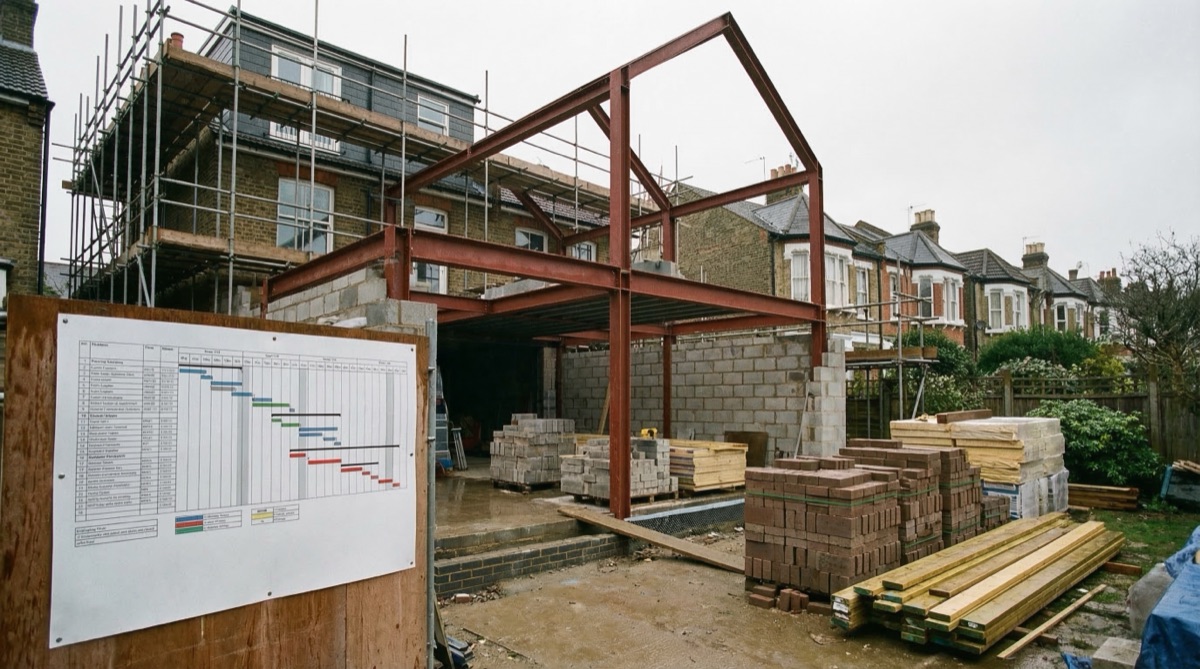
The actual construction timeline varies significantly based on extension size, complexity, and site conditions. A typical single storey 25 square metre extension usually takes 12-16 weeks to complete. This includes: site setup and protection (1-2 weeks), structural work and foundations (2-4 weeks), frame and roof construction (2-3 weeks), services installation (2-3 weeks), internal finishes (3-5 weeks), and final completion and snagging (1-2 weeks).
Double storey extensions typically require 18-24 weeks due to increased structural complexity. Loft conversions typically require 14-18 weeks. Kitchen extensions with significant services integration may require 16-20 weeks. Multiple simultaneous trades often cause delays as workers wait for previous trades to complete. Weather impacts construction, particularly roof work and external finishes. Winter weather extends timelines as scaffolding protects work, materials take longer to cure, and weather conditions limit productivity.
Experienced builders maintain realistic construction schedules and achieve them through careful planning, early procurement of materials, and efficient site management. First-time builders or those with inadequate planning often experience delays that push projects 4-8 weeks beyond original timelines.
Snagging and Final Approval Phase: 2-4 Weeks
As construction nears completion, building control conducts final inspections and issues completion certificates. Your specialist or project manager typically prepares snag lists identifying minor items requiring completion: paint touch-ups, missing skirting boards, caulking, and similar finish items. Most contractors complete snagging within 1-2 weeks. Once snagging is complete and building control issues completion certificates, your extension is ready for occupation.
Total Project Timeline: 9-12 Months
Adding all phases together, a straightforward house extension typically requires 9-11 months from initial consultation to final completion. Complex projects may require 12-15 months. Projects involving heritage constraints, difficult planning circumstances, or significant structural work can take 15-18 months.
This timeline assumes parallel processing of planning and building regulations (rather than sequential), efficient contractor selection, and realistic construction schedules. Delays in any phase impact the overall timeline. Planning appeal if initial application is refused can add 3-6 months. Construction delays caused by poor planning or builder performance can push projects 2-4 months beyond schedule.
Factors Affecting Your Specific Timeline
Planning Complexity: Straightforward extensions in planning-friendly areas proceed quickly. Heritage constraints, neighbor objections, or unusual circumstances extend planning timelines significantly.
Structural Requirements: Simple structural work extends timelines minimally. Extensive structural modifications, underpinning, or foundation work significantly increase construction duration.
Services Integration: Extensions requiring significant electrical, plumbing, or heating modifications take longer than simple structural additions.
Site Constraints: Limited access, party walls, or tight site conditions slow construction significantly compared to straightforward sites.
Weather: Winter projects take longer than summer projects due to weather impacts on external work.
Contractor Experience: Experienced specialists execute projects more efficiently than first-time builders.
Managing Timeline and Living During Construction
Clear communication with your contractor maintains timeline awareness. Regular site meetings (weekly during construction) identify delays early when mitigation is possible. Understanding realistic timelines helps you plan your living arrangements and business continuity. Many families arrange temporary accommodation if construction significantly impacts home functionality.
Explore More House Extension Design Options
Related Articles
Comprehensive guide to house extension planning permission in 2024. Learn about costs, timelines, planning applications, and what to expect from professional house extension specialists.
Discover the key advantages of choosing professional house extension services. From cost savings to creative solutions, learn why specialists are essential for successful projects.
Complete guide to house extension costs in the UK. Learn about fee structures, budgeting tips, and how to get maximum value from your house extension investment.
Ready to Get Started?
Home Extensions Now Team
Our expert team of architectural design specialists brings decades of combined experience in UK house extension design and planning services for residential and commercial projects. We're committed to providing clear, actionable insights to help you make informed decisions about your home extension projects.
Ready to Plan Your Home Extension?
Whether you're planning a single-storey extension, renovation project, or complete home redesign, our house extension design solutions can help you build quickly and confidently.