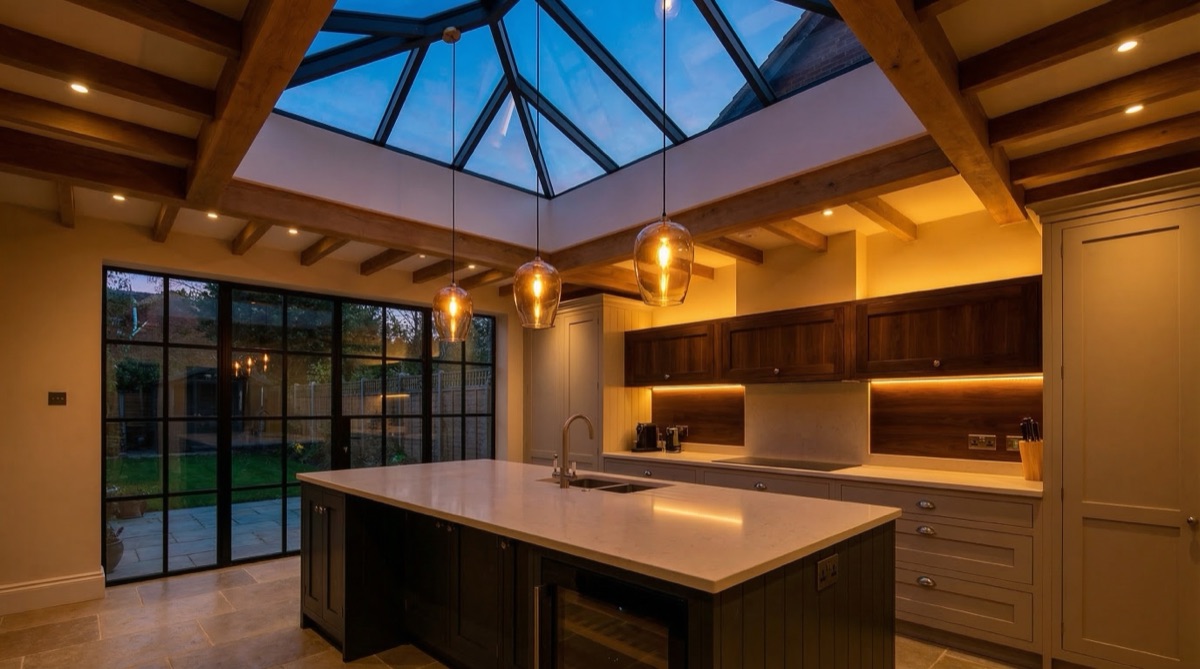
Kitchen Extension Lighting Design: Complete Guide
Master kitchen extension lighting design. Learn about task lighting, ambient lighting, accent lighting, and modern lighting solutions for extended kitchens.
Kitchen Extension Lighting Design: Comprehensive Guide
Proper lighting transforms kitchen extensions from functional spaces into beautiful, efficient areas enhancing both everyday living and property value. Poor lighting undermines even excellent design, creating dark, uninviting spaces. Conversely, thoughtful lighting design creates comfortable, functional, and visually appealing kitchens supporting all activities. This comprehensive guide explores lighting principles, specific kitchen requirements, modern lighting technologies, and design approaches ensuring your kitchen extension provides excellent lighting throughout the day and evening.
Understanding Kitchen Lighting Needs
Multiple Functions: Kitchen extensions must support multiple activities simultaneously: food preparation (requiring bright task lighting), dining (requiring warm ambient lighting), socializing (requiring flexible mood lighting), and working/studying (requiring bright, shadowless illumination). Single lighting solutions cannot serve all functions adequately; layered approaches combining multiple lighting types create functional, flexible spaces.
Lighting Levels Matter: Kitchens require higher illumination levels than living areas. Work surfaces require 500-1000 lux (lumens per square meter) for safe, comfortable food preparation. Dining areas require 200-300 lux for comfortable eating. Ambient background lighting requires 100-150 lux maintaining visibility without strain. Understanding these requirements guides fixture selection.
Color Temperature Considerations: Lighting color (warm vs. cool white) affects mood and functionality. Warm white (2700K) creates inviting, relaxed atmospheres suitable for dining areas. Neutral white (4000K) provides balanced lighting good for mixed functions. Cool white (5000K+) provides clinical, task-focused lighting suitable for detailed work. Mixing color temperatures creates layered lighting supporting multiple functions.
Task Lighting for Work Surfaces
Functionality Critical: Work surfaces (countertops, stoves, preparation areas) require bright, shadowless illumination for safe food preparation. Inadequate task lighting creates shadows limiting visibility and increasing injury risk. Proper task lighting is non-negotiable for kitchen function.
Under-Cabinet Lighting: Modern kitchens increasingly use under-cabinet LED strips providing direct illumination of work surfaces. These lights eliminate shadows cast by head-height light sources and provide focused task lighting without competing with ambient lighting. LED technology has made under-cabinet lighting affordable and energy-efficient. Dimmer controls allow task lighting intensity adjustment based on activity.
Pendant Lighting Over Islands: Kitchen islands require their own task lighting. Pendant lights suspended over islands at 65-75cm height provide direct illumination for preparation and eating. Multiple pendants distributed across islands provide even illumination preventing dark areas. Adjustable-height pendants accommodate changing counter activity and allow drama adjustment through lifting/lowering.
Recessed Ceiling Lights: Strategically positioned recessed downlights provide overall task lighting when under-cabinet and pendant solutions are insufficient. Recessed lights should be positioned to eliminate shadows and provide even illumination across all work surfaces. Spacing recessed lights at 1.2-1.5 meter intervals typically provides adequate coverage.
Ambient Lighting: Everyday Functionality
Overall Illumination: Ambient lighting provides overall kitchen illumination supporting general activities like moving through the space, locating items, and general visibility. Ambient lighting alone is insufficient for food preparation but creates baseline illumination supporting the space.
Ceiling Lights: Traditional ceiling lights (flush-mounts or semi-flush fixtures) provide ambient illumination for entire kitchens. Modern designs offer elegant options complementing kitchen aesthetics. Dimmer controls allow ambient light intensity adjustment supporting different times of day and activities.
Wall Sconces: Wall-mounted lighting provides supplementary ambient illumination, particularly in extended kitchen areas. Sconces create visual interest, provide accent lighting on display areas, and contribute to overall ambient illumination. Positioning sconces symmetrically creates visual balance in extended spaces.
Accent Lighting: Visual Interest and Drama
Creating Visual Depth: Accent lighting highlights architectural features, display items, and creates visual depth in extended kitchens. Display shelf lighting, open shelving illumination, and feature wall highlighting create visual interest beyond purely functional lighting.
LED Strip Lighting: Modern LED strips offer flexible accent lighting options. Strips mounted above open shelving illuminate displayed items while contributing subtle ambient lighting. Strips mounted along ceiling edges create indirect ambient lighting creating elegant, modern effects. Color-changing strips allow mood adjustment for entertainment settings.
Spotlight Effects: Track lighting or adjustable spotlights highlight specific areas: kitchen artwork, architectural features, or distinctive finishes. Spotlighting creates dynamic visual interest and can highlight design elements you want to emphasize.
Natural Light Optimization
Maximizing Daylight: Kitchen extensions benefit tremendously from maximized natural light. Large windows, glass doors, and roof lights provide daylight supporting daytime activities while reducing artificial lighting needs. Daylight creates more pleasant environments than artificial lighting alone and reduces electricity consumption.
Window Placement Strategy: Positioning windows to avoid glare on countertops and screens creates comfortable, usable daylight. South-facing windows provide consistent daylight but can create glare; diffusing treatments (translucent shades, frosted glass) manage glare while maintaining visibility. West-facing windows create afternoon glare; strategic window treatments manage problems.
Skylight Potential: Kitchen extensions with roof potential benefit from roof lights (skylights) providing overhead daylight. Positioned above work surfaces or dining areas, skylights provide excellent task illumination during day while adding architectural interest.
Seasonal Variations: Daylight availability varies seasonally. Winter provides limited daylight requiring greater reliance on artificial lighting. Designing flexible artificial lighting accommodating seasonal variations maintains comfort year-round.
Modern Lighting Technologies
LED Advantages: LED lighting dominates modern kitchen design due to: superior energy efficiency (80% more efficient than incandescent), exceptional longevity (50,000+ hour lifespan), cool operation (no heat generation), color options (warm to cool white), and dimmer compatibility. LED costs have declined dramatically, making them standard choice for new installations.
Smart Lighting Controls: Modern smart lighting systems offer unprecedented control: dimming through phone apps, scheduling automatic on/off times, adjusting color temperature throughout day, and creating scene presets for different activities. Smart controls optimize both comfort and energy consumption.
Motion Sensors: Motion-sensor lighting in kitchen extensions automatically activates when areas are occupied, improving convenience and reducing energy consumption when spaces are unoccupied. Particularly useful for less-frequented extension areas.
Emergency Lighting: Building regulations require emergency lighting for pathways and stairs in extensions. Modern emergency lighting integrates aesthetically while meeting safety requirements.
Lighting Design Process
Professional Design Investment: Quality lighting design from architects or lighting specialists ensures optimal results. Professional designers understand illumination requirements, fixture placement, and control strategies creating spaces that function beautifully and serve all activities well.
3D Visualization: Modern design tools create 3D visualizations showing lighting effects throughout day and evening. These visualizations help verify lighting designs solve problems and create desired effects before installation.
Sample Installations: Before full commitment, visiting showrooms or friends' kitchens with similar lighting helps confirm choices. Experiencing different lighting scenarios improves decision confidence.
Installation and Control Strategies
Circuit Separation: Proper electrical design separates task lighting, ambient lighting, and accent lighting onto different circuits with independent controls. This allows dimming or switching individual lighting types supporting different activities and moods.
Dimmer Installation: Most modern lighting benefits from dimmer control. Dimmers allow lighting intensity adjustment from bright task lighting to soft ambient lighting supporting multiple uses.
Access and Maintenance: Ensure lighting fixtures are accessible for bulb replacement and maintenance. Recessed lights should be positioned to allow safe access from ceiling below. Under-cabinet lighting should be accessible for repairs.
Common Lighting Mistakes to Avoid
Insufficient Task Lighting: Under-estimating work surface illumination creates dangerous, uncomfortable work environments. Ensure task lighting is bright enough for safe food preparation and comfortable vision.
Single Light Source: Relying on single ceiling light creates shadows and inadequate flexibility. Layered lighting approaches combining multiple light types serve all activities better.
Wrong Color Temperature: Using cool-white lighting throughout kitchens creates clinical, unwelcoming spaces. Warmer tones in dining areas combined with neutral/cool in work areas create better-balanced kitchens.
Ignoring Glare: Inadequate attention to glare control creates visual discomfort. Positioning lights to prevent direct glare on faces, screens, or reflective surfaces improves comfort significantly.
Budget-Conscious Lighting Strategies
Phased Approach: Install essential task and ambient lighting immediately. Add accent lighting and smart controls later as budget allows. This approach provides functional kitchens immediately while allowing gradual enhancement.
Value Lighting Options: Quality LED fixtures offer excellent value. Avoid cheap fixtures that create unflattering light or fail prematurely. Mid-range quality provides good balance of cost and performance.
Professional Advice on Value: Lighting specialists can recommend cost-effective solutions maximizing impact within budget constraints. Their expertise typically reduces waste and optimizes results compared to DIY approaches.
Summary: Creating Excellent Kitchen Lighting
Kitchen extension lighting success requires understanding multiple lighting types (task, ambient, accent), their functions, and how to layer them creating flexible, beautiful spaces. Maximize natural daylight through strategic window placement. Use LED technology for energy efficiency and design flexibility. Incorporate controls allowing adjustment to support different activities. Consult professional designers familiar with kitchen requirements ensuring your extension lighting supports all activities beautifully. Proper lighting transforms kitchen extensions from merely functional to genuinely delightful spaces enhancing both daily living and property value significantly.
Explore More House Extension Design Options
Related Articles
Comprehensive guide to house extension planning permission in 2024. Learn about costs, timelines, planning applications, and what to expect from professional house extension specialists.
Discover the key advantages of choosing professional house extension services. From cost savings to creative solutions, learn why specialists are essential for successful projects.
Complete guide to house extension costs in the UK. Learn about fee structures, budgeting tips, and how to get maximum value from your house extension investment.
Ready to Get Started?
Home Extensions Now Team
Our expert team of architectural design specialists brings decades of combined experience in UK house extension design and planning services for residential and commercial projects. We're committed to providing clear, actionable insights to help you make informed decisions about your home extension projects.
Ready to Plan Your Home Extension?
Whether you're planning a single-storey extension, renovation project, or complete home redesign, our house extension design solutions can help you build quickly and confidently.