How to Live in Your House During an Extension: Survival Guide
Comprehensive guide to living in your house during construction. Manage dust, noise, disruption, and maintain wellbeing while your extension is being built.
Living in Your Home During House Extension: Complete Survival Guide
Many homeowners choose to remain in their properties throughout extension construction rather than temporarily relocate. While this saves accommodation costs, living with active construction presents significant challenges requiring careful planning and realistic expectations. This comprehensive guide explores strategies for minimizing disruption, managing dust and noise, protecting your living space, maintaining wellbeing during extended construction periods, and establishing ground rules ensuring both productivity and habitability. Proper planning transforms living through construction from nightmare scenario to manageable disruption.
Realistic Expectations: What to Anticipate
Construction Duration Reality: Single storey extensions typically require 12-16 weeks of active construction. Double storey extensions require 18-24 weeks. Loft conversions typically need 14-18 weeks. These timelines represent active work; mobilization, site setup, and completion phases extend total project duration further. Understand realistic timelines rather than best-case scenarios to avoid shock at extended disruption.
Daily Disruption: Construction typically occurs 8am-5pm Monday-Friday (sometimes Saturday mornings). Expect daily noise from power tools, machinery, and multiple workers. Dust penetrates despite precautions, requiring frequent cleaning. Water and electricity disruption occurs occasionally when works affect services. Accept that living normality will be disrupted for the extension duration.
Privacy Loss: Multiple workers in your home daily means you're never alone. Bathroom access may be restricted when workers need to use facilities. Garden use becomes restricted when construction occupies outdoor space. Expect privacy loss particularly in open-plan living spaces where workers traverse constantly.
Physical Space Protection Strategies
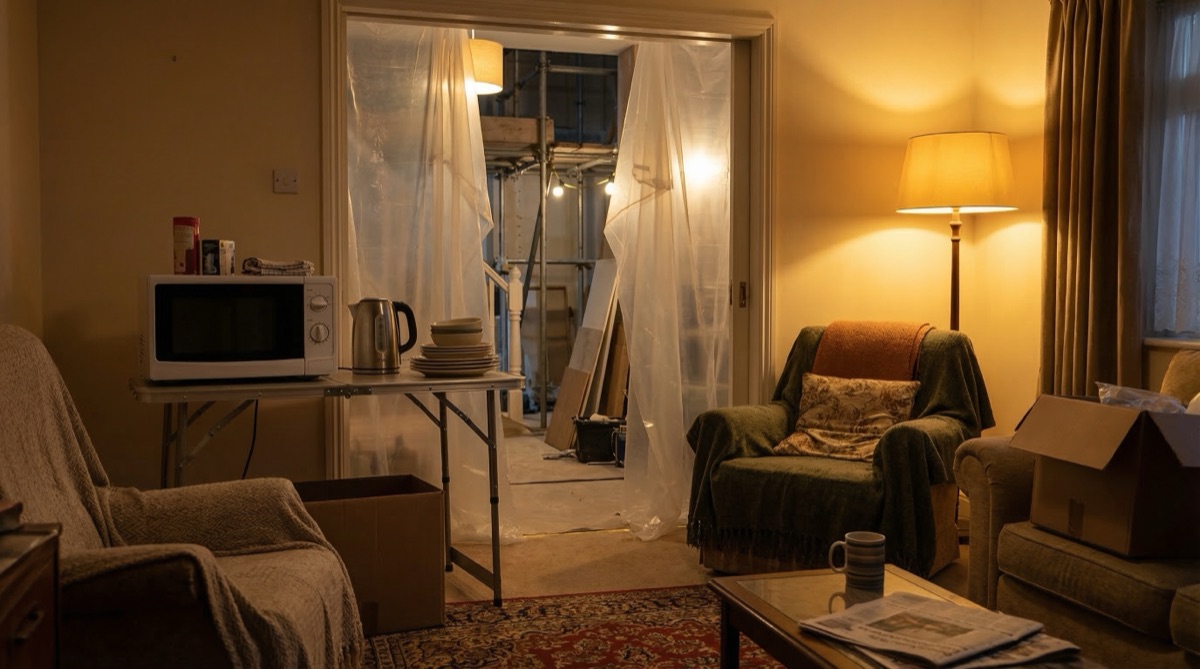
Dust Barriers: Construction dust penetrates living areas despite precautions. Install heavy-duty plastic sheeting separating construction zones from living spaces. Doors leading to construction areas should have temporary dust curtains or double-door airlocks containing dust. Seal gaps around pipes, electrical conduits, and other penetrations where dust enters. Dust is inevitable; strategic barriers reduce migration into unaffected areas.
Climate Control: Dust protection compromises air circulation. Opening windows during construction defeats dust barriers. Consider temporary air filtration (HEPA filters in fans) in occupied areas. Modern construction increasingly uses negative pressure ventilation sucking dust toward controlled exhaust points rather than allowing uncontrolled migration.
Carpet and Furnishing Protection: Cover valuable furniture with plastic sheeting. Remove carpets from heavily used construction paths or protect with heavy duty coverings. Accept that some damage to floor coverings is likely; budget for post-construction refresh. Natural hardwood floors resist dust better than carpet but require frequent sweeping.
Strategic Workspace Relocation: Move daily activities away from construction areas. If your kitchen is under extension, establish temporary kitchen arrangements (microwave, kettle, minimal cooking) in unaffected areas. If bedrooms are affected, establish alternative sleeping arrangements. Minimize time in disrupted zones.
Noise Management Strategies
Noise Reality: Construction generates unavoidable noise. Power tools, machinery, and multiple workers create continuous background noise 8am-5pm. Earplugs, noise-canceling headphones, and background music partially mitigate disruption but cannot eliminate it. Accept noise rather than expect silence.
Schedule Alignment: Discuss your schedule with contractors. If you work from home requiring phone calls or concentration, request morning construction allowing afternoon quiet. Some contractors agree to avoid loudest work (demolition, heavy machinery) during specific hours. Clear communication prevents conflict.
Strategic Retreats: Arrange regular offsite time during worst noise periods. Working from alternative locations (office, library, café), regular gym visits, or social activities during peak construction noise hours improves wellbeing. Don't underestimate mental health impacts of constant disruption.
Sound Insulation: Thick curtains, rubber door seals, and temporary acoustic panels reduce internal noise slightly. They don't solve construction noise but help attenuate particularly loud work. Temporary fixes prevent permanent modifications while maintaining flexibility.
Bathroom and Kitchen During Construction
Service Disruption Planning: Most extensions require temporary disruption to water and electricity. Schedule these disruptions when possible, notifying all household members. Use disruptions strategically: bathing before scheduled water shutdown, completing work requiring electricity before shutdown, using flashlights and microwaves during temporary outages.
Toilet Access: If your only toilet is in extension area under construction, establish alternative arrangements. Many contractors establish portable toilet facilities on-site reducing need for household toilet access. Discuss arrangements clearly during contract negotiations.
Kitchen Limitations: During kitchen extension construction, establish temporary kitchen arrangements. You don't need full kitchen capability; arrange for microwave, kettle, cold storage, and minimal cooking ability. Accept simplified cooking and increased take-away meals during extension duration. Some families view this as well-deserved break from daily cooking.
Hot Water Continuity: Arrange that hot water remains available even if supply is disrupted briefly. If work affects boiler or water pipes, ensure contractor minimizes outage duration. Many contractors work quickly to restore water service daily rather than maintaining disruption throughout construction.
Household Wellbeing During Extended Disruption
Mental Health Management: Extended construction disruption affects household mood and wellbeing. Acknowledge this openly. Maintain regular routines where possible (meal times, exercise, social activities) providing stability amid disruption. Short vacations during construction may provide valuable mental health breaks.
Family Communication: Clear family communication prevents disruption from creating household conflict. Discuss realistic timelines, expected disruptions, and mutual support strategies. Children adapt better when expectations are clear. Regular family check-ins about how extension is affecting everyone maintain household cohesion.
Pet Wellbeing: Construction noise and disruption affects pets. Anxious pets may display behavioral issues. Create quiet refuge spaces for pets away from construction noise. Consider pet day care during worst construction periods. Some pets benefit from calming supplements or thundershirt-style wraps during disruption.
Sleep Quality: If bedroom construction causes early wake times from noise and activity, consider temporary accommodation arrangements. Sleep deprivation compounds construction-related stress. Prioritizing sleep quality maintains wellbeing during extended disruption.
Contractor Communication and Ground Rules
Clear Expectations Establishment: Establish ground rules before construction commences. Document expectations regarding: working hours, bathroom access, noise minimization efforts, site cleanliness, parking arrangements, and emergency protocols. Clear documentation prevents conflict and provides reference if issues arise.
Daily Site Clearing: Require contractors to clear dust and debris from shared areas daily. Ask that they minimize tracking dirt through your living spaces. Some contractors use boot scrapers and doormats at boundaries. These small efforts significantly improve daily living quality.
Regular Site Inspections: Conduct weekly site inspections ensuring contractors maintain agreed standards. Address issues early when modification remains possible. Regular communication prevents small issues from becoming major friction points.
Contingency Communication Plan: Establish clear communication protocols for emergencies, unexpected discoveries, or issues requiring household coordination. Give site manager your contact information and establish preferred communication methods.
Managing Existing Damage Discovery
Common Discoveries: Many extensions reveal existing damage during construction: hidden damp, structural deterioration, previous repairs requiring attention, pest damage. Discuss contractor protocols for discoveries beforehand. Clarify who determines scope of necessary remedial work and how costs are managed.
Cost Contingency Utilization: Proper contingency budgeting accommodates discoveries without shocking cost overruns. Budget 10-15% contingency specifically for unexpected structural findings. Most discoveries can be addressed promptly without derailing projects if budget exists.
Financial Management During Disruption
Increased Expenses: Living during construction typically increases household expenses: increased utilities from tool use, additional take-away meals from kitchen disruption, occasional accommodation if evacuation becomes necessary, increased cleaning supplies for dust management. Budget £200-£500 monthly additional expenses during construction duration.
Quality of Life Trade-offs: Consider whether cost savings from avoiding temporary relocation justify quality of life disruption. For some households, temporary accommodation costs (£1,500-£3,000 monthly) offer acceptable value compared to construction disruption stress. For others, staying home despite disruption makes financial sense.
Activity Planning: Making the Most of Disruption Period
Productivity Opportunity: While construction proceeds, use disruption as motivation for additional household improvements. Refresh decor in unaffected areas, organize spaces you've been procrastinating, or complete deferred maintenance. Productive activity channels construction stress into positive home improvements.
Social Activity Maintenance: Maintain social activities and regular outings despite construction. Regular dinner outings, weekend activities, visits with friends provide necessary mental health breaks from construction environment. Don't let construction become your complete focus.
Post-Construction Transition
Clean-Up and Refresh: Expect final thorough cleaning once construction completes. Professional post-construction cleaning removes accumulated dust and debris from throughout the house. This represents worthwhile investment (typically £1,500-£3,000 for thorough cleaning) restoring your home post-disruption.
Snagging and Punch List Completion: As construction nears completion, prepare comprehensive snag lists identifying items requiring completion or correction. Address snags promptly; contractors are motivated to complete final items quickly before move to next project.
Summary: Making Living During Construction Manageable
Living in your home during extension construction requires realistic expectations, clear communication with contractors, strategic space management, and commitment to household wellbeing. While disruption is inevitable, proper planning and realistic attitude transform construction period from nightmare into manageable temporary challenge. Most families report that once construction completes and they occupy beautiful new spaces, disruption memories fade quickly. The new extension provides lasting value justifying temporary inconvenience of living through construction.
Explore More House Extension Design Options
Related Articles
Comprehensive guide to house extension planning permission in 2024. Learn about costs, timelines, planning applications, and what to expect from professional house extension specialists.
Discover the key advantages of choosing professional house extension services. From cost savings to creative solutions, learn why specialists are essential for successful projects.
Complete guide to house extension costs in the UK. Learn about fee structures, budgeting tips, and how to get maximum value from your house extension investment.
Ready to Get Started?
Home Extensions Now Team
Our expert team of architectural design specialists brings decades of combined experience in UK house extension design and planning services for residential and commercial projects. We're committed to providing clear, actionable insights to help you make informed decisions about your home extension projects.
Ready to Plan Your Home Extension?
Whether you're planning a single-storey extension, renovation project, or complete home redesign, our house extension design solutions can help you build quickly and confidently.