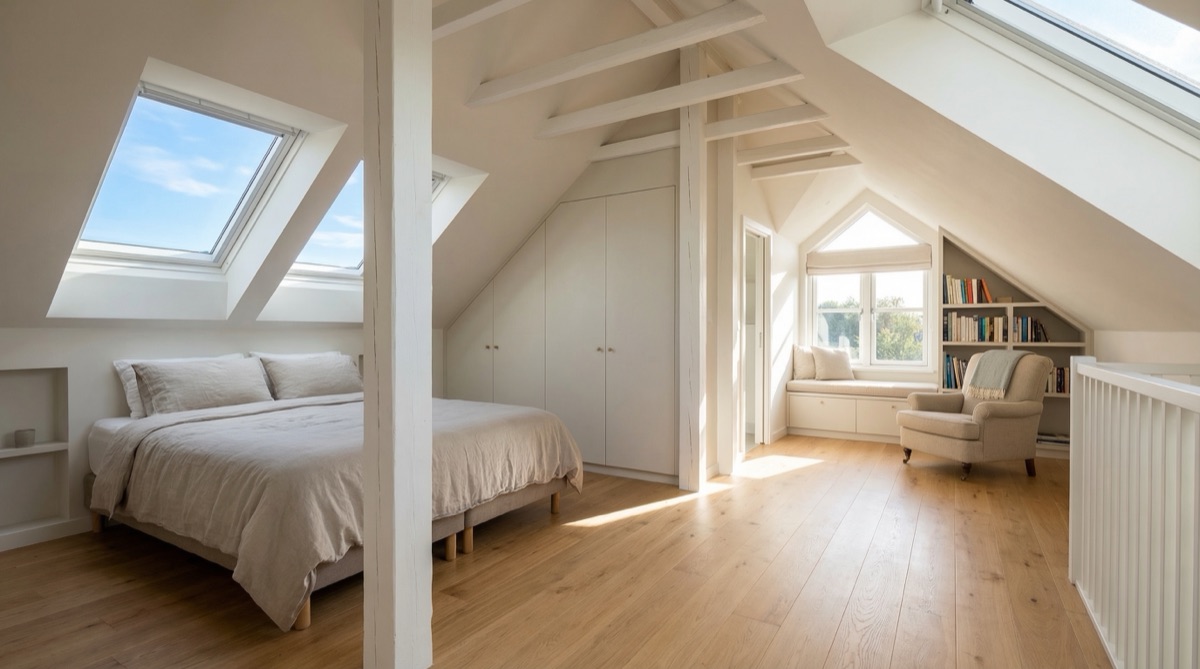
Loft Conversions: Maximizing Your Attic Space Effectively
Complete guide to loft conversions. Learn about different types, costs, planning requirements, and how to maximize usable space in your attic.
Understanding Loft Conversions
Loft conversions are one of the most cost-effective ways to add a bedroom or living space to your home without extending the building footprint. A typical loft conversion adds 15-25 square metres of usable space at a cost of £45,000-75,000, making it excellent value compared to traditional extensions. Most properties with suitable roof structure can be converted, though the type of conversion varies depending on existing roof design. This comprehensive guide explores different conversion types, planning considerations, and how to maximize the space created.
Types of Loft Conversion
Rear Dormer Conversion: The rear dormer is the most common loft conversion, consisting of a flat-roofed extension rising from the rear slope of the roof. This creates a large rectangular space maximizing headroom and floor area. Rear dormers usually fall within permitted development rights for terraced and semi-detached properties, avoiding the need for planning permission. A typical rear dormer adds 15-20 square metres and usually includes a new bedroom with en-suite bathroom and storage.
Hip-to-Gable Conversion: Semi-detached and detached properties often have hipped roofs that slope inward on each side. A hip-to-gable conversion extends the hip slope to a vertical gable wall, creating additional internal volume. This conversion is popular on 1930s semi-detached homes and creates generous bedroom spaces. Hip-to-gable conversions usually require planning permission.
L-Shaped Dormer: This combines a rear dormer with a side dormer to create maximum space, particularly on Victorian terraces with rear outriggers. L-shaped dormers create substantial space suitable for multiple bedrooms or spacious master suite. Most L-shaped conversions require planning permission due to their prominent visibility from the street.
Mansard Conversion: A mansard conversion replaces the rear roof slope with a near-vertical wall, creating maximum possible headroom and floor area. Mansard conversions almost always require planning permission and may be subject to conservation area restrictions. They're popular in conservation areas where the steep mansard form is sympathetic to period architecture.
Velux (Rooflight) Conversion: Some properties can be converted simply by adding large rooflights and internal partitioning, without external structural changes. This is only suitable for properties with generous existing roof space and proportional headroom. Velux conversions fall within permitted development rights and are the least expensive option.
Planning Permission Requirements
Most rear dormer and hip-to-gable conversions fall within permitted development rights, meaning no planning application is required. However, this depends on several factors: the property type, whether you've already used permitted development allowance for other extensions, and whether the property is in a conservation area or is a listed building. Mansard conversions almost always require planning permission, as do all conversions for flats or maisonettes.
Even where permitted development applies, building regulations approval is always required. Conversions must comply with current building regulations for fire safety, thermal performance, structural safety, and ventilation. Building control issues a completion certificate confirming compliance.
Maximizing Usable Space
Headroom Optimization: Loft conversions are constrained by the existing roof geometry and building regulations requiring minimum headroom heights. Professional designers optimize the location and design of dormers or gables to maximize space with standard headroom while meeting regulations. Strategic placement of sloped ceilings can create effective spaces even where full height isn't available.
Bathroom Integration: Most loft conversions include an en-suite bathroom. Positioning the bathroom in the lowest part of the roof space (where headroom is constrained) maximizes bedroom space with full headroom. Wet rooms or walk-in showers work well in sloped spaces where traditional bathtubs would be impractical.
Storage Solutions: Sloped ceiling spaces can be utilized for storage, creating eaves cupboards for seasonal items or hobby equipment. Built-in storage solutions maximize functionality while keeping usable floor space clear.
Staircase Placement: Efficient staircase location minimizes space consumed by the stair and maximizes bedroom footprint. Stair placement also affects ground floor layout, so this decision impacts the entire house.
Dormer Sizing: Dormer size balances the need for headroom and space against impact on the external appearance and planning acceptability. Larger dormers create more usable space but may require planning permission or face approval resistance. Professional design optimizes this balance.
Costs and Timescales
Budget Conversion: £40,000-50,000 for rear dormer with basic finishes and single bedroom.
Standard Conversion: £50,000-70,000 with good quality finishes and bedroom plus en-suite.
Premium Conversion: £70,000-90,000+ with high-end finishes, additional spaces, or complex roof structures.
Timescales typically range from 8-12 weeks from start to completion. Work is primarily external (building the dormer), minimizing disruption to the rest of the house. Most families continue living in the property throughout construction.
Structural Considerations
Roof Assessment: Before any design work, the existing roof must be surveyed to assess structural condition and suitability for conversion. The surveyor identifies any rot, woodworm, or structural issues requiring remediation. Some roofs may be unsuitable for conversion without substantial reinforcement.
Load-Bearing: The new floor and dormer structure must be properly supported. This may require reinforcement of existing roof timbers or installation of new beams. Calculations by qualified structural engineers ensure the design is safe and compliant.
Party Walls: For terraced or semi-detached properties, party wall matters must be addressed. A surveyor agreement is typically required, involving service of notices on neighbors. This usually costs £700-1,500 per adjacent property.
Loft Conversions in London and the South East
London properties particularly benefit from loft conversions due to high property values and limited land availability. A typical £65,000 loft conversion in London can increase property value by £80,000-100,000, making this investment extremely attractive. Victorian and Edwardian properties are particularly suitable for conversions, with the spacious attics that characterize period architecture. Many London conservation areas impose additional design requirements for roof modifications, typically requiring specific dormer designs that respect period proportions and proportions. Professional specialists familiar with London planning and conservation requirements can navigate these requirements successfully.
In inner London areas where properties command premium values, even relatively modest conversions justify significant investment in quality design and finishes. Many homeowners in London undertake loft conversions as an alternative to moving, allowing them to expand their current properties without relocating. The conversion process is typically faster than house hunting and moving, making it an attractive option for growing families.
Design and Aesthetic Considerations
External Appearance: The dormer design is visible from the street and significantly impacts property appearance. Professional design ensures dormers are proportionate to the house, respectful of architectural style, and in harmony with neighboring properties. Details such as dormer positioning, roof pitch, window design, and materials finishes all contribute to the overall impact. A well-designed dormer enhances property appearance and increases value, while poor design can detract from property appeal.
Internal Layout: Beyond raw square metres, loft conversion design significantly impacts usability. Professional designers optimize room proportions, position windows and doors for maximum light and views, and create spaces that feel spacious despite sloped ceilings. The location of the staircase, positioning of the bathroom, and placement of windows all affect how the space feels and how usable it becomes. Careful design can make relatively constrained spaces feel spacious and appealing.
Connection to Rest of House: How the loft room connects to the rest of the house affects the overall property flow and function. Some conversions work better as self-contained suites with dedicated bathrooms, while others work better as extensions of the main living space. Professional design considers how the conversion enhances overall property function rather than treating it as an isolated addition.
Fire Safety in Loft Rooms
Escape Routes: Bedrooms in loft rooms must have appropriate emergency escape provisions. For single storey rear dormers, escape can typically be via the internal staircase (the same route as the rest of the building). However, if there are existing bedrooms in the house above ground floor, additional escape provisions may be required, such as accessible windows with appropriate size and position.
Fire Detection: Loft rooms must have fire alarms interconnected to the rest of the building, ensuring occupants are warned wherever in the house fire starts.
Building Regulations Compliance
Insulation: Modern building regulations require excellent thermal performance. Loft conversions must have insulation of approximately 0.15 W/m²K U-value (about 150-200mm of insulation). This high standard means loft rooms are thermally efficient even in winter.
Ventilation: Loft rooms must have appropriate ventilation, either through openable windows or mechanical ventilation. Humidity from bathrooms and kitchens must be extracted to prevent mold and condensation.
Structural Safety: The conversion must be structurally sound, properly supporting the new floor and dormer weight. Inspections at key stages ensure compliance.
Explore More House Extension Design Options
Related Articles
Comprehensive guide to house extension planning permission in 2024. Learn about costs, timelines, planning applications, and what to expect from professional house extension specialists.
Discover the key advantages of choosing professional house extension services. From cost savings to creative solutions, learn why specialists are essential for successful projects.
Complete guide to house extension costs in the UK. Learn about fee structures, budgeting tips, and how to get maximum value from your house extension investment.
Ready to Get Started?
Home Extensions Now Team
Our expert team of architectural design specialists brings decades of combined experience in UK house extension design and planning services for residential and commercial projects. We're committed to providing clear, actionable insights to help you make informed decisions about your home extension projects.
Ready to Plan Your Home Extension?
Whether you're planning a single-storey extension, renovation project, or complete home redesign, our house extension design solutions can help you build quickly and confidently.