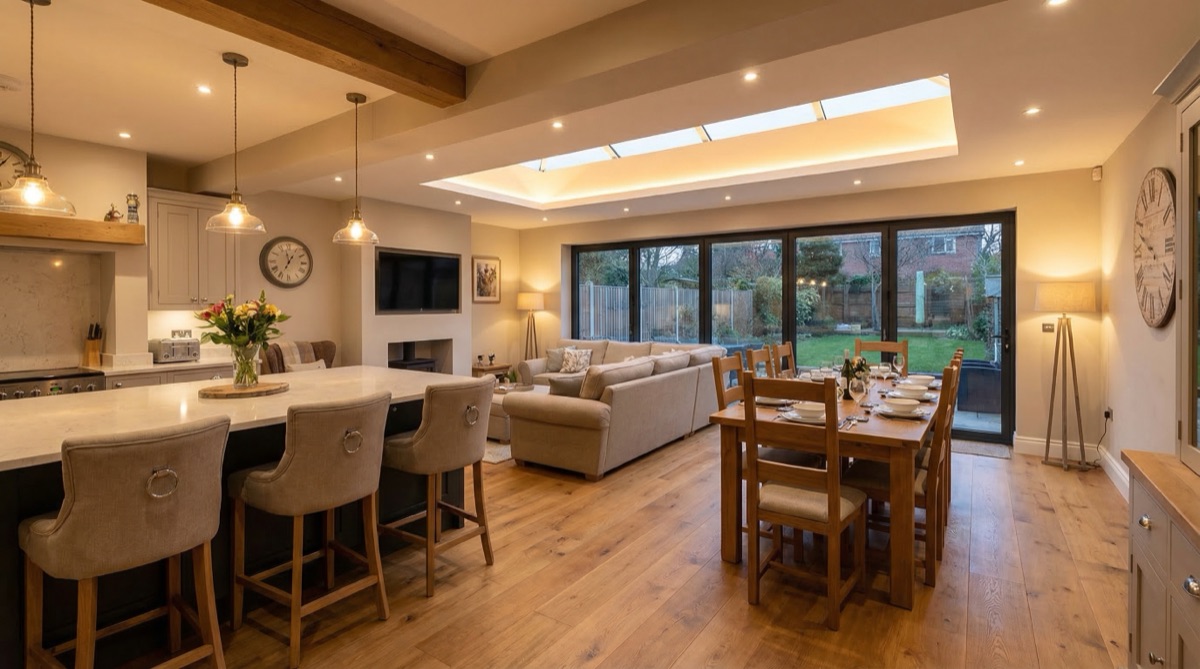
Open Plan Kitchen Extension Ideas: Design and Layout Guide
Design beautiful open-plan kitchen extensions. Explore layout ideas, zoning strategies, kitchen islands, and creating flexible, social kitchen-living spaces.
Open-Plan Kitchen Extensions: Design Excellence
Open-plan kitchens are the defining characteristic of contemporary extensions. Combining kitchen, dining, and living spaces creates flexible, social environments supporting modern family life. This guide explores open-plan design strategies, successful layouts, zoning techniques, and how to create beautiful, functional open-plan spaces that enhance your home and lifestyle.
Benefits of Open-Plan Kitchen Extensions
Visual Connection: Removing walls between kitchen and living areas creates visual continuity. Parents cooking can supervise children playing in living areas. This connection supports both practicality and family togetherness.
Flexibility: Large, undefined open space accommodates multiple simultaneous uses: cooking, dining, entertaining, children playing, working. This flexibility suits modern family needs better than divided spaces.
Light Distribution: Large extensions with full-width windows/doors distribute light throughout open space. Natural light penetrates far deeper than in compartmentalized kitchens.
Space Perception: Removing divisions makes even modest extensions feel larger. Visual openness creates sense of spaciousness improving perceived scale.
Open-Plan Kitchen Layout Options
Single Space Layout: Simplest approach treats entire extension as one open space. Kitchen equipment integrates at one end, dining and living occupy remaining area. This works well for 20-30sqm extensions where distinct zones naturally emerge.
L-Shaped Layout: Kitchen occupies one side (often along one wall), dining perpendicular, with living area deeper into the room. This creates natural zones while maintaining openness.
U-Shaped Layout: Kitchen against one wall with sitting area on opposite side. This layout maximizes counter space while maintaining central circulation.
Island-Centered Layout: Central island organizes the space, with seating on one side, cooking/work on the other. Dining and living areas flow around the island. This layout suits larger extensions (30sqm+) where generous space allows full island functionality.
Zoning Open-Plan Spaces
Subtle Level Changes: Different flooring heights (0.15-0.3m) define zones without walls. Kitchen on slightly raised platform, dining area between kitchen and living room, living room at original level. These changes create definition while maintaining visual connection.
Flooring Material Transitions: Kitchen typically has durable flooring (tile, sealed concrete). Dining and living areas use different materials (wood, carpet). Material changes define zones without creating barriers.
Ceiling Height Variation: Vaulted ceilings over kitchen, pitched roofs creating dramatic heights over seating areas, lower ceilings in intimate zones. These variations create architectural interest and subtle definition.
Partial Screening: Rather than full walls, partial screens (kitchen islands with back-panels, glass partitions, open shelving) define spaces while maintaining visual connection.
Kitchen Island Design for Open-Plan Spaces
Functional Island: Best islands incorporate multiple uses: cooking (cooktop), prep (counter), storage (cabinetry), and dining (bar seating). Multi-functional islands maximize utility.
Island Sizing: Size should accommodate functions without overwhelming space. Typical islands are 1.5m x 1m, allowing circulation around all sides and seating for 3-4 people. Oversized islands create barriers; undersized islands lack functionality.
Materials and Finishes: Islands are visually prominent. Quality materials and finishes define the entire kitchen aesthetic. Contrasting colors/materials create visual interest.
Lighting in Open-Plan Kitchens
Layered Lighting: Task lighting over island/counters, ambient background lighting, accent lighting highlighting architectural features. Layered lighting supports different activities and creates visual interest.
Pendant Lighting: Pendant lights suspended above islands create focal points and task lighting. Multiple pendants (3-4 for standard islands) provide functional and aesthetic benefit.
Natural Light: Maximize windows and roof lights. Full-width bi-fold doors and generous roof lanterns flood open spaces with daylight. Natural light quality is far superior to artificial light.
Design Tips for Successful Open-Plan Kitchens
Good Air Circulation: Adequate ventilation prevents cooking odors permeating living areas. Quality extraction systems remove cooking moisture and odors promptly.
Acoustic Control: Hard surfaces in open-plan spaces create noise issues. Soft furnishings, carpeting, acoustic panels reduce sound reflection making spaces acoustically comfortable.
Visual Hierarchy: Clear design hierarchy prevents cluttered appearance. Focal points (kitchen islands, feature walls, artwork) create visual interest and prevent monotony.
Storage Integration: Adequate storage prevents open-plan spaces appearing cluttered. Integrated cabinetry, pantries, and built-in storage maintain clean lines.
Avoiding Open-Plan Mistakes
Inadequate Ventilation: Open-plan kitchens without excellent ventilation suffer from cooking odors spreading throughout. Quality extraction systems are essential, not optional. Professional ventilation design prevents this common issue.
Excessive Noise: Hard surfaces create acoustic challenges in open-plan. Ceilings, walls, and flooring designed with acoustics in mind prevent sound bouncing and noise issues. Soft furnishings, carpeting, and acoustic treatments address this.
Visual Clutter: Without thoughtful design, open-plan spaces appear cluttered. Integrated storage, hidden clutter, and clear visual hierarchy prevent this. Design thinking about how spaces appear is essential.
Poor Natural Light: Open-plan only works when light fills the space. Inadequate windows or roof lights result in dark spaces failing to fulfill open-plan potential. Maximizing natural light through generous glazing is essential investment.
Material Finishes in Open-Plan
Material selection significantly impacts perceived quality and success of open-plan extensions. Quality finishes (natural timber, stone, quality paint) create sophisticated spaces. Budget finishes (laminates, cheap materials) create utilitarian appearance. Investment in quality materials pays long-term dividends through satisfaction and property value.
Open-Plan Kitchen Extension Costs
Open-plan extensions typically cost £2,000-2,800 per sqm depending on finishes and kitchen quality. A 30sqm open-plan kitchen extension might cost £60,000-84,000 including design, construction, and mid-range kitchen installation. Premium specifications increase this substantially, while budget options reduce costs. Additional costs for excellent ventilation, acoustic treatment, and quality finishes are investments in long-term satisfaction.
Creating Your Open-Plan Vision
Professional designers excel at creating open-plan spaces meeting your needs while maximizing light, function, and aesthetic appeal. Contact us to discuss your open-plan kitchen vision and develop a design strategy creating your ideal extension. Call 020 3051 9430 or request a free consultation.
Kitchen Appliance Placement in Open-Plan Spaces
Open-plan kitchens require thoughtful appliance placement managing cooking heat, steam, and odors. Best practices include: positioning cookers/ovens away from living areas, using range hoods or chimney extractor systems capturing cooking emissions, integrating appliances into cabinetry so they don't visually dominate, and selecting appliances in finishes complementing kitchen design. Tall appliances (refrigerators) work better against walls rather than blocking sightlines. Dishwashers and laundry appliances are best hidden in integrated units or nearby utility spaces rather than taking prime kitchen positions. Strategic placement keeps cooking utilities functional while maintaining open-plan aesthetics.
Color Coordination Across Open-Plan Zones
Successful open-plan spaces often employ subtle color transitions defining zones while maintaining visual continuity. Strategies include: cool tones (grays, blues) in kitchen, warm neutrals (beige, taupe) in dining, accent colors in living areas; or monochromatic schemes with tonal variations creating zones through depth rather than stark color changes. Feature walls (accent colors, materials) create focal points drawing attention without overwhelming. Coordinated color palettes tie separate zones together creating unified aesthetic rather than disjointed spaces. Professional designers excel at color coordination creating sophisticated, cohesive spaces that feel intentional rather than accidental.
Flexible Furnishing and Movable Elements
Open-plan spaces benefit from flexible furnishing accommodating changing needs. Strategies include: movable kitchen islands (mounted on castors), flexible seating that can be reconfigured, storage solutions that adapt to changing needs, and partitioning screens (glass, timber, fabric) that can be deployed when needed (creating temporary separation for intimate dining or focused work). This flexibility allows homeowners to adapt spaces as circumstances change — growing families might desire more separation; couples might prefer maximum openness. Intelligent design builds in flexibility allowing evolution without expensive modifications.
Multi-Functional Spaces Within Open-Plan
Contemporary open-plan extensions often incorporate multiple functions within the large open space. Beyond traditional kitchen/dining/living, designers increasingly integrate: home office zones (small desk area, separate seating), reading nooks (armchair, built-in shelving), informal bar areas (beverage stations, bar seating), or playrooms (designated children's area with storage). These zones are defined through design elements (rugs, lighting, partial screens) rather than walls, maintaining openness while accommodating diverse needs. This multi-functional approach maximizes utility of valuable extension space, allowing homes to adapt to modern living patterns where work, leisure, and family activities increasingly coexist in shared spaces.
Explore More House Extension Design Options
Related Articles
Comprehensive guide to house extension planning permission in 2024. Learn about costs, timelines, planning applications, and what to expect from professional house extension specialists.
Discover the key advantages of choosing professional house extension services. From cost savings to creative solutions, learn why specialists are essential for successful projects.
Complete guide to house extension costs in the UK. Learn about fee structures, budgeting tips, and how to get maximum value from your house extension investment.
Ready to Get Started?
Home Extensions Now Team
Our expert team of architectural design specialists brings decades of combined experience in UK house extension design and planning services for residential and commercial projects. We're committed to providing clear, actionable insights to help you make informed decisions about your home extension projects.
Ready to Plan Your Home Extension?
Whether you're planning a single-storey extension, renovation project, or complete home redesign, our house extension design solutions can help you build quickly and confidently.