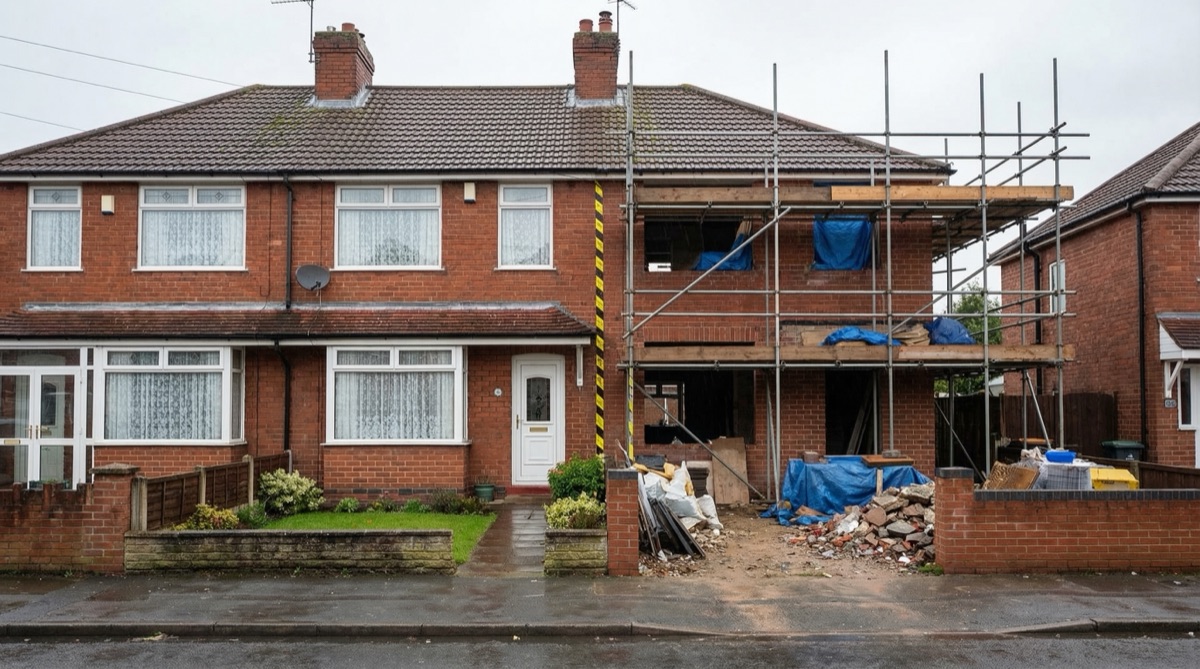
Party Wall Matters for House Extensions: Essential Legal Guide
Navigate party wall requirements for extensions. Learn about notices, surveyors, awards, and how to comply with party wall laws while maintaining good neighbor relations.
Understanding Party Wall Matters
If your property shares a party wall with neighbors and you're planning an extension, you must comply with the Party Wall Act 1996. This legislation protects neighbors' rights when building work affects shared walls. Understanding party wall requirements and complying properly protects you from enforcement action and ensures your extension proceeds without neighbor disputes. This guide explains the legal requirements, the process involved, and strategies for managing party wall matters smoothly.
What Is a Party Wall?
A party wall is a wall that sits astride the boundary between two properties, belonging jointly to both properties. This typically applies to walls between semi-detached houses, terraced properties, or shared walls between houses and adjacent commercial buildings. The party wall law applies whether the wall is entirely on your side of the boundary or straddles the boundary.
Common scenarios requiring party wall compliance include: extensions built against party walls, extensions built close to party walls (within 3 metres), loft conversions involving roof work near party structures, and extensions involving building work that vibrates or affects adjacent property stability.
Party Wall Act Requirements
The Party Wall Act requires property owners to serve notice on neighbors if they plan certain building works. You must serve notice at least 2 months before work starts (or 1 month in some circumstances). Notice must be served on all owners of adjoining properties that might be affected. Neighbors have the right to appoint a surveyor to protect their interests and monitor the work. If neighbors appoint a surveyor, you must also appoint a surveyor (or agree to a joint surveyor). Surveyors prepare a party wall award documenting existing conditions, the proposed work, and measures to protect the neighbor's property.
Work cannot start until notice period has passed and either neighbors have agreed to the work or surveyors have issued an award. If neighbors object, surveyors assess whether objections are valid and issue an award permitting work to proceed (unless surveyors agree with neighbors that work should be modified).
When Party Wall Notices Are Required
Works Within 3 Metres of a Party Wall: If you're undertaking works within 3 metres of a party wall (measured horizontally from the wall), and the works go deeper than the party wall foundation level, you must serve notice.
Works Directly Affecting a Party Wall: If your work will directly affect a party wall (such as removing part of it, inserting beams, or working on the wall itself), notice is definitely required.
Building Against a Party Wall: If you're building an extension against a party wall, notice must be served.
Excavation Near Party Walls: If your extension's foundations will be deeper than the neighbor's foundations, notice is required.
Works Not Requiring Notice: Some minor works don't require notice, such as like-for-like replacements of surface coatings, or works that are entirely on your side of the boundary and don't affect the party wall itself. However, if in doubt, serving notice is safer than assuming exemption.
The Party Wall Process
Step 1: Consult a Party Wall Surveyor: Before serving notice, consult a party wall surveyor who specializes in Act compliance. The surveyor advises on which neighbors must be notified, what notice should cover, and how to serve it properly. This preliminary consultation typically costs £200-400 and is money well spent — errors in serving notice can invalidate the notice and delay your project.
Step 2: Serve Notice: Your surveyor prepares the formal notice and serves it on all neighbors whose properties might be affected. Notice must be served by a method that provides proof of delivery — typically by personal service or registered post. Notice must contain prescribed information about the proposed works. Notice period runs from the date of service, not from when neighbors acknowledge receipt.
Step 3: Neighbor Response: Neighbors have 14 days to respond. They can either: consent to the work and consent to you appointing a surveyor (most common outcome for straightforward extensions), consent but appoint their own surveyor (creates the need for a full party wall award), or dissent without appointing a surveyor (uncommon but allows you to progress once the dispute procedure is completed), or dissent and appoint a surveyor (requires full party wall award process).
Step 4: Surveyor(s) Appointment: If neighbors appoint a surveyor, both parties must appoint a surveyor (or agree to a joint surveyor). If you and the neighbor can agree on a joint surveyor, costs are minimized and the process is simpler. If you cannot agree, each party appoints a surveyor and these two surveyors appoint a third surveyor (often called an engineer or umpire).
Step 5: Party Wall Award: Surveyors inspect the property, understand the proposed work, and issue an award documenting: the condition of the party wall and adjacent property before works, the nature of the proposed works, measures to protect the adjacent property during works, and conditions for compensation if damage occurs. The award is the legal document permitting works to proceed. Work cannot start until the award is issued and the notice period has expired.
Step 6: Perform Works According to Award: Once the award is issued, you can proceed with works, but must comply with the award's conditions. The surveyor or engineer inspects the work at key stages to ensure compliance. If damage to the neighbor's property occurs, the award specifies how compensation is determined.
Step 7: Final Inspection and Completion: Upon work completion, the surveyor conducts a final inspection and issues a completion certificate. The neighbor's surveyor also inspects and confirms satisfaction. Once both surveyors have certified completion, the process is finished.
Costs of Party Wall Matters
Party wall costs typically break down as follows:
Initial Surveyor Consultation: £200-400
Notice Preparation and Serving: £300-600
Your Surveyor (if award required): £800-1,500 per property
Neighbor's Surveyor Fees (if appointed): £700-1,500 per neighbor (you typically pay these costs)
Engineer/Umpire (if surveyors disagree): £1,000-2,000+ (shared cost)
Total Cost for Typical Extension (one adjacent property): £1,500-4,000
These costs vary depending on survey complexity, your location, and whether surveyors can agree or require an engineer. Straightforward extensions typically cost less; complex structural work costs more.
Managing Party Wall Issues Smoothly
Notify Early: Serve notice as early as possible in your project planning. Don't wait until construction is imminent — this creates stress and neighbor resentment. Early notification allows time for communication and dispute resolution.
Communicate with Neighbors: Before formally serving notice, discuss your extension plans with neighbors in person. Explain what you're planning, how it will affect them (or that it won't), and why you need to serve notice. Many neighbors are more cooperative when they understand your project. Personal communication often prevents disputes that formal notice procedures might trigger.
Provide Clear Information: Ensure your notice documentation is clear, comprehensive, and shows your proposed works clearly. Good documentation helps surveyors understand your work and reduces disputes. Vague or unclear information increases costs and delays.
Appoint Your Surveyor Early: Even if neighbors don't appoint a surveyor (and most don't for straightforward extensions), appointing your surveyor early allows them to inspect the party wall before work starts. This protects you by documenting existing conditions.
Cooperate with Surveyors: If surveyors are appointed, cooperate fully. Provide access to properties for inspection, answer questions, and share relevant information. Good cooperation speeds up the survey process and often results in surveyors agreeing, avoiding the need for an engineer.
Plan for Contingency: Budget for party wall costs in your project timeline and budget. Don't assume neighbors will waive their rights — assume surveyor involvement and budget accordingly.
Common Party Wall Disputes
Inadequate Notice: Disputes arise when notice is not served properly or doesn't contain required information. Always use a qualified surveyor to prepare and serve notice — this investment prevents costly disputes.
Damage Claims: If work damages the neighbor's property (cracks, structural movement, etc.), neighbors can claim compensation under the party wall award. Quality construction that follows the award's requirements minimizes damage risk.
Noise and Disturbance: While party wall law doesn't directly control noise, excessive noise during works can create disputes and strain neighbor relations. Controlling working hours and minimizing disruption maintains good relations.
Boundary Disputes: Party wall matters sometimes reveal boundary uncertainties. If your property boundary is unclear, resolve this before serving notice — surveyors can advise on how to clarify boundaries.
When Party Wall Disputes Require Legal Resolution
Most party wall disputes are resolved through the surveyor process. However, if disputes cannot be resolved, either party can appeal to the courts. Court disputes are expensive (£2,000-10,000+) and time-consuming (6-12 months), so resolving disputes through surveyors is preferable.
Avoid court disputes by: communicating early and clearly with neighbors, appointing qualified surveyors, cooperating fully with the process, and addressing any concerns surveyors raise promptly. Court disputes are rare for straightforward extensions where process is followed properly.
Explore More House Extension Design Options
Related Articles
Comprehensive guide to house extension planning permission in 2024. Learn about costs, timelines, planning applications, and what to expect from professional house extension specialists.
Discover the key advantages of choosing professional house extension services. From cost savings to creative solutions, learn why specialists are essential for successful projects.
Complete guide to house extension costs in the UK. Learn about fee structures, budgeting tips, and how to get maximum value from your house extension investment.
Ready to Get Started?
Home Extensions Now Team
Our expert team of architectural design specialists brings decades of combined experience in UK house extension design and planning services for residential and commercial projects. We're committed to providing clear, actionable insights to help you make informed decisions about your home extension projects.
Ready to Plan Your Home Extension?
Whether you're planning a single-storey extension, renovation project, or complete home redesign, our house extension design solutions can help you build quickly and confidently.