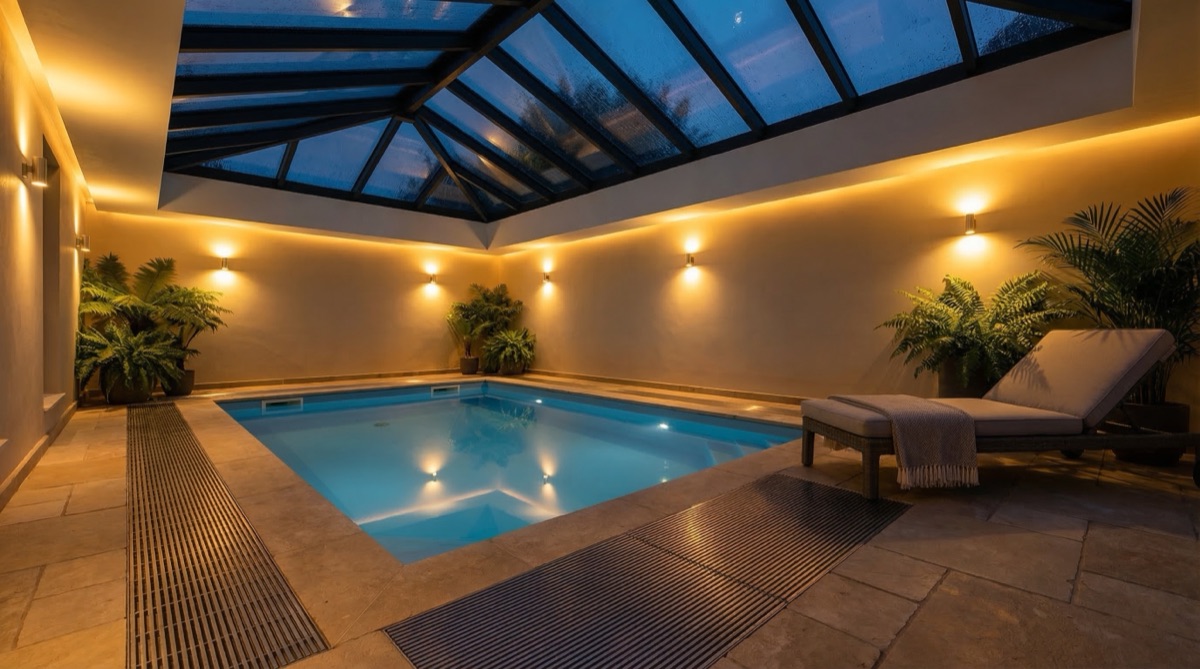
Pool and Spa Room Extensions: Creating Luxury Wellness Spaces
Design indoor pool and spa extensions. Learn about water management, heating systems, ventilation requirements, and creating luxurious wellness spaces.
Indoor Pool and Spa Room Extensions
Indoor pool and spa extensions create luxurious wellness spaces, adding significant value and lifestyle benefit. However, these specialized extensions require careful design and construction to manage moisture, provide adequate ventilation, and maintain structural integrity. This comprehensive guide explores design considerations, technical requirements, cost implications, and how to create beautiful, functional indoor water spaces that enhance your home and wellbeing.
Pool vs Spa Considerations
Swimming Pools: Indoor swimming pools require substantial space (typically 25sqm minimum for functional lap swimming), robust structural design to support water weight, and comprehensive mechanical systems (heating, filtration, circulation). Benefits include exercise value, recreation, and significant property value increase. Costs are substantial: £80,000-150,000+ for modest pools.
Hot Tubs and Spas: Compact hot tubs (2-6 person) require less space (10-15sqm), simpler mechanical systems, and lower costs (£40,000-70,000). Wellness benefits include relaxation and therapeutic heat therapy. Hot tubs are popular choices for space and budget-conscious homeowners.
Combination Spaces: Many projects combine pools with hot tubs, saunas, or steam rooms, creating comprehensive wellness centers. These increase costs but create diverse recreational options.
Structural Design for Water Spaces
Foundation and Floor Strength: Water adds substantial weight — 1,000 liters of water weighs 1 tonne. A 25sqm pool holding 100,000 liters weighs 100 tonnes. Floors must be designed to support this weight through robust concrete slabs, properly designed structural beams, and adequate foundations. Professional structural design is essential — inadequate structural capacity causes catastrophic floor failure.
Waterproofing: Complete, long-term waterproofing is essential. Even small leaks cause damage to structure below and neighboring properties. Waterproofing layers typically include: structural concrete, damp-proof membranes, tiling and sealants, and careful detailing at junctions. Waterproofing inspections at critical stages ensure proper implementation.
Material Durability: Water creates aggressive environment attacking materials. Concrete can deteriorate, steel corrode, and wood rot in high-moisture environments. Specify durable materials: waterproof concrete, stainless steel, treated timber, and corrosion-resistant finishes. Material selection is more important in water spaces than typical extensions.
Ventilation and Humidity Control
Ventilation Requirements: Water evaporation from pools and hot tubs creates humidity. Without adequate ventilation, humidity condenses on walls and ceilings, causing mold growth, decay, and discomfort. Ventilation must remove moisture continuously. Humidity control typically requires mechanical ventilation (heat recovery ventilation systems extracting humid air while minimizing heat loss) rather than simple fans.
Dehumidification: Dedicated dehumidification systems actively remove moisture from the air, maintaining relative humidity below 60%. These are often essential in pool rooms where simple ventilation may be insufficient. Dehumidification costs £2,000-5,000 for systems but is essential investment preventing moisture damage.
Air Circulation: Good air circulation prevents stagnant humid zones and prevents condensation. Design ductwork to distribute fresh air throughout the space and extract humid air efficiently.
Heating Systems
Pool Heating: Maintaining comfortable water temperature (27-29°C for swimming pools, 37-40°C for hot tubs) requires significant heating capacity. Options include: air source heat pumps (increasingly popular, efficient for most conditions), electric immersion heaters (simple but expensive to operate), gas boilers (efficient but require gas supply), or solar thermal systems (renewable but weather-dependent). Proper insulation reduces heating demand.
Energy Costs: Heating water consumes substantial energy. A well-insulated pool with heat pump heating costs £500-1,000 annually to heat; inadequately insulated pools or electric heating can cost £2,000-4,000+ annually. Energy-efficient heating design is essential for affordability.
Zone Control: Separate heating for pool water and ambient air allows independent control. Keeping pool water warm (27-29°C) while maintaining ambient air at slightly lower temperature (24-26°C) optimizes comfort and energy efficiency.
Water Treatment and Filtration
Circulation Systems: Pumps circulate water through filters and treatment systems. Circulation keeps water clean by removing particles, distributes treatment chemicals, and maintains water quality. Pump sizing depends on pool volume and required circulation rates. Modern systems are efficient but require proper design and maintenance.
Filtration: Sand filters, cartridge filters, or advanced filtration systems remove particles maintaining water clarity. Filter selection depends on water volume and usage. Regular maintenance (cleaning/replacement) is essential for performance.
Water Treatment: Chemical treatment (chlorine or salt chlorination) prevents algae growth and maintains water safety. Modern systems are increasingly automated with sensors monitoring and maintaining appropriate chemical levels. Proper treatment ensures water safety and clarity.
Filtration Plant Space: Pumps, filters, heaters, and chemical treatment equipment require dedicated space — typically a plant room of 10-15sqm. Allow access for maintenance. Proper plant room design ensures long-term functionality and ease of maintenance.
Lighting and Ambiance
Underwater Lighting: Underwater LED lights create ambiance and allow evening use. Colored LED lighting creates spa-like atmosphere. Design waterproof light fittings to meet electrical safety standards.
General Lighting: Bright, even lighting is essential for safety. Bright LED lighting during swimming; dimmable lighting during relaxation. Ensure lighting supports both recreation and relaxation use.
Natural Light: Where possible, incorporate windows or roof lanterns providing natural light. This improves mood and reduces daytime lighting costs. However, avoid excessive heat gain from south-facing windows heating the space beyond comfort.
Material and Design Choices
Pool Finishes: Options include: chlorine-resistant tile (durable, easy to clean, premium cost), fiberglass (smooth, comfortable, lower cost but can stain), concrete with sealant (lowest cost but requires careful waterproofing). Tile is most popular choice for durability and ease of cleaning.
Spa and Sauna Materials: Treated timber creates traditional spa aesthetic. Ceramics and tile create modern look. Select materials resistant to moisture and heat.
Flooring: Non-slip surfaces are essential for safety. Textured tile or rubber mats prevent slipping. Ensure drainage slopes floor toward drains preventing water pooling.
Accessibility and Safety
Access: Provide safe access with non-slip surfaces and hand rails where necessary. Consider wheelchair accessibility if anyone with mobility limitations uses the space.
Safety Features: Install safety equipment: hand rails, non-slip surfaces, depth markings, and rescue equipment. Ensure electrical installations meet safety standards for wet environments. Install ground fault circuit interrupters (RCDs) on all electrical circuits in wet areas.
Supervision: If children use pools, provide appropriate supervision and consider safety features like fencing or automatic pool covers.
Cost Analysis for Pool and Spa Extensions
Hot Tub Extension (12sqm): £40,000-70,000 including basic room structure, hot tub installation, and mechanical systems.
Compact Swimming Pool (25sqm): £80,000-150,000 including structure, pool construction, mechanical systems, and finishing.
Luxury Wellness Center (50sqm+): £150,000-300,000+ including pool, hot tub, sauna, steam room, and comprehensive mechanical systems.
Ongoing costs include: chemical treatment (£100-200 annually), electricity for heating/filtration (£800-2,000 annually for efficient systems), maintenance and repairs (£500-1,500 annually), and professional servicing (£300-600 annually).
Planning and Building Control Considerations
Pool and spa extensions typically require planning permission due to their size and impact. Building regulations approval is always required, with specialized requirements for moisture control, water treatment systems, and electrical safety. Professional design and compliance with regulations is essential.
Long-Term Value and Enjoyment
Well-designed pool and spa extensions add significant property value (often recovering 70-100% of investment) while providing years of wellness and recreational benefits. These specialized spaces create luxury living environments supporting health, relaxation, and quality of life.
Understanding Pool Room Heating and Operating Costs
Heating represents the largest operating cost for pool rooms. Maintaining water at 27-29°C and air at 24-26°C requires substantial energy input. Air source heat pumps are the most efficient option, typically operating at COP (coefficient of performance) of 3-4, meaning they deliver 3-4 units of heat for each unit of electricity consumed. A well-insulated 25sqm pool room heated with an efficient heat pump costs approximately £500-800 annually to operate. In contrast, electric resistance heating or gas boilers can cost £2,000-4,000+ annually. Initial investment in efficient heating systems and proper building insulation pays back through significantly reduced operating costs over the building's lifetime. Additionally, pool room extensions can be designed to minimize heat loss through superior insulation and strategic window placement, further reducing running costs.
Professional Design and Coordination
Pool and spa extensions require coordination between architects, structural engineers, mechanical engineers (for heating and ventilation), builders, and specialized water feature contractors. Complex building regulations and technical requirements make professional design essential. Specialists understand humidity management, water chemistry, energy efficiency, and building durability in challenging environments. Investment in professional expertise prevents costly mistakes and ensures long-term functionality and enjoyment.
Explore More House Extension Design Options
Related Articles
Comprehensive guide to house extension planning permission in 2024. Learn about costs, timelines, planning applications, and what to expect from professional house extension specialists.
Discover the key advantages of choosing professional house extension services. From cost savings to creative solutions, learn why specialists are essential for successful projects.
Complete guide to house extension costs in the UK. Learn about fee structures, budgeting tips, and how to get maximum value from your house extension investment.
Ready to Get Started?
Home Extensions Now Team
Our expert team of architectural design specialists brings decades of combined experience in UK house extension design and planning services for residential and commercial projects. We're committed to providing clear, actionable insights to help you make informed decisions about your home extension projects.
Ready to Plan Your Home Extension?
Whether you're planning a single-storey extension, renovation project, or complete home redesign, our house extension design solutions can help you build quickly and confidently.