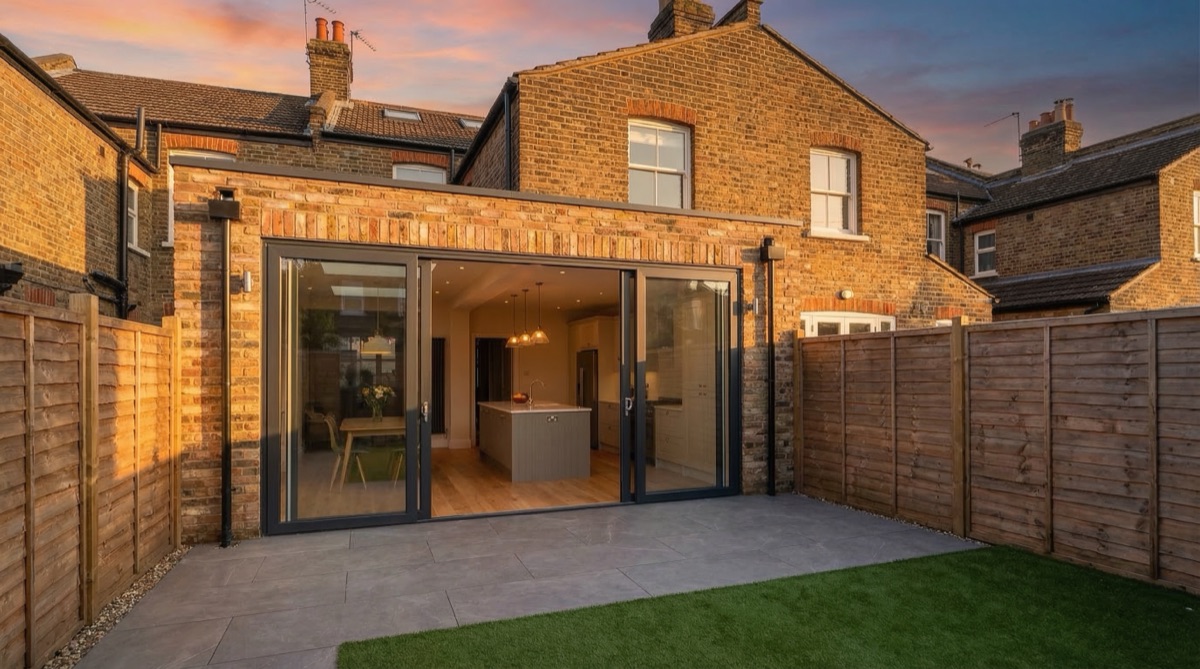
Rear Extensions London: Design Ideas, Costs & Planning Guide for 2026
Complete guide to rear house extensions in London. Design ideas for Victorian terraces, costs per sqm, permitted development rules and how to maximise your garden space.
Rear Extensions: The Most Popular Way to Extend in London
A rear extension is the most common and versatile type of house extension in London. By extending the back of your property, you can create a larger kitchen, an open-plan living area, or a combined kitchen-diner that opens directly onto the garden. Rear extensions work on almost every property type — from compact Victorian terraces to spacious detached houses. This comprehensive 2026 guide covers permitted development rules, costs, design ideas, and planning requirements for rear extensions across London.
Permitted Development Rules for Rear Extensions
Many rear extensions can be built without planning permission under permitted development rights. The key limits in 2026 are:
Terraced and semi-detached houses: Up to 3 metres from the original rear wall without planning permission (or up to 6 metres using the prior approval/larger home extension process).
Detached houses: Up to 4 metres without planning permission (or up to 8 metres using prior approval).
Maximum height: 4 metres at the eaves, 3 metres at the boundary.
These limits do not apply in conservation areas or to listed buildings, where planning permission is almost always required. We check your property against all the rules during our free consultation.
Rear Extension Costs in London 2026
Small rear extension (3m, 15sqm): £35,000 to £55,000
Medium rear extension (4-5m, 20-25sqm): £55,000 to £80,000
Large rear extension (6m+, 30sqm+): £75,000 to £110,000
Costs include design, structural engineering, building regulations, construction and standard finishes. Premium specifications, underfloor heating, high-end kitchens and bespoke joinery will increase these figures substantially.
Design Ideas for Rear Extensions
Bi-Fold and Sliding Doors
Full-width bi-fold or sliding doors along the rear elevation create a dramatic connection between kitchen and garden. When fully open, the threshold between inside and outside effectively disappears — perfect for summer entertaining.
Roof Lanterns and Skylights
A large roof lantern or series of skylights transforms a rear extension from a dark room into a light-filled space. Roof lanterns work particularly well over kitchen islands or dining tables, creating a focal point of natural light.
Level Thresholds and Consistent Flooring
Using the same flooring material (or visually matching materials) inside and outside, combined with a flush threshold at the doors, creates a seamless flow between the extension and the garden patio.
Vaulted and Pitched Ceilings
Instead of a standard flat roof, a vaulted or pitched ceiling adds volume and architectural interest to a rear extension. Exposed timber rafters or steel beams create a contemporary look while maximising the sense of space.
Rear Extensions by London Area
We design and build rear extensions across all of London. Here are some of the areas where we are most active:
South London: Clapham, Tooting, Mitcham, Morden, Peckham, Brockley, Catford, Epsom, Carshalton, Wallington
North London: Enfield, Barnet, Southgate, Winchmore Hill, Highgate, Islington, Camden, Crouch End, Tottenham, Walthamstow
West London: Chiswick, Twickenham, Hampton, Kingston, Richmond, Fulham
East London: Hackney, Barking, Chadwell Heath, Sidcup, Orpington, Biggin Hill, Bromley
Building Regulations for Rear Extensions
All rear extensions require building regulations approval regardless of whether planning permission is needed. Building regulations approval ensures the extension meets current standards for fire safety, structural integrity, thermal performance, ventilation, electrical safety and accessibility. The process involves submission of detailed technical drawings to the local authority's building control department, which reviews them for compliance. Once approved, the local authority conducts inspections at key construction stages (foundations, structural completion, and final completion) to verify work complies with approved designs. Upon completion, building control issues a completion certificate confirming the extension complies with building regulations. This certificate is essential for future property sales and mortgage purposes — properties without completion certificates face difficulty selling.
Building regulations have become increasingly stringent around thermal performance and energy efficiency. Modern extensions must achieve U-values around 0.15 W/m²K (about 150mm of insulation), have airtight construction to minimize heat loss, and include mechanical ventilation with heat recovery to maintain air quality. Windows must be high-performance double or triple-glazed units. These requirements add cost (approximately £8,000-12,000) but deliver lasting benefits through reduced energy bills and improved comfort.
Neighbour Relations and Party Walls
For terraced and semi-detached properties, the Party Wall Act applies if the extension touches the Party Wall or works within a certain distance of neighbouring boundaries. A Party Wall surveyor must be appointed to manage the process, serving formal notices on neighbors and monitoring works. This typically costs £800-1,200 per neighbor but protects all parties and ensures proper procedures are followed. Most neighbors accept Party Wall notices without objection — the process is standard and commonplace. Early consultation with neighbors often reduces concerns and prevents later complications.
Design Principles for Victorian and Georgian Properties
Victorian and Edwardian terraced properties dominate London's housing stock and respond beautifully to well-designed rear extensions. The key is respecting the architectural language of the original building while creating modern, functional extensions. Traditional proportions — tall windows, high ceilings, period detailing — inform good extension design. A rear extension that respects the scale of the original building, uses compatible materials and proportions, and maintains the visual hierarchy of the existing property creates a harmonious addition rather than an incongruous afterthought.
Contemporary design also works well on Victorian properties when handled with sensitivity. Clean lines, large glazed openings and minimal ornamentation can contrast elegantly with period brickwork and detailing. The key is thoughtful design that references both old and new rather than attempting to pastiche period style. Quality contemporary extensions often add more value than poorly executed period imitations.
Energy Efficiency and Running Costs
Modern rear extensions can be significantly more energy-efficient than the older original building, effectively reducing whole-house energy consumption even when adding floor area. High-performance insulation, heat pumps, solar panels, and other sustainable technologies turn extensions into energy-generating or energy-neutral additions. A well-designed extension with underfloor heating, heat pump hot water, and solar panels might cost £5,000-8,000 more to build but deliver savings of £500-800 annually through reduced energy bills. Over a building's lifecycle, these investments deliver substantial financial returns while reducing environmental impact.
The Process
Step 1: Free site visit and consultation — we assess your property, discuss your requirements, and explain your options.
Step 2: Design and drawings — our architectural team creates detailed plans for your approval.
Step 3: Planning and building regulations — we handle all applications and approvals on your behalf.
Step 4: Construction — we provide tender-ready drawings, help you select a builder, and manage the project through to completion.
Start Your Rear Extension Project
Contact us for a free, no-obligation consultation about your rear extension project. Call 020 3051 9430 or request a quote online. We cover all areas across London and the surrounding counties.
Maximizing Garden Connection Through Design
The best rear extensions maximize connection to the garden creating seamless indoor-outdoor living. Design strategies include: full-width glazing opening the extension toward garden views, level thresholds eliminating barriers between indoor and outdoor, matching flooring materials creating visual continuity, and thoughtful garden design complementing interior finishes. Extensions oriented away from gardens or with poor glazing miss opportunities for light and connection. Conversely, well-designed extensions that frame garden views and create strong indoor-outdoor connection command premium market values reflecting the enhanced living experience.
Getting Started With Your Rear Extension
Ready to transform your London home with a rear extension? Start with a free consultation with our specialist team who will assess your property, discuss your vision, and guide you through the entire process from concept to completion.
Future-Proofing Rear Extensions
Design decisions should anticipate future needs and adaptability. Strategic electrical outlets, water connections, and mechanical systems facilitate future modifications (outdoor kitchen, heating extensions). Flexible spaces can be reconfigured as family needs evolve. These forward-thinking approaches prevent expensive later modifications. Building with adaptability in mind ensures extensions remain functional and valuable long-term rather than becoming fixed solutions limiting future flexibility.
Explore More House Extension Design Options
Related Articles
Comprehensive guide to house extension planning permission in 2024. Learn about costs, timelines, planning applications, and what to expect from professional house extension specialists.
Discover the key advantages of choosing professional house extension services. From cost savings to creative solutions, learn why specialists are essential for successful projects.
Complete guide to house extension costs in the UK. Learn about fee structures, budgeting tips, and how to get maximum value from your house extension investment.
Ready to Get Started?
Home Extensions Now Team
Our expert team of architectural design specialists brings decades of combined experience in UK house extension design and planning services for residential and commercial projects. We're committed to providing clear, actionable insights to help you make informed decisions about your home extension projects.
Ready to Plan Your Home Extension?
Whether you're planning a single-storey extension, renovation project, or complete home redesign, our house extension design solutions can help you build quickly and confidently.