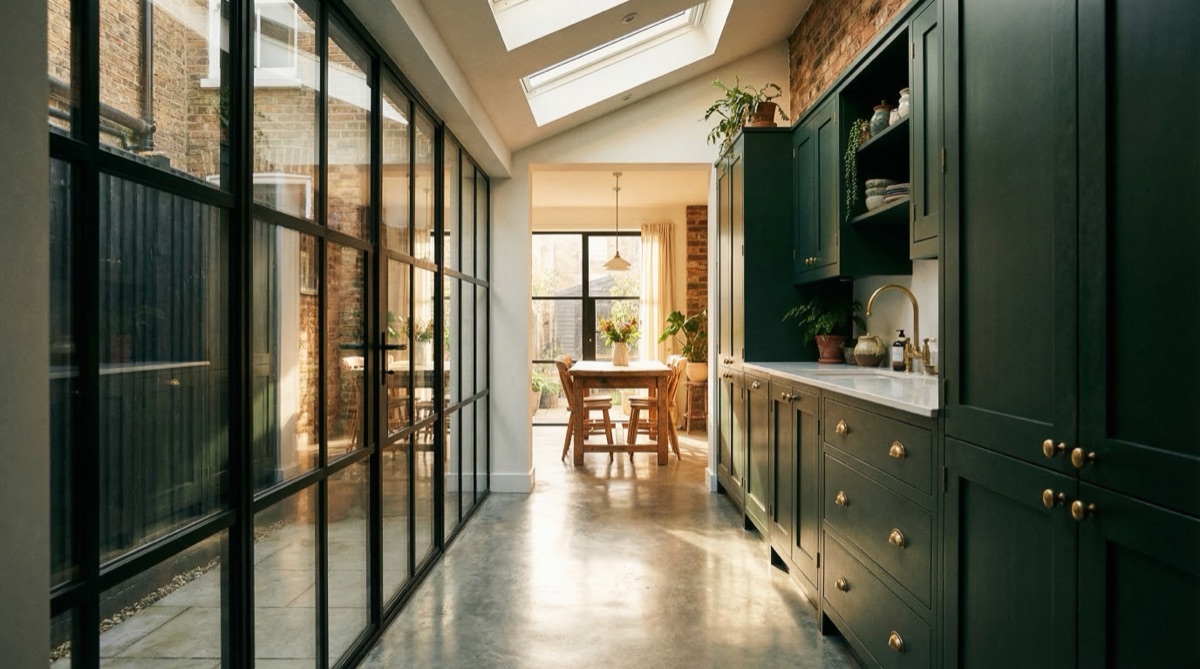
Side Return Extension London: Cost, Design & Planning Guide 2026
Transform narrow side returns in London homes. Learn about side return costs, design options, planning rules, and how to create bright, spacious extensions.
Side Return Extensions: Maximizing London Terrace Spaces
Side return extensions reclaim narrow alleyways running alongside Victorian and Edwardian terraced houses, transforming dark, underutilized spaces into bright living areas. Side returns are among the most popular extensions in London, particularly in areas where terraced housing dominates. This guide explains side return costs, design options, planning requirements, and how to maximize these valuable but constrained spaces.
What Is a Side Return?
A side return is the narrow alleyway or passage between terraced houses and a neighbor's boundary. In Victorian and Edwardian terraced properties, this space (typically 2-3m wide) often remains open to the street. Enclosing this space and opening it into the existing kitchen creates a larger, brighter kitchen/dining area. Side returns represent one of London's most characteristic extension opportunities.
Side Return Extension Costs 2026
Basic Side Return (10-12sqm): £25,000-40,000 with standard finishes, basic kitchen fit-out, and simple rooflight.
Standard Side Return (12-15sqm): £35,000-55,000 with good quality finishes, mid-range kitchen, and roof light along party wall.
Premium Side Return (15sqm+): £50,000-70,000 with premium finishes, high-end kitchen, and sophisticated lighting design.
Design Opportunities for Side Returns
Successful side return designs maximize light (primary constraint), create usable dining space, and open to the kitchen behind. Design strategies include: long roof lantern/skylight along the party wall (floods space with light from above), glazed doors opening into existing kitchen (maximizes visual connection), materials continuing from kitchen (creates seamless flow), and furniture arrangement working with the narrow geometry. Professional design transforms constrained space into attractive, functional area.
Party Wall Matters for Side Returns
Side return extensions involving work on party walls require party wall compliance. A surveyor agreement between you and your neighbor is typical, costing £700-1,500 per surveyor. Some neighbors appoint surveyors; others waive rights. Early communication often resolves party wall matters amicably, avoiding disputes and additional costs.
Planning and Building Regulations
Most side return extensions fall within permitted development rights if they don't exceed height/depth limits and don't affect conservation areas. Building regulations approval is always required, with special emphasis on damp proofing given exposure to external moisture and ventilation ensuring adequate air supply to the small space.
Lighting Design: The Critical Challenge
Side returns' primary challenge is maximizing natural light in a narrow, enclosed space. Solutions include: roof lanterns or continuous rooflights along party wall (most effective), glazed doors opening to kitchen, white/light finishes reflecting light, minimal visual obstruction, and potentially skylights if roof height permits. Professional lighting design makes all difference to success. Some extensions include decorative mirror panels increasing light reflection further.
Thermal Performance and Year-Round Comfort
Side returns can be challenging to heat and cool due to narrow width, limited solar gain, and three exterior walls. Excellent insulation (150-200mm in walls and roof), high-performance triple-glazed windows, and continuous thermal barriers ensure comfort year-round. Many side returns benefit from underfloor heating, which provides warmth without radiators consuming precious wall space. Heat recovery ventilation maintains air quality while minimizing heat loss. These additional specifications add £3,000-5,000 to costs but transform side returns from seasonal spaces into comfortable areas usable year-round.
Material Finishes and Durability
Side returns require durable finishes due to exposure to external elements. Three exterior walls mean rain exposure risk, requiring careful damp proofing and waterproofing. Roof design must shed water effectively, with quality flashings and gutter systems preventing water ingress. Interior finishes should use moisture-resistant materials, particularly near external walls. Professional specification ensures durability and prevents expensive problems like damp or mold that can plague poorly detailed conversions.
Integration with Existing Kitchen
Successful side returns integrate seamlessly with existing kitchens rather than appearing as separate rooms. Design strategies include: consistent flooring materials continuing from kitchen into extension, complementary color schemes, matching ceiling heights where possible, and thoughtful door placement maximizing visual connection. The best side returns feel like natural extensions of the kitchen, expanding it rather than adding separate space. Poor integration creates disjointed, unsatisfying spaces that fail to deliver their potential.
Side Return ROI in London
A well-designed £45,000 side return typically increases property value by £55,000-70,000, delivering strong returns. The value uplift reflects that side returns solve a specific London problem — dark, wasted side spaces — and add highly functional, valued living area. Properties with well-executed side returns attract premium prices from buyers. Poorly executed side returns with dark, awkward spaces add little value. Quality design and execution are essential for maximizing returns on side return investments.
Side Return in Areas of London
Side returns are particularly common in: Islington (dense Victorian terraces), Hackney (period properties with narrow plots), Walthamstow (Victorian stock), Clapham (terraced streets), Peckham (dense housing), Tooting (Victorian terraces), Crouch End (period properties), and other areas with substantial Victorian/Edwardian terraced housing. These areas represent the highest concentration of side return opportunities and greatest market demand for side return extensions.
Maximizing Limited Space
Despite narrow width, side returns can serve multiple purposes: extended kitchen/dining area, wine cellar/storage if accessed from kitchen, utility area, or additional bathroom. Flexible design maximizing utility while maintaining comfortable functionality creates valuable space from constrained geometry.
Side Return Structural Considerations
Structurally, side returns are relatively straightforward — they typically involve infilling open alleyways with new walls and roofing. The primary structural requirement is designing a roof that carries its own weight plus snow/wind loads while connecting to the existing house structure. Structural engineers detail connections between new roof and existing walls, ensuring loads transfer safely. If the side return wall is load-bearing (supporting upper floor), additional bracing may be required during construction. Most side returns avoid major structural costs because they don't typically involve removing walls or supporting additional floors. Professional structural assessment early in design prevents surprises during construction.
Natural Ventilation and Air Quality
Side returns can suffer from poor natural ventilation due to narrow dimensions and limited window options. Building regulations require adequate ventilation — this is typically achieved through: windows opening to side return and kitchen, mechanical extract ventilation over cooker (required by regs), and potentially heat recovery ventilation. Adequate ventilation prevents moisture buildup and ensures air quality. Mechanical ventilation adds £1,500-3,000 but ensures year-round air quality even when windows are closed in winter. Modern systems are quiet and unobtrusive, making them preferable to constantly opening windows in cold months.
Electrical and Services Planning
Side returns require careful services planning given space constraints. Electrical outlets, lighting, heating pipes, and plumbing require strategic placement along walls to avoid consuming visual space. Under-cabinet lighting, recessed ceiling lights, and wall-mounted fixtures work better than free-standing elements. If incorporating kitchen appliances (integrated dishwasher, wine cooler, coffee machine), electrical and water connections require careful planning. Professional kitchen design coordinates all services ensuring everything fits properly without wasteful or awkward routing. Poor services planning creates cluttered, dysfunctional spaces where wires and pipes are visually intrusive.
Kitchen Design Integration for Side Returns
Successfully integrating side returns with kitchens requires sophisticated design. Strategies include: extending kitchen work surface into side return (island or peninsula units work well), using side return as dining zone with table and chairs, locating refrigerator in side return (tall appliances suit narrow width), or creating a beverage/coffee station. The best designs treat the side return and kitchen as single integrated space rather than separate areas. Furniture and appliance placement should follow the natural workflow and use patterns of the kitchen. Color coordination (matching finishes and materials between kitchen and side return) creates visual harmony.
Furniture and Fixture Selection for Narrow Spaces
Narrow spaces require careful furniture selection — standard-sized kitchen elements or dining tables often don't fit proportionally. Bespoke cabinetry designed for the specific dimensions ensures optimal space utilization. Narrow dining tables (60-75cm wide instead of standard 90cm) accommodate side return widths while providing functional dining. Wall-mounted shelving above work surfaces provides storage without consuming floor area. Slim, elegant designs work better than chunky, heavy furniture which overwhelms constrained spaces. Professional kitchen designers specialize in fitting appropriate-scale elements into narrow geometries, creating solutions off-the-shelf retailers can't provide.
Environmental and Sustainability Considerations
Modern side return extensions can incorporate sustainability features improving environmental credentials. Triple-glazed windows and thermal insulation reduce heating energy. Underfloor heating with heat pump systems provides efficient heating without fossil fuels. Rainwater harvesting collects roof water for toilet flushing. Solar panels on south-facing roofs generate renewable electricity. These features add initial cost (£5,000-10,000 for full green specification) but reduce operating costs and may qualify for government grants or favorable financing terms. Sustainable features also appeal to contemporary buyers valuing environmental responsibility, potentially increasing property value beyond basic extension value.
Explore More House Extension Design Options
Related Articles
Comprehensive guide to house extension planning permission in 2024. Learn about costs, timelines, planning applications, and what to expect from professional house extension specialists.
Discover the key advantages of choosing professional house extension services. From cost savings to creative solutions, learn why specialists are essential for successful projects.
Complete guide to house extension costs in the UK. Learn about fee structures, budgeting tips, and how to get maximum value from your house extension investment.
Ready to Get Started?
Home Extensions Now Team
Our expert team of architectural design specialists brings decades of combined experience in UK house extension design and planning services for residential and commercial projects. We're committed to providing clear, actionable insights to help you make informed decisions about your home extension projects.
Ready to Plan Your Home Extension?
Whether you're planning a single-storey extension, renovation project, or complete home redesign, our house extension design solutions can help you build quickly and confidently.