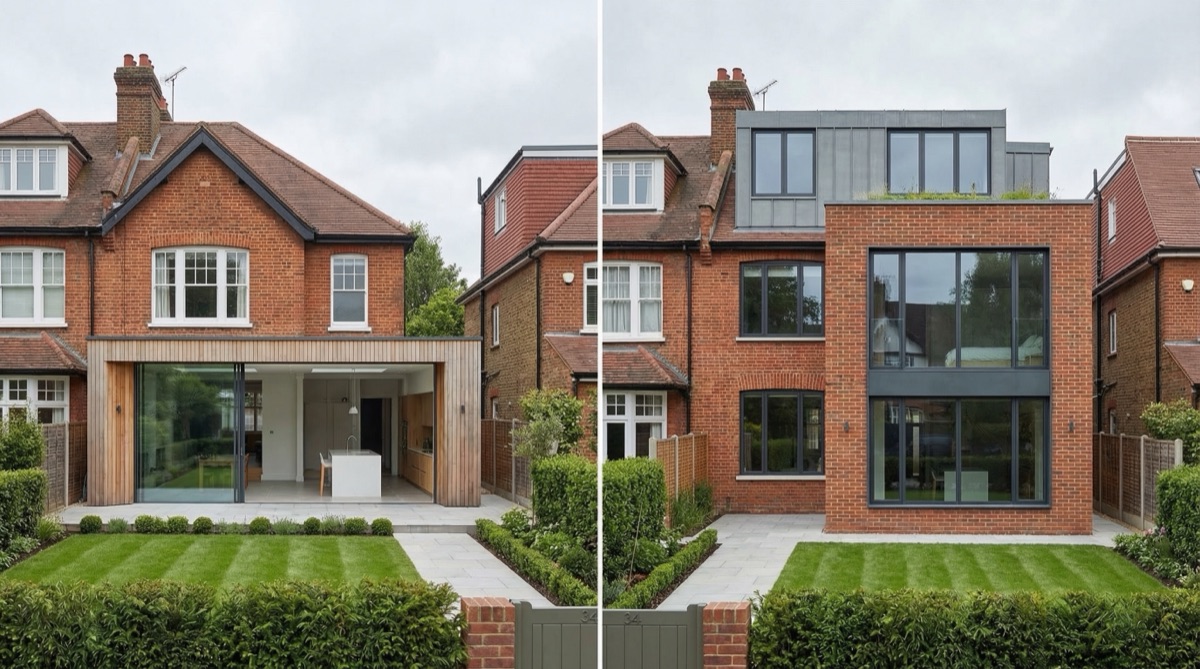
Single Storey vs Double Storey Extensions in London: Which Should You Choose?
Comparing single storey and double storey extensions for London homes. Costs, planning rules, timelines and which option adds the most value to your property.
Single Storey vs Double Storey: Making the Right Choice
Choosing between a single storey and double storey extension is one of the biggest decisions London homeowners face when planning to extend their property. Both options have distinct advantages and the right choice depends on your property type, budget, planning constraints and what you need the extra space for. This detailed comparison examines costs, planning requirements, design implications, and which option delivers better value for different situations and property types.
Single Storey Extensions: Comprehensive Analysis
Advantages
Lower cost: Single storey extensions typically cost 40-50% less than a double storey of the same footprint, making them accessible to more homeowners. A 25 square metre single storey extension might cost £50,000-70,000, while a double storey of the same footprint (50 square metres total) could cost £85,000-130,000.
Easier planning: Most single storey rear extensions up to 3m (terraced) or 6m (detached) fall under permitted development, meaning no planning application is needed, avoiding delays and risks of refusal.
Less disruption: Construction is quicker (typically 3-4 months) and less disruptive to daily life since the work is confined to the ground floor only.
Design flexibility: Single storey extensions offer more freedom with roof design, including vaulted ceilings, roof lanterns and large skylights that flood the space with natural light.
Disadvantages
Less space per pound: You only gain space on one floor, so the cost per additional square metre is higher than a double storey.
Uses more garden: To gain significant space, you need to extend further into the garden, potentially losing valuable outdoor space.
Double Storey Extensions: Comprehensive Analysis
Advantages
More space per pound: A double storey extension shares the foundation and roof costs across two floors, making it significantly better value per square metre.
Preserves garden: You gain twice the space with the same garden footprint as a single storey.
Higher ROI: Double storey extensions typically add more value to the property because they provide additional bedrooms or bathrooms on the upper floor.
Disadvantages
Planning permission usually required: Double storey extensions almost always need planning permission, which adds 8-12 weeks to the timeline and carries a risk of refusal.
Higher upfront cost: The total project cost is higher, even though the cost per square metre is lower.
More disruption: Construction takes longer (typically 5-7 months) and affects both floors of the house.
Neighbour impact: Double storey extensions are more likely to affect neighbouring properties through overshadowing or overlooking, which can complicate planning approval.
Cost Comparison
Single storey (25sqm): £55,000 to £80,000 = £2,200-£3,200 per sqm
Double storey (50sqm total): £80,000 to £130,000 = £1,600-£2,600 per sqm
The double storey is roughly 30% cheaper per square metre because you share the foundations, scaffolding and roof between two floors.
Which Is Better for Your Property?
Choose Single Storey If:
You mainly need more kitchen or living space on the ground floor. Your budget is limited. You want to avoid the planning application process. You value natural light features like vaulted ceilings and large rooflights.
Choose Double Storey If:
You need both ground floor space and additional bedrooms or bathrooms. You want maximum value per pound spent. You have a property type and location where planning permission is likely to be granted. You are willing to accept a longer build time for significantly more space.
Popular Areas for Each Type
Single storey extensions are most popular on terraced houses across London, particularly in areas like Islington, Hackney, Clapham, Peckham, Tooting, Crouch End and Walthamstow where period terraces benefit hugely from rear and side-return extensions.
Double storey extensions are more common on semi-detached and detached houses in suburban areas such as Barnet, Enfield, Southgate, Chiswick, Orpington, Twickenham, Epsom and Hadley Wood where there is typically more space around the property.
Planning Permission: Single vs Double Storey
Single storey extensions benefit from relaxed planning rules. In most cases, rear extensions up to 3 metres (terraced) or 6 metres (detached) can be built without planning permission if they meet permitted development criteria. This means no 8-12 week planning process, no risk of refusal, and significant savings on planning fees and professional services. Most single storey extensions only require building regulations approval, which is more straightforward and quicker. Double storey extensions almost always require full planning permission, as they exceed permitted development limits. This makes the process more lengthy and introduces planning risk — if the planning authority objects to the design, the project could face delays or refusal.
In London Conservation Areas, neither single nor double storey extensions fall within permitted development, making both options subject to planning permission. This applies to large areas of London including much of central London, Westminster, Kensington, Chelsea, Islington, Hackney and other historically significant areas. For properties in conservation areas, the planning process is a fixed requirement regardless of extension type.
Timeline and Construction Disruption
Single storey extensions typically take 12-16 weeks from start to completion, divided into: site setup and foundations (3-4 weeks), walls and roof (4-5 weeks), finishes including kitchen and bathroom (4-5 weeks), and final inspections (1-2 weeks). Double storey extensions extend this to 20-28 weeks, adding 8-12 weeks due to the additional first floor construction. The longer build time means more disruption to family life, more extended periods of noise and site activity, and longer periods living in a partly-finished home. For families with young children, pets, or those working from home, single storey offers significant advantages through quicker completion.
Return on Investment: Single vs Double Storey
While double storey extensions cost more, they often deliver higher absolute returns. A £100,000 double storey extension might increase property value by £130,000-150,000, delivering strong ROI. However, a £65,000 single storey extension might increase value by £80,000-95,000, delivering a similar percentage return. The question isn't which delivers the highest percentage return, but which suits your circumstances better. If you need ground floor space and have budget constraints, a single storey delivers excellent value and quicker returns. If you need additional bedrooms and have the budget, double storey provides more space and better long-term property appreciation.
Structural Considerations
Single storey extensions require structural support for the roof, but the structural challenge is relatively modest. Double storey extensions require substantial structural work — additional beams to support the first floor, stronger foundations to support additional loading, and more complex detailing. This structural complexity increases both design and construction costs. In some situations, existing structural constraints (Party Wall issues, narrow sites, difficult ground conditions) may make one option more practical than the other. Professional assessment during the design phase identifies these constraints and recommends the most appropriate approach.
Get Expert Advice
The best way to decide is to get professional advice tailored to your specific property and requirements. We offer free consultations and site visits across London — call 020 3051 9430 or request a quote online.
Environmental and Sustainability Factors
Both single and double storey extensions can incorporate sustainability features improving environmental performance. High-performance insulation, heat pumps, solar panels, and mechanical ventilation with heat recovery work equally well on either type. Double storey extensions may offer additional opportunities for solar panel placement on larger roof areas. However, double storey extensions' higher embodied carbon from additional materials and construction must be weighed against long-term energy savings. Thoughtfully designed extensions of either type can reduce overall household environmental impact through improved efficiency.
Making Your Decision
The choice between single and double storey ultimately depends on your specific circumstances: property type, budget, timeline requirements, space needs, and planning constraints. Single storey extensions offer accessible value, faster completion, and planning simplicity. Double storey extensions deliver greater total space, better cost-per-square-metre, and potential for higher property value uplift. Neither is universally "better" — the right choice is the one matching your circumstances and priorities.
Explore More House Extension Design Options
Related Articles
Comprehensive guide to house extension planning permission in 2024. Learn about costs, timelines, planning applications, and what to expect from professional house extension specialists.
Discover the key advantages of choosing professional house extension services. From cost savings to creative solutions, learn why specialists are essential for successful projects.
Complete guide to house extension costs in the UK. Learn about fee structures, budgeting tips, and how to get maximum value from your house extension investment.
Ready to Get Started?
Home Extensions Now Team
Our expert team of architectural design specialists brings decades of combined experience in UK house extension design and planning services for residential and commercial projects. We're committed to providing clear, actionable insights to help you make informed decisions about your home extension projects.
Ready to Plan Your Home Extension?
Whether you're planning a single-storey extension, renovation project, or complete home redesign, our house extension design solutions can help you build quickly and confidently.