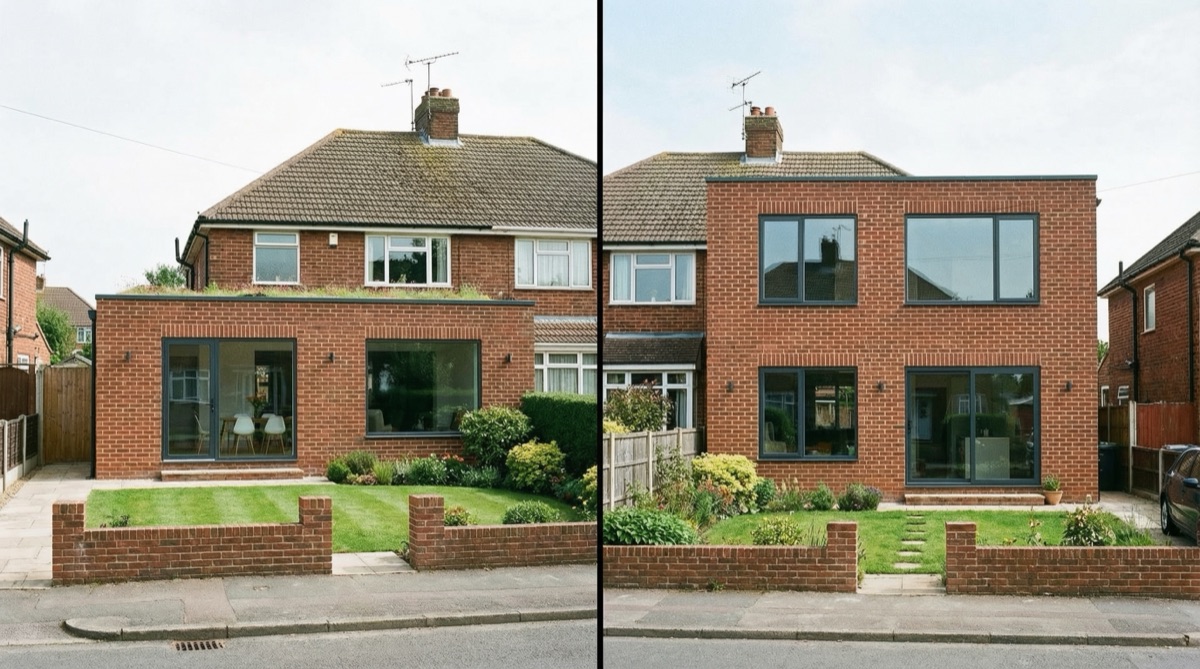
Single vs Double Story Extensions: Pros, Cons and Costs Compared
Compare single and double storey extensions. Learn about costs, planning permission, construction time, and which option delivers better value for your situation.
Single vs Double Storey Extensions: Making Your Choice
Choosing between a single and double storey extension is one of the biggest decisions when planning your house expansion. Both options have distinct advantages and disadvantages, and the right choice depends on your property type, budget, planning constraints, and how you'll use the additional space. This comprehensive comparison explores the pros and cons of each option, typical costs, and guidance on which option suits different situations.
Single Storey Extensions: Comprehensive Analysis
Advantages: Single storey extensions are typically 40-50% cheaper than equivalent double storey extensions, making them accessible to more homeowners. A 25 square metre single storey extension might cost £50,000-70,000, while a double storey of the same footprint (50 square metres total) could cost £85,000-130,000. Many single storey rear extensions up to 3 metres (for terraced houses) fall under permitted development rights, eliminating the need for planning applications and associated costs and delays. Construction is faster, typically 3-4 months compared to 5-7 months for double storey work. This means less disruption to your daily life. Single storey extensions offer design flexibility, including vaulted ceilings, roof lanterns, and large skylights that create bright, airy spaces impossible with standard flat roofs on double storey extensions.
Disadvantages: You only gain space on one floor, so the cost per additional square metre is higher than double storey. To achieve significant space gains, you need to extend further into the garden. For properties with limited garden space, this constraint can be frustrating. Single storey extensions don't provide additional bedrooms or bathrooms upstairs, limiting their ability to address family expansion needs.
Best For: Single storey extensions suit properties where ground floor space is the priority: families wanting larger kitchens, dining areas, or living rooms; properties with generous gardens where garden loss is acceptable; properties in conservation areas or with planning constraints where double storey may be problematic; homeowners on tighter budgets; properties where the primary need is ground floor space rather than additional bedrooms.
Double Storey Extensions: Comprehensive Analysis
Advantages: Double storey extensions provide substantially more usable space with the same garden footprint as single storey. A 25 square metre footprint provides 50 square metres total (25 per floor), making double storey significantly better value per square metre. Double storey extensions often add valuable bedrooms or bathrooms upstairs, addressing family growth needs. The return on investment is typically higher because additional bedrooms or bathrooms command significant market value. The cost per square metre is 20-30% lower than single storey, making the investment more efficient.
Disadvantages: Planning permission is almost always required, adding 8-12 weeks to project timelines and introducing approval uncertainty. The total project cost is higher, though cost per square metre is lower. Construction takes 5-7 months, creating longer disruption to daily life. Double storey extensions have greater impact on neighboring properties through overshadowing or overlooking, which can trigger neighbor objections and complicate planning approval. Design options are more constrained — double storey usually means simple rectangular boxes, whereas single storey allows architectural creativity with roofs and ceilings.
Best For: Double storey extensions suit properties where bedroom/bathroom expansion is important; properties with limited garden space where preserving garden is a priority; properties with sufficient space and orientation to allow double storey without excessive neighbor impact; families planning significant expansion; properties where long-term value maximization justifies higher investment; detached or semi-detached houses in suburban locations where double storey is architecturally compatible.
Cost Comparison in Detail
Single Storey Example (25 sqm): Total cost £55,000-80,000 = £2,200-3,200 per sqm. This includes design (£2,500), planning/building regulations (£2,000), and construction (£50,500-75,500).
Double Storey Example (50 sqm total, 25 sqm per floor): Total cost £80,000-130,000 = £1,600-2,600 per sqm. The same 25 sqm ground floor footprint with an upper floor costs significantly less per square metre because foundation, drainage, and roof costs are shared between two floors.
Cost Breakdown for Double Storey: The difference is that a double storey shares foundation costs across two floors, has lower per-square-metre structural costs, and efficiency gains from scaling. The extra 25 sqm of upstairs space costs approximately £15,000-25,000 more to add (for structure, stairs, services, and finishes) compared to the cost of the ground floor, meaning you're acquiring 50% more space for approximately 30-40% more cost.
Planning Permission Comparison
Single Storey Planning: Most single storey rear extensions up to 3 metres (terraced houses) or 4-6 metres (detached) fall within permitted development, avoiding planning applications. This typically saves £2,000-4,000 in professional fees and 8-12 weeks in project timeline. You still require building regulations approval, but this is less time-consuming than planning permission.
Double Storey Planning: Almost all double storey extensions require planning permission because they exceed permitted development limits. Planning applications add significant time and cost. Some planning authorities grant approvals readily if designs are sympathetic, while others are more restrictive. Location and design significantly affect approval likelihood.
Construction Time Comparison
Single Storey Timeline: Typically 12-16 weeks from start to completion: site setup and foundations (3-4 weeks), walls and roof (4-5 weeks), finishes (4-5 weeks), final inspections and handover (1-2 weeks).
Double Storey Timeline: Typically 20-28 weeks from start to completion: site setup and foundations (3-4 weeks), ground floor structure and roof (5-6 weeks), first floor construction (5-6 weeks), finishes (5-6 weeks), final inspections (1-2 weeks). The longer timeline means more disruption to daily life.
Design and Architectural Considerations
Single Storey Flexibility: Single storey allows vaulted ceilings creating generous proportions, roof lanterns and skylights providing abundant natural light, and various roof forms (pitched, flat with upstands, curved) creating architectural interest. These design options are constrained in double storey extensions which typically require standard flat roofs for practicality.
Double Storey Simplicity: Double storey extensions typically use simple rectangular box designs for cost efficiency. This limits architectural creativity but means straightforward, durable, and economical design.
Neighbor Relations and Impact
Single Storey Impact: Primarily impacts neighbors through overshadowing from the extended building envelope and (for side extensions) through overlooking upper floor windows. Impact is generally moderate and many single storey extensions face no neighbor objections.
Double Storey Impact: Greater impact through more substantial overshadowing, overlooking from upper floor windows, sense of dominance, and construction disruption affecting more of the neighborhood. Double storey extensions are more likely to trigger neighbor objections and require careful design to minimize impact.
London Property Context: Single vs Double Storey
In London and particularly in Conservation Areas, the choice between single and double storey is heavily influenced by planning policy. Many London Conservation Areas restrict the height of extensions, often requiring single storey in rear gardens to protect the character of the area. Terraced properties in conservation areas are particularly constrained — planners often support single storey extensions while resisting double storey work that would dominate the streetscape. Understanding local policy is essential, as some planning authorities are supportive of double storey extensions while others almost never approve them.
The high value of London property means that even expensive double storey extensions (£100,000+) can deliver excellent ROI if planning permission is achievable. A £120,000 double storey extension in London can increase property value by £150,000-200,000, making it an outstanding investment. However, this only makes sense if planning permission is likely to be approved. Conversely, a £70,000 single storey extension might be the only option in restrictive planning areas, but still delivers solid value through improved living space and property appeal.
Which Option Suits You?
Choose Single Storey If: Your primary need is ground floor living space (kitchen, dining, living); budget is a constraint; you want to avoid planning applications; you value architectural design with vaulted ceilings and natural light; your garden can accommodate garden loss; your neighborhood has planning constraints limiting double storey.
Choose Double Storey If: You need additional bedrooms or bathrooms; garden space is limited and you want to preserve it; budget allows for higher investment in return for better value per square metre; you want to maximize property value and ROI; your property type (detached, spacious semi) is suitable for double storey; your planning context supports double storey extensions.
Hybrid Approach: Single + Future Double Storey
Many homeowners compromise by building a single storey extension initially, designed to accommodate an upper floor addition in future. This allows you to spread costs, gain ground floor space immediately, and expand upward years later when budget allows. The key is designing the single storey foundations and structural system to support future vertical expansion.
Explore More House Extension Design Options
Related Articles
Comprehensive guide to house extension planning permission in 2024. Learn about costs, timelines, planning applications, and what to expect from professional house extension specialists.
Discover the key advantages of choosing professional house extension services. From cost savings to creative solutions, learn why specialists are essential for successful projects.
Complete guide to house extension costs in the UK. Learn about fee structures, budgeting tips, and how to get maximum value from your house extension investment.
Ready to Get Started?
Home Extensions Now Team
Our expert team of architectural design specialists brings decades of combined experience in UK house extension design and planning services for residential and commercial projects. We're committed to providing clear, actionable insights to help you make informed decisions about your home extension projects.
Ready to Plan Your Home Extension?
Whether you're planning a single-storey extension, renovation project, or complete home redesign, our house extension design solutions can help you build quickly and confidently.