Small House Extension Ideas Under £30k Budget
Explore affordable house extension ideas for budgets under £30,000. Discover cost-effective approaches maximizing value within budget constraints.
Small House Extensions on £30k Budget: Affordable Space Solutions
Not all homeowners can invest £100,000+ in comprehensive extensions. Modest budgets (£20,000-£30,000) still enable valuable space improvements through strategic planning and smart choices. This comprehensive guide explores extension options within modest budgets, cost-optimization strategies, and how to maximize value from limited investment. Understanding budget-conscious extension approaches helps you improve your home affordably while potentially laying foundation for future expansion.
Budget Realities: What £30,000 Achieves
Cost Structure in Budget Extensions: With £30,000 budget, actual construction costs (£2,000-£3,500 per square meter) limit extensions to approximately 8-15 square meters of new space. This might be single storey rear extension of 4 metres depth by 3 metres width (12 square meters). Professional fees, approvals, contingency, and contingencies consume 25-35% of budgets, leaving 65-75% for actual construction. Understanding these constraints helps realistic planning.
Options Available: Within £30,000 budgets, realistic options include: modest single storey rear extensions (3-4 metres), garage conversions, loft conversions (limited scope), significant kitchen renovations without extending space, or combining modest extensions with strategic renovations. Each approach offers specific benefits and constraints.
Modest Rear Extensions (£18,000-£28,000)
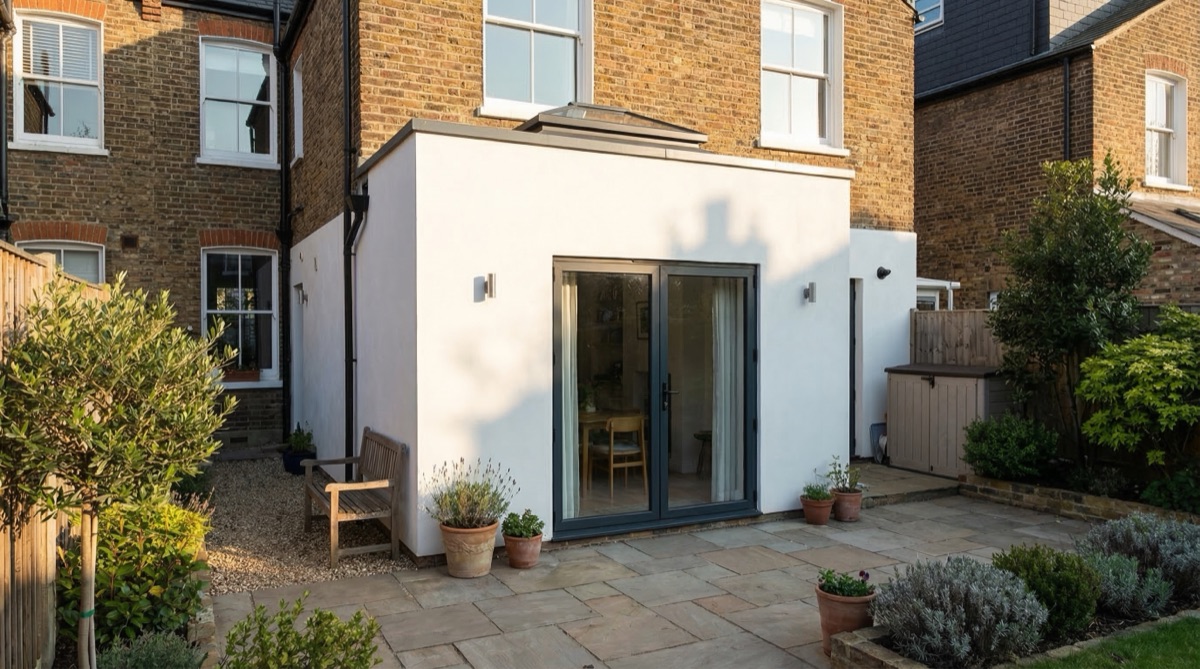
Scope and Sizing: Single storey rear extensions of 3-4 metres depth and 3-4 metres width (10-16 square meters) fit comfortably within £20,000-£30,000 budgets. These extensions create open-plan kitchen-diners, modest but valuable space additions. While not dramatic, they meaningfully improve ground-floor functionality and property appeal.
Design for Maximum Value: Maximize open-plan living by removing internal walls creating flow between extended and existing kitchen. Install large sliding glass doors creating strong indoor-outdoor connection. Ensure adequate natural light through generous windows and potential roof lights. These design choices maximize perceived space even if absolute additions are modest.
Construction Simplicity for Cost Control: Simple designs minimize costs. Matching existing roof slope avoids complex structural design. Standard material selections reduce specification complexity. Straightforward geometric shapes cost less than elaborate designs. Quality execution of simple designs delivers excellent results at controlled costs.
Garage Conversions (£18,000-£30,000)
Outstanding Value Option: Converting existing garages creates valuable space within budget constraints. A 30 square meter double garage conversion might cost £20,000-£30,000, creating space equivalent to extensions costing £60,000+. This cost-effectiveness makes garage conversions excellent budget options.
Conversion Approaches: Convert garages to home offices, guest bedrooms, playrooms, or studios depending on requirements. Single garage conversions (£15,000-£25,000) suit offices or studios. Double garage conversions (£20,000-£35,000) accommodate bedrooms or substantial recreation spaces. Existing structure utilization provides cost advantages unavailable with new construction.
Phased Conversion Strategy: Start with basic conversion (walls, insulation, flooring, basic services) within budget constraints. Complete finishes (decoration, fixtures, premium finishes) in subsequent phases as budget allows. This phased approach delivers functional spaces immediately while allowing enhancement later.
Loft Conversions in Modest Form (£15,000-£30,000)
Limited but Valuable Space: Loft conversions cost 30-40% less than equivalent ground-level extensions. £20,000-£30,000 budgets enable modest loft conversions (12-20 square meters) creating valuable bedroom or study space. While smaller than complete conversions, partial loft improvements deliver significant value.
Cost-Control Strategies: Use roof lights instead of dormers reducing complexity and cost. Conversions within existing roof line (avoiding dormers) remain within modest budgets. Simple layouts minimize complexity. Partial room conversions (study area rather than full bedroom) control scope. These strategies deliver loft improvements within budget constraints.
Building Regulations Compliance Costs: Loft conversions require fire safety egress windows (approximately £800-£1,500 each), insulation, and structural assessment. Budget these essential costs prominently. Quality fire safety provision is non-negotiable despite adding costs.
Kitchen Renovation Without Extension (£12,000-£30,000)
Alternative Space Solution: Rather than extending space, transforming existing kitchens can dramatically improve functionality. New cabinetry, appliances, flooring, and decoration within £15,000-£25,000 budgets creates substantially improved kitchens without space additions.
When to Choose This Approach: If kitchen is inadequate for current needs despite adequate space, renovation without extension may be ideal. Opening up existing kitchens through wall removal creates open-plan living without construction. Renovation is faster, simpler, and sometimes delivers better value than modest extensions.
Long-Term Consideration: While kitchen renovation improves functionality immediately, it doesn't solve fundamental space constraints. If space is genuinely inadequate, renovation delays inevitable extension. Consider whether modest extension combined with kitchen improvements (reducing kitchen budget to £8,000-£12,000) might deliver better long-term value.
Cost-Control Strategies for Budget Extensions
Material Selection: Choose durable, attractive standard materials rather than premium or custom options. Quality standard materials cost minimally more than poor alternatives while maintaining professional appearance. Avoid custom fabrications and specialized selections that consume budgets disproportionately.
Simplicity Over Complexity: Simple geometric designs cost less than elaborate shapes. Standard roof configurations cost less than complex designs. Straightforward details reduce costs. Simple, well-executed designs deliver excellent results at controlled costs.
DIY and Sweat Equity: Some budget-conscious homeowners perform non-structural work themselves (decoration, basic finishes) reducing professional labor costs. Ensure DIY work doesn't compromise quality or building regulations compliance. Structural, electrical, and plumbing work must be professional.
Material Bulk Purchasing: Coordinating with other properties undergoing similar work sometimes enables bulk purchasing discounts. Contractors purchasing materials for multiple projects achieve better pricing sharing benefits with clients.
Phased Extension Approach
Strategic Planning for Future Expansion: Design initial budget extensions as first phase of eventual larger projects. Initial modest rear extension might be foundation for future double storey addition. Phased approach spreads costs while maintaining trajectory toward ultimate vision.
Building Foundations for Expansion: Design structural work supporting future expansion. Services (plumbing, electrical, heating) routed anticipating future needs. Foundation work capable of supporting additional loads. This forward thinking enables future expansion without redesigning existing work.
Timeline Benefits: Phased expansion extends timelines but spreads disruption. Initial extension improves functionality while living within budget constraints. Future phases add additional improvement as budgets allow. This approach may ultimately cost modestly more but distributes costs and disruption over time.
Professional Guidance for Budget Management
Value-Engineering Expertise: Architects and surveyors experienced with budget projects understand cost-effective solutions. Their expertise optimizes value within constraints, identifying essential costs versus optional enhancements. Professional guidance on budget management prevents wasteful spending.
Quotes and Competitive Bidding: Obtain detailed quotations from multiple contractors. Competitive bidding encourages cost realism. Compare quotations carefully; lowest price often indicates misunderstanding of scope rather than efficiency. Mid-range quotes often provide best value.
Change Control Discipline: Establish strict change control preventing scope creep. Changes during construction cost substantially more than pre-construction design decisions. Disciplined adherence to approved scope controls costs.
Realistic Outcome Expectations
Modest but Meaningful: Budget extensions provide modest rather than dramatic space additions. A £25,000 extension might add 12 square meters, approximately 10-15% space increase. While not transformational, improvements are meaningful, improving functionality and property value.
Value Recovery: Budget extensions typically recover 70-80% of costs in property value increases. A £25,000 extension might increase property value by £17,500-£20,000. ROI remains strong despite modest absolute additions.
Future Expansion Foundation: Budget extensions often create foundation for future expansion. Initial improvements improve immediate satisfaction while demonstrating extension value, justifying eventual larger investments.
Avoiding False Economy
Quality Standards Must Not Suffer: Budget constraints should not compromise building regulations compliance, structural soundness, or damp prevention. Cutting corners on essential requirements creates problems far exceeding upfront savings.
Professional vs. DIY Tradeoffs: While DIY work might save money short-term, professional execution ensures quality and code compliance. Some work must be professional; amateur attempts create problems. Distinguish between appropriate DIY work and professional-only requirements.
Making £30,000 Work Effectively
Budget constraints require strategic planning, value-conscious decision-making, and disciplined execution. Realistic scoping ensures budgets enable meaningful improvements rather than inadequate partial solutions. Strategic phasing spreads costs enabling eventual larger vision realization. Professional guidance optimizes value within constraints. With careful planning and smart choices, £20,000-£30,000 budgets enable valuable property improvements creating better functionality and enhanced property value. View budget extensions as foundation for eventual larger improvements rather than complete solutions. This perspective enables strategic decision-making delivering excellent value from limited investment.
Explore More House Extension Design Options
Related Articles
Comprehensive guide to house extension planning permission in 2024. Learn about costs, timelines, planning applications, and what to expect from professional house extension specialists.
Discover the key advantages of choosing professional house extension services. From cost savings to creative solutions, learn why specialists are essential for successful projects.
Complete guide to house extension costs in the UK. Learn about fee structures, budgeting tips, and how to get maximum value from your house extension investment.
Ready to Get Started?
Home Extensions Now Team
Our expert team of architectural design specialists brings decades of combined experience in UK house extension design and planning services for residential and commercial projects. We're committed to providing clear, actionable insights to help you make informed decisions about your home extension projects.
Ready to Plan Your Home Extension?
Whether you're planning a single-storey extension, renovation project, or complete home redesign, our house extension design solutions can help you build quickly and confidently.