Sustainable House Extensions: Green Building Practices
Design sustainable extensions that reduce environmental impact. Learn about green materials, energy efficiency, renewable energy, and sustainable building practices.
Sustainable Design for House Extensions
Sustainability has become central to contemporary extension design. Creating environmentally responsible extensions reduces your carbon footprint, cuts long-term energy costs, and appeals to increasingly environmentally conscious buyers. This comprehensive guide explores sustainable building practices, green materials, renewable energy options, and strategies for creating extensions that are both environmentally responsible and economically sensible. Understanding sustainability is essential for future-proofing your extension and contributing to climate action.
Thermal Performance and Insulation
One of the most important factors in sustainable extension design is excellent thermal performance. Modern building regulations require insulation levels of approximately 0.15 W/m²K U-value (compared to 0.45 W/m²K in 2010 regulations). Achieving this requires high-quality insulation, typically 150-200mm thickness in walls and 200-250mm in roofs. Insulation types include mineral wool (traditional and cost-effective), cellulose fiber (recycled newspaper, lower embodied carbon), wood fiber boards (natural and sustainable), and foam insulation (high performance but higher environmental impact).
Thermal bridging (heat loss through structural elements) significantly undermines insulation performance. Detailed design avoids thermal bridges by keeping insulation continuous, using thermally broken connections, and minimizing structural penetrations. Proper design and quality installation deliver extensions that are significantly more thermally efficient than older buildings, reducing heating demand by 60-70% compared to pre-extension conditions.
Airtightness and Ventilation
Airtightness (minimizing uncontrolled air leakage) is essential for both thermal performance and indoor air quality. Construction details are carefully designed and closely inspected to achieve air tightness targets. Mechanical ventilation with heat recovery (MVHR) systems provide fresh air while recovering heat from extract air, maintaining indoor air quality without compromising thermal performance. MVHR systems recover 60-90% of heat from extract air, providing significant energy savings compared to traditional natural ventilation.
Renewable Energy Systems
Heat Pumps: Air source heat pumps or ground source heat pumps provide heating and hot water using renewable energy. Modern heat pumps are efficient and can operate in cold climates. Air source heat pumps are cost-effective and suitable for most properties; ground source heat pumps require significant space and initial investment but offer best long-term performance. Heat pumps are increasingly standard in contemporary extensions, particularly when combined with good insulation.
Solar Thermal Systems: Solar thermal panels on south-facing roofs provide hot water throughout the year, reducing reliance on boilers. Modern systems are efficient and reliable, particularly in sunny regions. Systems cost £3,000-5,000 and can reduce hot water costs by 50-70%.
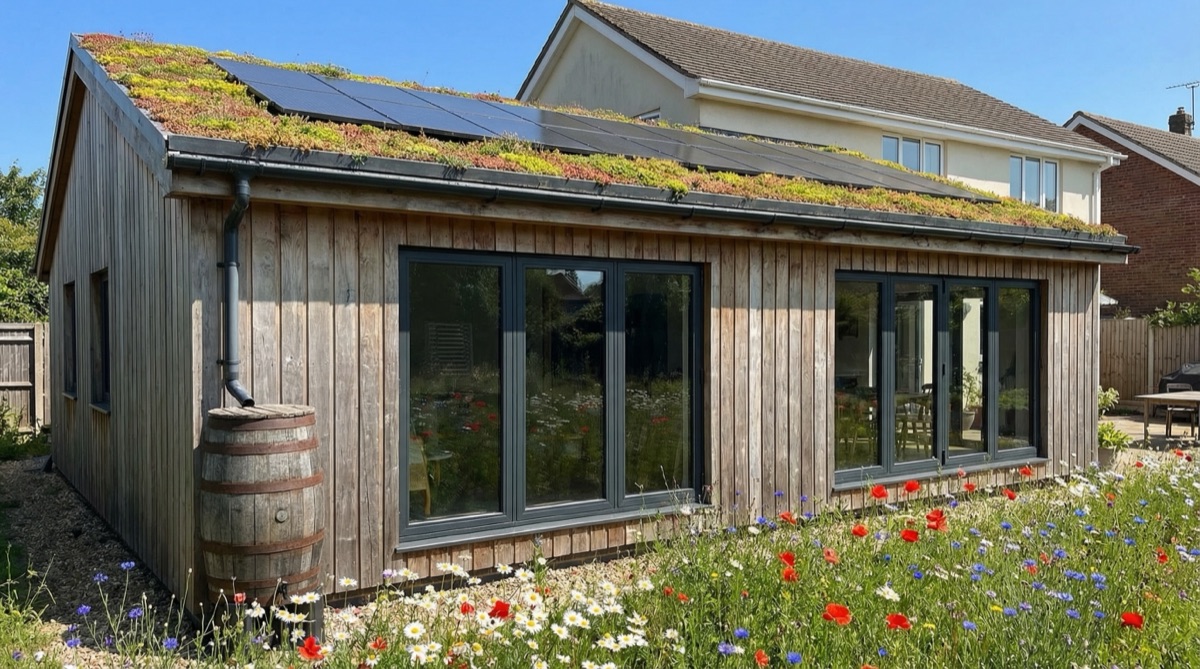
Photovoltaic Panels: Solar PV panels generate electricity, reducing grid electricity demand. Modern panels are efficient and systems can generate substantial electricity on suitable roofs. Costs have reduced significantly and many systems generate good return on investment through reduced electricity bills and government feed-in tariffs.
Sustainable Materials
Embodied Carbon: Materials have embodied carbon (carbon emitted during production, transport, and end-of-life). Specifying materials with low embodied carbon (such as timber, stone, and clay) reduces your extension's lifecycle carbon footprint. Recycled materials (reclaimed brick, timber, or metal) have lower embodied carbon than virgin materials. Consider lifecycle carbon when selecting materials, not just initial cost.
Responsible Sourcing: Specify materials from sustainably managed sources. Look for FSC certification for timber (ensures sustainable forest management), and responsible sourcing certifications for stone, brick, and other materials. Responsible sourcing ensures resources are managed sustainably and workers are fairly treated.
Natural Materials: Natural materials like timber, stone, clay, and natural fiber insulation are renewable and often biodegradable at end-of-life. These materials create healthier indoor environments with lower chemical emissions compared to synthetic alternatives.
Durability: Choosing durable materials that will last 30-50 years reduces the need for replacement and associated carbon emissions from manufacturing and transport. Quality construction extends material life, making durability both an environmental and economic consideration.
Water Management
Sustainable Drainage Systems (SUDS): Instead of traditional drainage connecting to sewers or storm drains, SUDS approach manages rainwater through permeable paving, rain gardens, or rainwater storage. This reduces flood risk, replenishes groundwater, and reduces pressure on sewage systems. SUDS systems are increasingly required by building regulations and planning authorities.
Rainwater Harvesting: Collecting roof rainwater for reuse in toilets, garden irrigation, or laundry reduces mains water demand. Modern systems are reliable and cost-effective, typically costing £2,000-4,000 for domestic systems. Water savings are significant in areas with drought risk.
Water Efficiency: Specify water-efficient fixtures (low-flow taps, efficient shower heads, low-flush toilets) reducing water consumption by 30-50%. Water efficiency reduces both mains water demand and wastewater production.
Design for Longevity and Adaptation
Sustainable design considers long-term performance and the building's ability to adapt as needs change. Design decisions that are durable and flexible reduce the need for future renovation and modification, minimizing long-term environmental impact. Consider future-proofing for changing household needs, climate adaptation (resilience to extreme weather), and ability to retrofit additional sustainability measures (solar panels, heat pumps) without major disruption.
Construction Waste Minimization
Construction produces substantial waste. Minimizing waste involves: efficient design that reduces material quantities, prefabrication of components reducing on-site waste, careful planning to minimize offcuts, and recycling/recovery of waste materials. A well-managed construction site diverts 70-90% of waste from landfill through recycling and recovery. Work with builders who prioritize waste management.
Green Building Certification
BREEAM Homes: BREEAM (Building Research Establishment Environmental Assessment Method) certification assesses buildings against sustainability criteria covering energy, water, health and wellbeing, pollution, transport, waste, ecology, and management. Achieving BREEAM certification (ranging from "Pass" to "Outstanding") demonstrates comprehensive sustainability performance.
Passivhaus: Passivhaus standard requires extremely high insulation, airtightness, and thermal performance, achieving heating demand of 15 kWh/m²/year (compared to 100-150 kWh/m²/year for standard buildings). Meeting Passivhaus standard requires rigorous design and construction but delivers exceptional performance and comfort. Costs are 5-10% higher than standard construction but deliver operational energy savings of 70-80%.
Cost-Benefit Analysis of Sustainability
While sustainable features add initial cost, they deliver long-term value through reduced energy bills, improved comfort, and higher property values. Analysis of typical sustainable extension costs shows:
Heat Pump vs. Traditional Boiler: Heat pumps cost £1,000-2,000 more initially but save £300-500 annually in energy costs, paying back within 3-5 years. Lifetime savings exceed £10,000.
High-Performance Insulation: High-quality insulation costs £2,000-4,000 more but delivers energy savings of £200-300 annually, paying back within 10-15 years. Lifetime savings exceed £8,000.
Solar PV System: A 4kW solar system costs £5,000-7,000 but generates electricity saving £400-600 annually. Payback period is 10-15 years but lifetime savings exceed £12,000.
While individual sustainable features have varying payback periods, combined packages deliver rapid returns through cumulative energy savings. Most importantly, homes with excellent energy performance command 5-10% price premiums, meaning sustainable features add property value beyond operational savings.
Occupant Behavior and Sustainability
Even the most sustainable extension can be undermined by wasteful occupant behavior. Achieving sustainability requires both design excellence and conscious use. Considerations include: understanding how to operate heating/ventilation systems efficiently, being conscious of water and energy use, and maintaining systems properly. Well-designed extensions with responsive controls and occupant feedback (energy monitoring, water meters) encourage sustainable behavior.
Future-Proofing for Climate Adaptation
As climate change progresses, extensions should adapt to changing conditions. This includes: heat mitigation through shading, thermal mass, and natural ventilation to prevent overheating in hotter summers; flood resilience through elevated electrical systems, water-resistant materials, and permeable surfaces in flood-risk areas; water efficiency in areas facing drought; and natural capital protection (trees, vegetation) supporting cooling and local water management.
Green Roofs on Extensions
Green roofs (also called living roofs) provide exceptional sustainability benefits, turning unused roof space into productive gardens. Extensive green roofs with shallow growing media support hardy plants and mosses, reducing surface temperatures, absorbing rainwater, and providing habitat for pollinators. Intensive green roofs with deeper growing media support larger plants and shrubs, creating attractive accessible spaces while offering all environmental benefits. Green roofs reduce stormwater runoff by 40-80%, insulate buildings reducing energy use, provide urban greening and habitat, and can last 40+ years. While installation costs are higher than conventional roofing, green roof systems deliver long-term environmental and economic value.
Business Case for Sustainable Extensions
From a purely financial perspective, sustainable extensions represent sound investments. While initial costs are slightly higher (5-10%), resulting energy savings and property value premiums deliver rapid payback. A sustainable £80,000 extension might cost £86,000 with green features but increase property value by £100,000-120,000 versus £80,000-95,000 for standard extensions. Additionally, operating costs are 50-70% lower, delivering £1,000-2,000+ annual savings over the extension's 50+ year lifetime. Sustainability is both environmentally responsible and economically sensible.
Explore More House Extension Design Options
Related Articles
Comprehensive guide to house extension planning permission in 2024. Learn about costs, timelines, planning applications, and what to expect from professional house extension specialists.
Discover the key advantages of choosing professional house extension services. From cost savings to creative solutions, learn why specialists are essential for successful projects.
Complete guide to house extension costs in the UK. Learn about fee structures, budgeting tips, and how to get maximum value from your house extension investment.
Ready to Get Started?
Home Extensions Now Team
Our expert team of architectural design specialists brings decades of combined experience in UK house extension design and planning services for residential and commercial projects. We're committed to providing clear, actionable insights to help you make informed decisions about your home extension projects.
Ready to Plan Your Home Extension?
Whether you're planning a single-storey extension, renovation project, or complete home redesign, our house extension design solutions can help you build quickly and confidently.