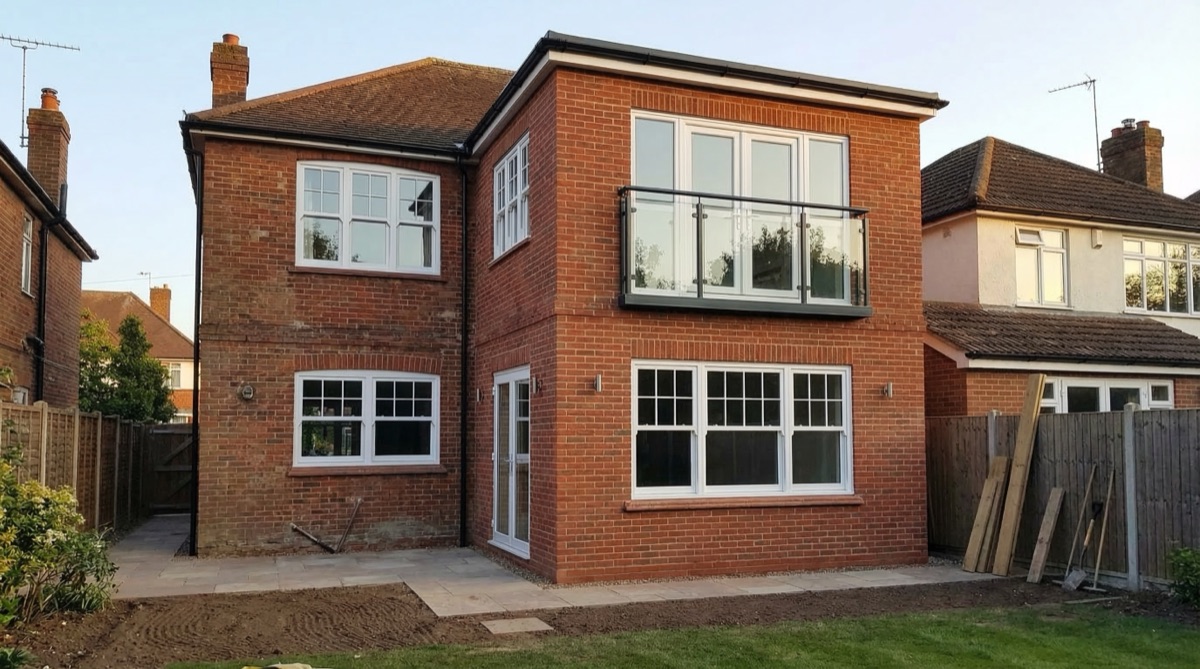
Two Storey Extension Cost London: Double Floor Investment Analysis
Understand two storey extension costs in London. Compare value per square metre, planning requirements, timelines, and ROI analysis for double floor extensions.
Two Storey Extension Costs in London 2026
Two storey extensions represent substantial investment but deliver excellent value through cost-per-square-metre efficiency and significant property value increases. This comprehensive guide explains two storey extension costs across London, value analysis, planning requirements, and why double storey extensions represent smart investment for suitable properties.
Two Storey Extension Cost Breakdown 2026
Modest Double Storey (40sqm total, 20 per floor): £70,000-100,000 with standard finishes and specifications. Per square metre: £1,750-2,500.
Standard Double Storey (50sqm total, 25 per floor): £90,000-130,000 with good quality finishes, integrated kitchen/bathroom. Per square metre: £1,800-2,600.
Premium Double Storey (60sqm total, 30 per floor): £120,000-180,000 with luxury finishes, high-end kitchen/bathrooms, and premium materials. Per square metre: £2,000-3,000.
Cost per Square Metre Comparison: Single vs Double Storey
Single storey extensions typically cost £2,200-3,000 per sqm due to proportional overhead costs spread across smaller area. Double storey extensions cost £1,600-2,600 per sqm because foundation, structural system, and roof costs are shared between two floors. This represents approximately 25-30% savings per square metre, a significant economic advantage for larger space needs.
What Increases Two Storey Extension Costs
Structural Complexity: Roof connections, second floor support, and load transfer systems add structural cost. Standard designs cost less than complex geometry.
Bathroom and Kitchen Installation: Upper floor bathrooms require additional plumbing infrastructure increasing costs. Ground floor kitchens with expensive appliances add cost.
Services Distribution: Electrical, plumbing, and heating extending to upper floors increase infrastructure costs.
Finishes and Specifications: Premium materials, underfloor heating, and high-end fixtures significantly increase costs. Budget finishes reduce costs substantially.
Planning and Timeline Impact on Costs
Planning permission requirement (typically 8-12 weeks) delays projects. Extended timelines increase professional fees and can increase labor costs if unexpected issues arise. Conservative project planning with built-in contingency time accommodates delays without excessive cost escalation.
Value Addition Through Double Storey Extensions
Two storey extensions typically increase property value by £100,000-180,000, often exceeding the extension cost. Value comes from: additional bedrooms/bathrooms (high-value additions), substantially increased floor area, modern open-plan living spaces, improved light and connection to garden. Properties with successful double storey extensions command strong resale value and appeal to broader buyer pool.
ROI Analysis: Investment Recovery
Most double storey extensions recover 70-90% of costs through increased property value. A £120,000 extension increasing property value by £100,000-150,000 represents strong investment. Long-term homeowners benefit from both increased property value and improved daily living quality from expanded space.
Who Benefits Most from Double Storey Extensions
Double storey extensions suit: families planning to stay in properties long-term, properties where additional bedrooms are essential (growing families), detached/semi-detached properties with suitable space and orientation, properties where planning constraints support double storey approval, and properties where strong resale market can support premium pricing from extended space.
Cost Control Strategies for Two Storey Extensions
Value Engineering: Identify cost-effective alternatives delivering functionality without premium pricing. Standard fixtures, simplified layouts, and phased fit-out can reduce costs.
Competitive Tendering: Obtain quotes from multiple builders. Significant cost differences often emerge, allowing negotiation and selection of best-value provider.
Phased Approach: Build basic shell and services initially, finishing upper floor later. This spreads costs over time and allows interior design refinement.
Contingency Planning: Budget 10% contingency for unforeseen costs, essential given complexity of two storey construction.
Financing Two Storey Extensions
Most homeowners finance two storey extensions through: home improvement loans (typically 5-10% interest), home equity loans (better rates for larger projects), remortgaging (lowest rates for significant borrowing), or savings combined with borrowing. Conservative financial planning ensures monthly payments are manageable and project doesn't overextend finances.
Two Storey Extension Design Considerations
Successful double storey extensions combine excellent proportions, respectful architectural language, and integration with existing properties. Ground floor typically accommodates expanded kitchen/dining/living, while upper floor adds bedroom(s) and bathroom(s). Design must address: visual harmony with existing building, connection between floors through stairs, natural light on both levels, and outdoor connection through gardens. Professional design balances all these considerations, creating extensions that enhance rather than diminish properties.
Planning Approval for Double Storey
Double storey extensions almost always require planning permission as they exceed permitted development limits. Planning concerns typically focus on: impact on neighboring properties (loss of light, privacy, overbearing scale), design integration with existing property, character compatibility in conservation areas, and parking impacts. Professional design addressing these concerns dramatically improves approval likelihood. Many applications face initial concerns that are resolved through dialogue with planning officers and design modifications.
Building Regulations Complexity
Double storey extensions require more complex building regulations compliance than single storey, particularly: structural verification of two-floor loads, fire safety between floors, adequate escape routes from upper floor, proper ventilation systems for both floors, and heating/cooling adequacy for enlarged space. Professional engineers and builders manage this complexity, ensuring full compliance and successful building control inspections.
Timeline: Two Storey Extension Delivery
Typical timeline from initial consultation through completion: 4-8 weeks design, 8-12 weeks planning, 2-4 weeks tendering, 16-20 weeks construction, 2-4 weeks final inspections. Total 5-9 months depending on complexity and planning requirements. Conservative planning prevents timeline pressure undermining quality or budget management.
Structural Engineering for Double Storey Extensions
Two storey extensions require sophisticated structural engineering to safely support two floors of load. Structural engineers design: reinforced concrete or steel foundations supporting increased loads, structural beams carrying upper floor loads, connection points between new and existing structure, and bracing systems resisting wind loads. Most extensions connect to existing walls which must be assessed for their ability to carry additional loads. Sometimes structural modifications to existing property are required (new foundation work, beam installations), adding cost but necessary for safety. Professional structural engineers provide designs ensuring full compliance with building regulations and safe construction execution. Detailed structural drawings guide builders throughout construction, ensuring every element is correctly installed to design specifications.
Upper Floor Room Configuration Options
Upper floors of double storey extensions typically accommodate: additional bedrooms (typically 2-3 depending on space), bathroom and/or en-suite (critical for appeal), and sometimes shared living space. Common configurations include: 3-bed plus 2-bath (appeals to families), 2-bed plus en-suite plus office (appeals to professionals), or 1-large-bed with separate bathroom plus sitting area. Flexible design during development allows consideration of different configurations before final commitment. Open or partition-able spaces provide flexibility — walls added later if layouts need adjustment. Professional space planning ensures efficient layouts maximizing usable area, minimizing wasted circulation space, and achieving appropriate proportions and ceiling heights throughout.
Ground Floor Open-Plan Living
Double storey extensions typically create expanded ground floor spaces. Modern designs emphasize open-plan layouts combining kitchen, dining, and living zones. Large openings between kitchen and dining (often involving structural beams supporting upper floor) create flow and light. Quality kitchen design becomes critical — islands, peninsula units, or contemporary layouts organize the open-plan while maintaining clear work zones. Glazed doors opening to gardens provide visual and physical connection to outdoor space. Excellent lighting design (combining natural through windows with artificial lighting) creates welcoming, functional spaces. When well-designed, extended ground floors become the heart of modern homes — places where families spend significant time together.
Stair Design and Placement
Stair location significantly impacts ground floor layout and aesthetics. Effective strategies include: spiral stairs (minimize floor area), straight runs in dedicated spaces, or quarter-turn stairs creating visual interest. Stair positioning influences how upper floor feels accessed from main living spaces. Stairs integrated into the design rather than appearing as afterthoughts create more coherent overall layouts. Professional designers work with builders and structural engineers to integrate stairs efficiently, maximizing remaining floor space while ensuring comfortable stair proportions and safe installation.
Long-Term Value Perspective
Two storey extensions represent long-term value investments. Properties with quality double storey extensions typically maintain that value premium indefinitely. Younger families value extended space; downsizers moving later in life benefit from additional space for guests or hobbies. The additional bedrooms and bathrooms appeal to almost all buyer profiles. This broad appeal means extensions rarely become market disadvantages even 15-20 years later. Properties without extensions become outdated relative to extended versions, so extensions help maintain competitiveness in property markets long-term. Combined with improved quality of life during occupancy, two storey extensions represent sound investments for homeowners planning to stay medium to long-term.
Professional Team Coordination
Double storey extensions require coordination between multiple professionals: architects/designers (vision and planning), structural engineers (safety and compliance), building control inspectors (regulatory approval), contractors (construction), and project managers (coordination and timeline management). Effective team coordination prevents delays, ensures quality, and keeps projects on budget. Project managers coordinating all parties, managing timelines, resolving conflicts, and ensuring quality throughout construction are valuable investments reducing stress and ensuring successful project delivery. Homeowners without project managers sometimes face poor coordination, delays, and quality issues that could have been prevented through professional management.
Explore More House Extension Design Options
Related Articles
Comprehensive guide to house extension planning permission in 2024. Learn about costs, timelines, planning applications, and what to expect from professional house extension specialists.
Discover the key advantages of choosing professional house extension services. From cost savings to creative solutions, learn why specialists are essential for successful projects.
Complete guide to house extension costs in the UK. Learn about fee structures, budgeting tips, and how to get maximum value from your house extension investment.
Ready to Get Started?
Home Extensions Now Team
Our expert team of architectural design specialists brings decades of combined experience in UK house extension design and planning services for residential and commercial projects. We're committed to providing clear, actionable insights to help you make informed decisions about your home extension projects.
Ready to Plan Your Home Extension?
Whether you're planning a single-storey extension, renovation project, or complete home redesign, our house extension design solutions can help you build quickly and confidently.